

Opinion: As I reflect on 2025 at Whakaata Māori and the major news stories of the year, I decided it was not what I wanted to regurgitate for our Te Ao Māori News readers on Christmas Day. The division, the deaths, the resistance stories aren’t what I wanted to think about, but it did make me think about the perceptions of what Māori news is, and isn’t.
Māori news is not a genre. It’s not a niche, a flavour, or a special interest category. And it’s certainly not a PR company. Māori news is a way of seeing the world and is determined by our surroundings, our whakapapa, where we were raised, and who we answer to.
Māori news is a worldview.

This year, I’ve sat in endless hui and wānanga with Māori journalists, editors, funders, and academics. Different rooms, same kōrero: Māori journalism is still judged by standards that were never built for us, while being expected to protect and uplift te reo, ōna tikanga and keep everyone comfortable at the same time.
From the outside, mainstream media still frames Māori outlets as underdogs in journalism, useful for their colour, culture, or access, but rarely taken seriously as agenda-setting newsrooms. That’s not new.
What is new, and harder to ignore, is the increasing criticism coming from within our own Māori spaces, including from Māori journalists. Publicly.
We saw it in feedback to our coverage; readers were disappointed that Te Ao Māori News reported stories showing Māori institutions under pressure as if our job is only to tell positive stories. As if Māori journalism exists to protect reputation rather than interrogate power and injustice.
That’s not what we do.
Māori news is not PR. It’s not a comms arm. It’s journalism that belongs to this country, with a responsibility to communities, to context, and to the truth, even when that truth is awkward.
This year tested that expectation. When Toitū Te Tiriti publicly distanced itself from Te Pāti Māori, the issue wasn’t accuracy; it was that we reported it at all. The criticism wasn’t about facts; it was about loyalty.

Minister Chris Bishop was caught on camera at the Aotearoa Music Awards dismissing tino rangatiratanga flags during Stan Walker’s performance. The reaction to our coverage shifted quickly from what was said to whether it should have been covered. Tone was scrutinised, intent was questioned. Māori frustration at Māori journalism stated plainly, suddenly became the problem.
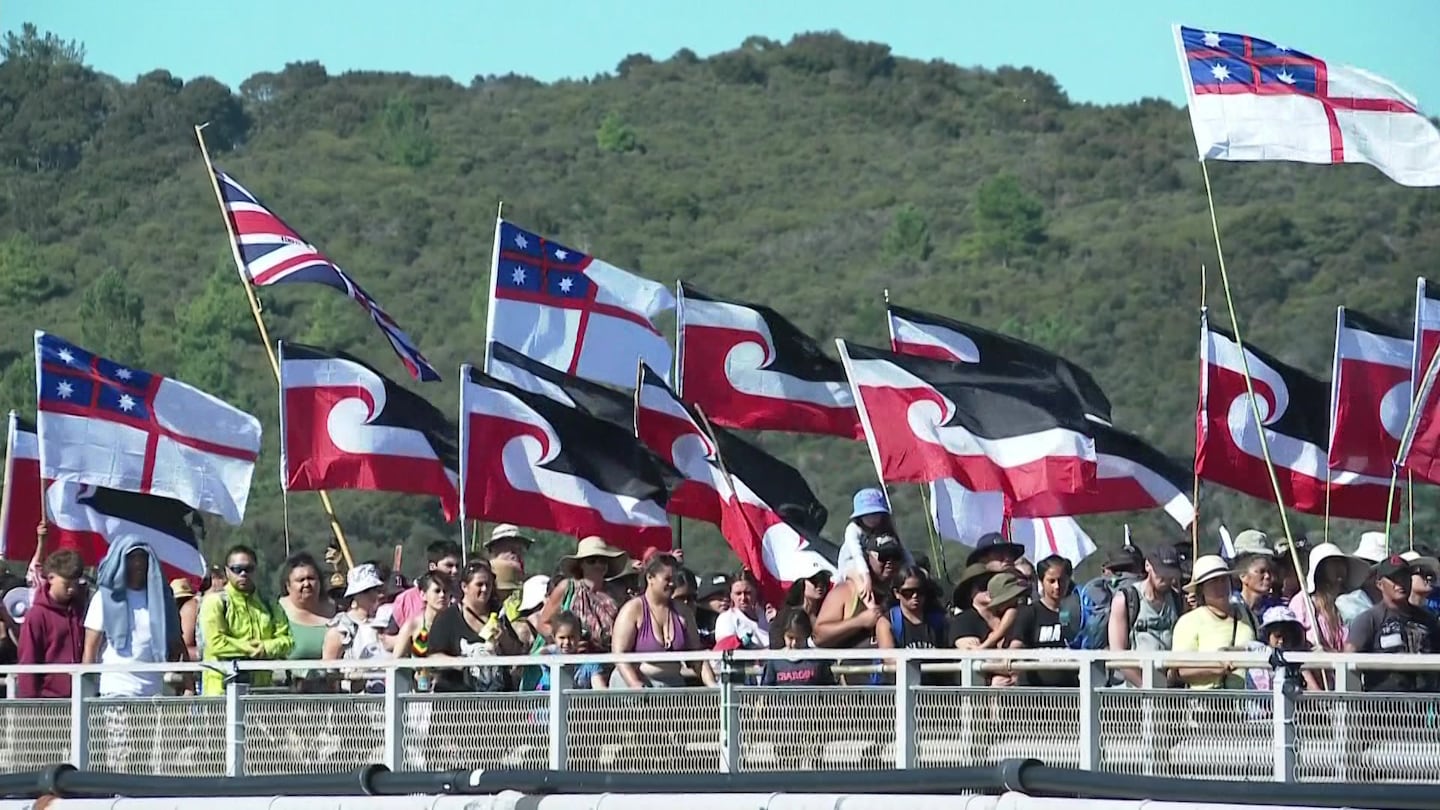
The same pattern showed up in coverage of the large-scale protests connected to Te Tiriti. We were expected to show the crowd, but not the cause. The disruption, but not the history behind it. Neutrality was demanded in a way that stripped the story of meaning.
That’s gatekeeping.
And it’s not always obvious. It doesn’t always look like being shut out. Sometimes it looks like being told how to tell your own stories. Sometimes it looks like being praised when your work is palatable and questioned when it isn’t.
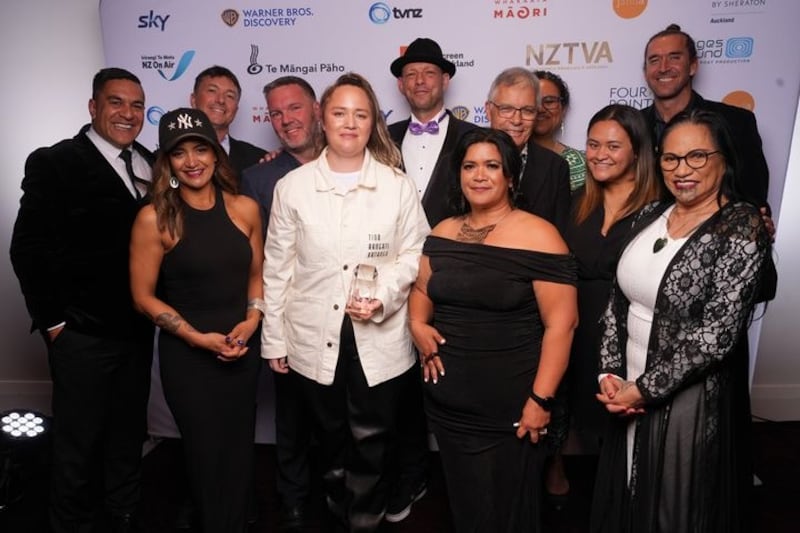
It showed up again in the awards space in 2025. Both the NZ Television Awards and the Voyager Media Awards celebrated mainstream organisations for storytelling approaches Māori media have used for years, long-form reporting, lived-experience narratives, and placing people at the centre. The kaupapa wasn’t new. What changed was who told it.
That landed heavily in kōrero with Māori journalists. Not because awards are the point, but because the pattern is familiar: when Māori tell our own stories, we’re framed as advocates. When mainstream outlets tell them, it’s framed as excellence.
That’s not accidental. That’s gatekeeping too.

Through my doctoral work on decolonising Māori storytelling and through sector kōrero this year, one thing has been reinforced: Māori storytelling doesn’t sit outside politics, power, or history. It never has. Our reporting carries whakapapa in both people and stories, a simple concept but one that, if you know, you know. If you don’t, you don’t. Ditto with concepts of kōrero tuku iho, reo tuku iho, and Māori worldview. Māori journalists understand events as part of longer arcs shaped by colonisation, resistance, and survival.
That brings obligations non-Māori journalists can’t fathom.
We use reo Māori even when it draws complaints. We allow silence when others want soundbites. We resist false balance, even when it would make life easier. Those aren’t stylistic choices. They’re editorial decisions with a Māori worldview.
Māori news isn’t about speaking for Māori. It’s about speaking with Māori. Our audience isn’t abstract; it’s whānau, hapū, and iwi who will live with the consequences of how stories are told. The future generations will look back and decide whether we did our jobs properly. Waiho ki a rātou.
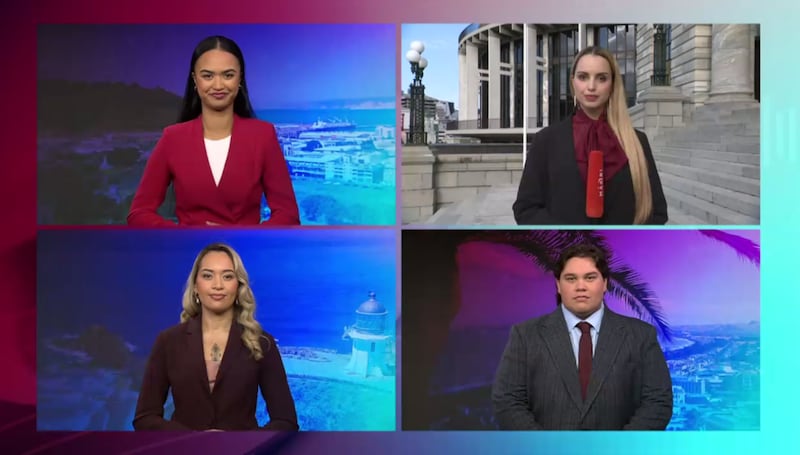
As News Editor, I see the work that goes into that every day: reporters carrying trauma with care, producers holding tikanga under pressure, camera operators knowing when not to film, editors making calls that don’t fit neatly into ratings or awards criteria.
So let me say this plainly: Māori news is not a genre because our lives aren’t a genre. Our realities aren’t always positive. Our stories aren’t always comfortable.
And if that makes some people uneasy, Māori and non-Māori alike, then we’re probably doing our jobs properly. Nō reira, ki konei whakaoti ai ngā kōrero. Mā te atua koutou e manaaki i ngā hararei. Meri Kirihimete ki a koutou katoa.
