

This article was first published on RNZ.
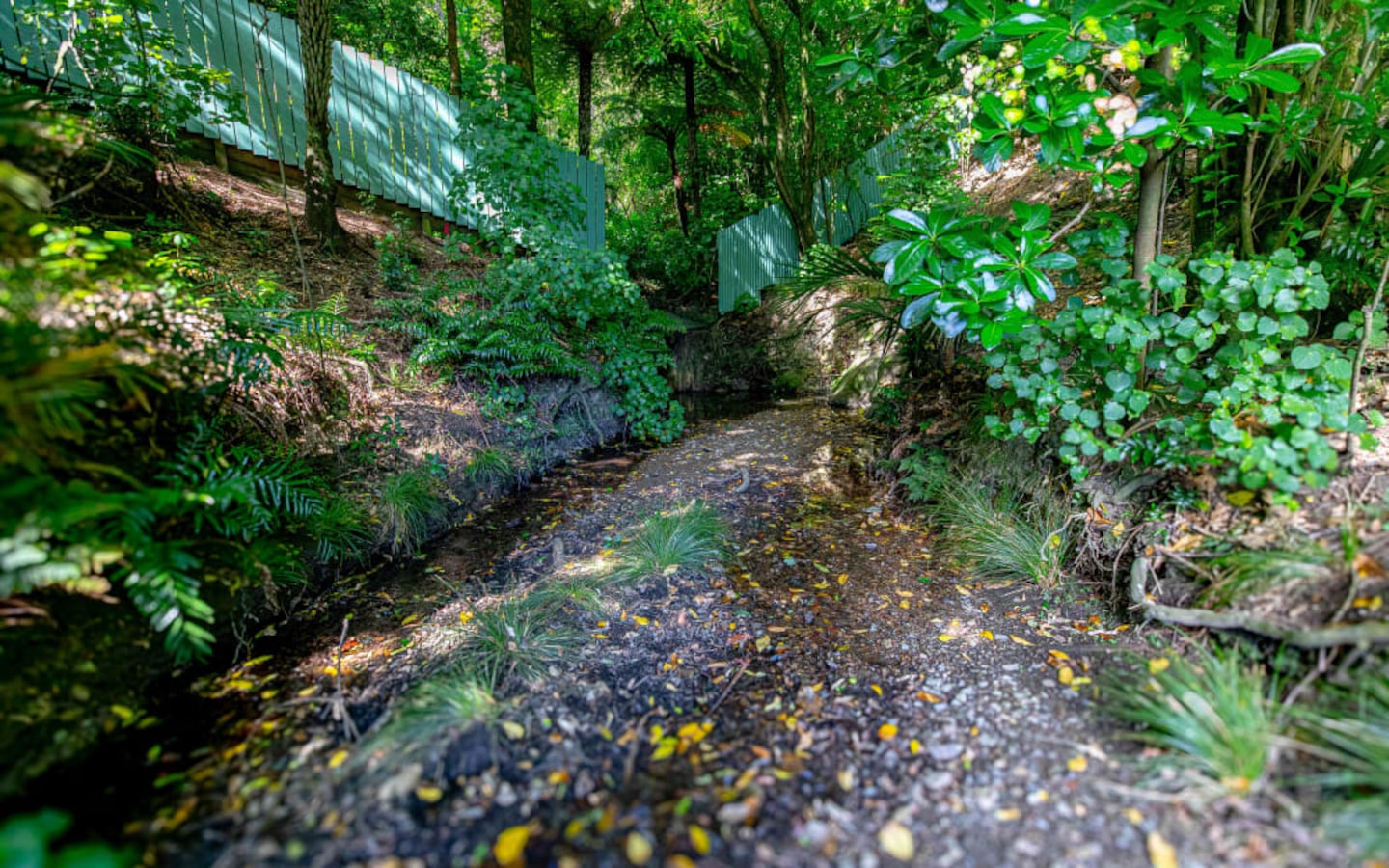
These days only one small section of the Kumutoto stream still flows above ground, the rest is culverted and piped running under the motorway and central city streets before emptying into the harbour.
Where the stream once met the harbour was also the site of one of the main Māori villages in central Wellington, also named Kumutoto.
The manager of Māori heritage recognition and engagement at Heritage NZ, Dennis Ngawhare (Taranaki), said it was just one of many waterways Wellingtonians walked or drove over every day.
“One of the fascinating things with the Kumutoto is that, despite it being buried and culverted and piped from the 1860s onwards, it still leaves its presence in the landscape,” he said.
Heritage NZ has designated the sole remaining above ground section of the river in the Kumutoto forest near Victoria University of Wellington as a Wāhi Tīpuna on the New Zealand Heritage List.

“But regardless of whether you can see the awa or not, you can really see its influence on the landscape and how the city was built around it and over it. And that, unbeknownst to most people in Wellington, that underneath our feet this river is still flowing, albeit through the old pipes and culverts that have been developed over the century and a half at Wellington has been here,” Ngawhare said.
Native fish such as kōkopu, kōaro and perhaps even tuna (eels) still swim in the waters of the Kumutoto, at least in the part in the open air.
Ngawhare, paraphrasing the poet and scholar Dr Alice Te Punga Sommerville, said “no one has told the eels to stop acting like eels.”
“We can bury our streams in pipes and culverts, but eels and other fish life are still going to find their way up and in. And so I think it’s, for any waterway, it’s a really positive sign when we’re seeing life in our streams. And especially in central Wellington, a central city stream, we’re still seeing life.”
The path of the river
Ngawhare remembers while doing his undergraduate degree at Victoria University sitting outside on the marae at Te Tumu Herenga Waka he could hear a “bubbling brook” where there was none visible.
He asked one of the university’s kaumātua who told him that was the Kumutoto, that is where his interest in the awa began.
The stream begins beneath Pukehinau Ridge, in the area now occupied by Te Herenga Waka - Victoria University of Wellington.

“And so from essentially under the marae at Te Herenga Waka, but down the middle of Kelburn Parade is the culvert or the pipes that kind of gathers all that water from the water table. It flows down Kelburn Parade to a sharp right at Salamanca Road. And those of you who’ve been to Wellington and Victoria University and on Kelburn Parade in Salamanca, it’s quite a sharp right-hand bend. And that essentially, when the road was developed, it followed the course of the awa itself. And just, again, giving shape to the roads that have been built that we travel upon,” Ngawhare said.
From there, it drops down beneath the Kelburn Tennis Court into the Kumutoto Forest, which is a part of the Wellington town belt.
From the glade it then enters into another culvert that runs alongside the Terrace Tunnel and underneath the Northern Motorway. Then cuts to the right underneath The Terrace out to Woodward Street.

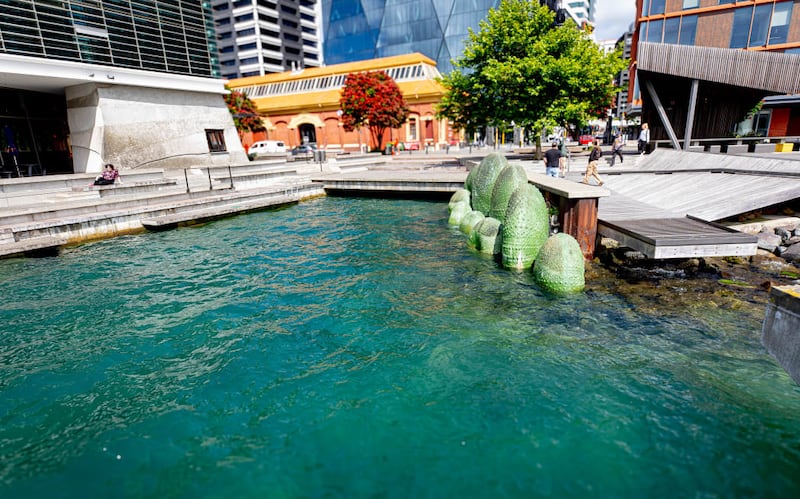
It then exits out to Lambton Quay, which was once the waterfront of Wellington, and crosses over several roads out to the harbour at what is now called Kumutoto Plaza.
Ngawhare said you could still see the influence of the Kumutoto on Wellington’s streets, like where the Terrace Tunnel plunges into the gully which now contains the motorway.
The entire path of the river from the university to the harbour can be traversed in about an hour and a half, he said.
“It’s just a real fascinating juxtaposition of coming from the university into the bush and then exiting out on the motorway, travelling underneath tunnels and just following the path of the awa. It’s a really interesting and fascinating walk.”

Kumutoto Papakāinga
Established by Wi Piti Pomare of Ngāti Mutunga in 1824, Kumutoto Pā was a settlement founded at the old mouth of the stream, where Woodward Street and The Terrace meet.
In 1835, ownership was passed over to the tupuna Ngātata-i-te-rangi of Ngāti Te Whiti, Te Ātiawa. Ngawhare said when Ngāti Mutunga left Kumutoto they ritually burned their houses, thereby relinquishing their claim.
“The Kumutoto Papakāinga itself was only occupied for around 30-odd years, but it was quite a significant settlement at the time, not only for the people that were living there, and there were multiple other settlements around the harbour settled by refugees from Taranaki,” he said.
“But the Kumutoto itself was also the heart of the Wellington flax trade, and so flax traders had set up for a few years there at Kumutoto, and that was an important part of the early trade development from Te Whanganui-a-Tara, that Māori were engaged in with English traders.”
By around 1852, most people had moved from Kumutoto and relocated themselves to other places in the region such as Ngauranga, Petone and Waiwhetu, he said.
Ngawhare said the name Kumutoto is said to refer to Māori birthing practices. It was known as a place where the wāhine of that early settlement period would go to have their children.

Daylighting
When asked if the Kumutoto could potentially be “daylighted,” ie making the stream visible again, Ngawhare said regardless of what humans do to redirect and to bury waterways, water will always find a way.
He said there had been talk of daylighting other streams, like the Waitangi stream also in Wellington or the Horotiu which runs beneath Auckland’s Queen Street.
“It would be difficult. And for some of these streams, infrastructure won’t really allow us to do it. But wouldn’t it be great to be able to see these streams flowing through our cities again?”

And while it may initially seem impossible it has happened in other cities around the world, such as in Seoul where an elevated motorway was removed in order to daylight the Cheonggyecheon stream, which has since become a popular park.
Ngawhare said one important process of listing the stream at Heritage New Zealand, was not only to acknowledge its historical significance, but it was also an opportunity to recognise the significance and importance of the waterway itself, so that perhaps in the future that people may look at daylighting this stream and other streams that there is a body of evidence there.
By Pokere Paewai of RNZ.
