


Hohepa Thompson, also known as Hori, with one of the dog whistles he made in protest at politicians' race baiting. Photo / Supplied
By Virginia Fallon, Stuff
With the political footballs of reo, Māori and perceived race-based policies well in play, Virginia Fallon finds the recent rhetoric around road signs isn’t so recent at all.
One by one, the National Party’s politicians were stopped at a road sign.
Just minutes before they’d been coasting along a corridor, but then they were stalled and quizzed whether they could either read or understand what the sign meant.
“I could,” said Judith Collins. “I would,” said Shane Reti. “I can,” said Simeon Brown.
“You brought it up,” their leader Christopher Luxon told a reporter then turned away, refusing her follow-up question.
When the politicians were pulled over in a parliamentary corridor earlier this month, their abridged responses belied just how tricky they found both the question and the mental gymnastics involved in answering it.
Clutched by reporters, the sign read "Te Ara Puaki Expressway”, a pointed exercise coming just days after Simeon Brown had declared the party would ditch bilingual signs if elected in October.
"We all speak English, and they should be in English... It's going to be confusing if you add more words," he told a Tauranga public meeting, adding that place names were OK.

Examples of proposed bilingual traffic signs in English and te reo supplied by Waka Kotahi. Waka Kotahi / Stuff
Brown’s comments followed the release of bilingual traffic signs for public consultation, in a project led by transport agency Waka Kotahi and Te Mātāwai. The proposal would see new signs introduced as existing ones need to be replaced in an effort to ensure te reo is more visible in Aotearoa.
It would also bring the country into alignment with global trends. Currently, the only countries that typically don’t feature indigenous languages on signage are Australia, the US and ours.
In the Republic of Ireland, where the population’s similar to Aotearoa, it's been compulsory for signage to exhibit both Irish and English since 2008.
Meanwhile, back at that Parliament pitstop, Luxon said the Government should be focusing on potholes, commute times and safer roads. The fact that signs were even being talked about proved its priorities were all wrong, he said.
And as for the reporter’s question that the National leader wouldn’t answer: “who was talking about signs before the National Party started talking about them?”
The answer, of course, is nobody much. But nearly 20 years after the divisive rhetoric of Don Brash’s Ōrewa speech boosted National up the polls, some politicians still believe that when all else fails, race-baiting prevails.
ActionStation director Kassie Hartendorp (Ngāti Raukawa) says right now that’s evident in the discourse around not just bilingual signage but the attempts to use public fears about perceived Māori separatism and Te Tiriti obligations.
“We’ve definitely seen an upturn in race-baiting: let's call it for what it is. This behaviour deliberately stirs up racism and is actually causing a division putting us further and further behind in our race relations.”

Kassie Hartendorp: “We’ve definitely seen an upturn in race-baiting; let's call it for what it is.” Supplied / Stuff
Hartendorp says race-baiting is all too often disguised as “innocent issues of democracy”, but that’s a misnomer.
“We’ve had a treaty in place for 200 years... It’s time we just started living as if that’s our reality rather than fighting back time and again in order to get power.”
Ultimately, race-baiting diminishes Māori lives by making them a danger to everyone else in society, she says.
“It’s not true; it's a deliberate manipulation in order to gain votes and that’s why we see it every election.”
Hartendorp isn’t alone in pointing out the attempts to stir up racial disharmony in the lead up to this year’s election, just as traffic signs aren’t the only form in which reo is being targeted.
Recently, Luxon said there is “a problem” with the level of te reo Māori used in government departments; the same sentiment used by NZ First’s Winston Peters in his bid for power.
Using the tagline “take our country back”, Peters thrilled a Grey Power meeting with his promises “to change all the woke virtue signalling names of every government department back to English”.
Adding to that, he also criticised the Waitangi Tribunal and questioned the blood quantum of Māori.

Don Brash was pelted with mud in protest of his 2004 speech. John Selkirk / Stuff
And although Peters’ comments came in March, just this week opposition parties were accused of trying to whip up racism over a tool prioritising surgery wait lists based partly on ethnicity.
On Friday, ACT issued a press release about a petition to end so-called race-based wait lists while just a few hours later Don Brash was back, popping up with a nomination for a new Race Relations Commissioner – not that anyone was asking.
Nevertheless, despite championing a female Māori member of his lobby group, his press release heaved with words like equal rights; equal representation; race and ethnicity. As did the quotes from his candidate.
But it’s not just the opposition parties being accused of race-baiting tactics. Last week, both Prime Minister Chris Hipkins and Luxon were criticised for using the death and tangi of an Ōpōtiki Mongrel Mob member to grandstand on law and order.
“It’s become a political football,” the town’s mayor David Moore said of the issue.

Hohepa Thompson, also known as Hori, has created a "political football" and dog whistle to protest politicians' race-baiting. Supplied / Stuff
While that’s a term brandished in every election year, one artist is going further and making actual political footballs in protest.
Hohepa Thompson has designed a limited run of footballs emblazoned with tino rangatiratanga colours and carrying the words ‘Māori’, ‘co-gov’, ‘te reo’ and ‘Hori’ on their sides. The latter is a both a slur used for Māori and Thompson’s adopted moniker.
“Māori are always used as political footballs and this year it's really ramping up,” he says. “It’s so divisive and it’s every week; all for political gain.”
A passionate champion for te reo, Thompson says the opposition to bilingual signs isn’t just racism and dog-whistling in play; it’s an issue that’s long had an undercurrent in Aotearoa.
In 2021, he put a sticker bearing the reo word for rubbish – rāpihi – on the council bin outside his Ōtaki studio. The move was part of promoting the language in a place long tipped to be NZ’s first official bilingual town and home to a high percentage of reo speakers, Te Wānanga o Raukawa, and two Māori immersion schools.
When the sticker was removed by a member of the public, Thompson replaced it and for weeks the cycle continued. Ultimately the entire bin was taken by the Kāpiti Coast District Council following a complaint.
“We’ve always had a problem with Māori signs,” Thompson says, pointing to what’s commonly known as Transmission Gully as an example.
“Te Ara Nui o Te Rangihaeata - where’s the sign saying that?”

The macrons from Kāpiti’s welcome signs have had to be reinstated 16 times since January 2020. Joel Maxwell / Stuff
In Kāpiti, that problem with Māori signage is highlighted by the district’s long-running issue of macrons being removed from its two welcome signs.
Since January 2020, those missing macrons have been reinstated 16 times by the council and, in 2021, spurred an anonymous group to add duct tape macrons to shop and street signs across the district.
But macron removal or addition aside, Kāpiti has had a much bigger problem with te reo signage; an issue about to resurface again.
In 2017, the council was tasked with finding a new name for a section of state highway, a nearly 18km corridor set to become a local road when surpassed by the district’s new expressway.
Local historians and iwi representatives ultimately gifted seven Māori names for seven different sections: Hurumutu was one, Kākākura another.

Former Kāpiti mayor K Gurunathan says there’s no way he’d have been elected if he was Māori. Ross Giblin / Stuff
Back then, nearly 600 public submissions flowed in with objections ranging from the names being “unpronouncable” to claims it was all “political-correctness gone haywire”.
"I'm not a racist,” said Paraparaumu man Mike Judd at the time, summing up much of the community sentiment. “I've just come back from a family reunion where there's a very big percentage of Māori, in my family."
Still, the country needed to stop "looking back over our shoulders" at past history and move on, he said.
Six years and $100k in consultation costs later, not only has the council not yet named the road, it doesn’t know when it will or even what it will be called.
Officially, it says the project was delayed until Waka Kotahi completed the revocation process, something council group manager Sean Mallon says is still the case. No decisions have been made on whether those original names will once again be up for debate.
But with Waka Kotahi expecting that to happen in the next few months, mayor Janet Holborow says it's an issue that can’t be put off much longer, and she’s hoping it won’t be so contentious this time around.
Asked what was behind the 2017 furore, Holborow chooses her words carefully.
“I think some of it came from a lack of confidence from some in the community to be able and pronounce and use the names. I'll go that far.”
Now, the council is hoping to have “a more positive conversation” with residents, having let the dust settle a bit.
”My first thought is the community has moved on a lot since 2017. We have moved on as a council in terms of our relationship with mana whenua and the community has a deeper understanding of the history and significance of some of these areas.”
Former Kāpiti mayor K Gurunathan says the issue was a “political hot potato” during his term and the delay meant it had had time to cool down.
“What I didn't anticipate is for that delay to fester and run up to the elections where dog-whistling, race-baiting and the argument over co-governance has become so acute.”

Last month Caleb Robinson said he was kicked out of Timaru’s Old Bank Cafe and Bar because of his moko. John Bisset / Stuff
Like Holborow, he stops short of describing the backlash as racism, instead pointing to the district’s demographics as a potential explanation.
“We’ve got 26% of people over 65 – like myself - who are much more set in their old ways and find the changing world more of a challenge. That’s just part of being old.”
Even so, this is the Malaysian-born man who previously admitted to lightening his skin on election billboards and said Kāpiti would never have elected him if he was Māori. Does he still thinks that’s the case?
“Yes, other minorities like myself do not cause a systemic cultural challenge to the mainstream. Māori have a treaty, a partnership clause that gives them equal status as the cultural majority. That power frightens people; scares the mainstream.”
In 2021, research revealed that 93% of Māori in Aotearoa experienced racism every day while even more - 96% - said racism was a problem for their whānau.
The Whakatika Survey of 2000 Māori found 89% were less likely to receive assistance when shopping or seeking services and most had been followed, watched or asked to open their bags in a shop.
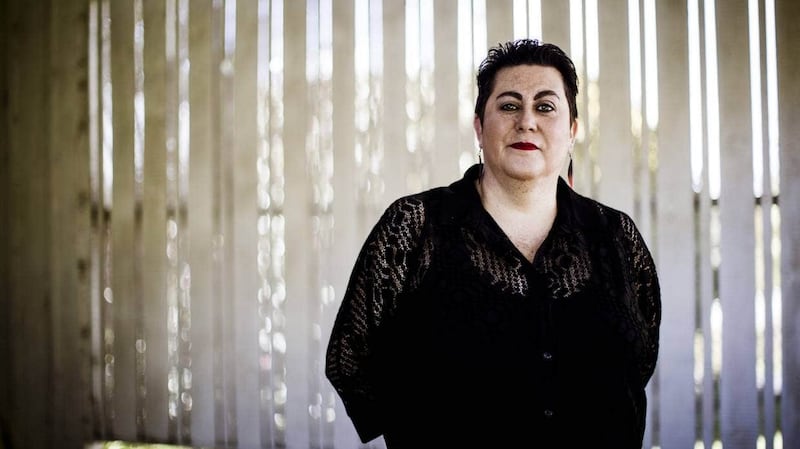
Khylee Quince: “NZers are so lily-livered about their racism. Rather than just saying ‘I don't want Māori on the signs’ they say ‘it’s not safe’ or ‘nobody will understand’.” David White / Stuff
A total of 87% had seen other Māori being treated unfairly in shops and of the 71% of those with a Māori name, most had to explain or spell it regularly.
Associate Professor Khylee Quince, dean of AUT’s law school, says whether it’s disguised as being about signs, crime or health, the rhetoric currently being used by politicians is undeniably dog-whistling to a small but reflective audience.
“NZers are so lily-livered about their racism,” she says.
“Rather than just saying ‘I don't want Māori on the signs’ they say ‘it’s not safe’ or ‘nobody will understand’. Own your dumb views, don't pretend there's another reason for it.”
Quince (Ngāpuhi) says that when it comes to traffic or any other signs, not only does every little bit of visible te reo help the language, it’s also an obligation under Te Tiriti o Waitangi.
“The Crown has a duty to do that; in a legal sense Waka Kotahi has to do it.”
Ultimately though, her vision for the future is the same shared by Guru, Thompson, Hartendorp and the vast majority of NZers heading to the polling booths this year.
“What we’re hearing are only the dying squeals of a demographic that won't be representative of Aotearoa in 20 years time. I can’t wait.”