
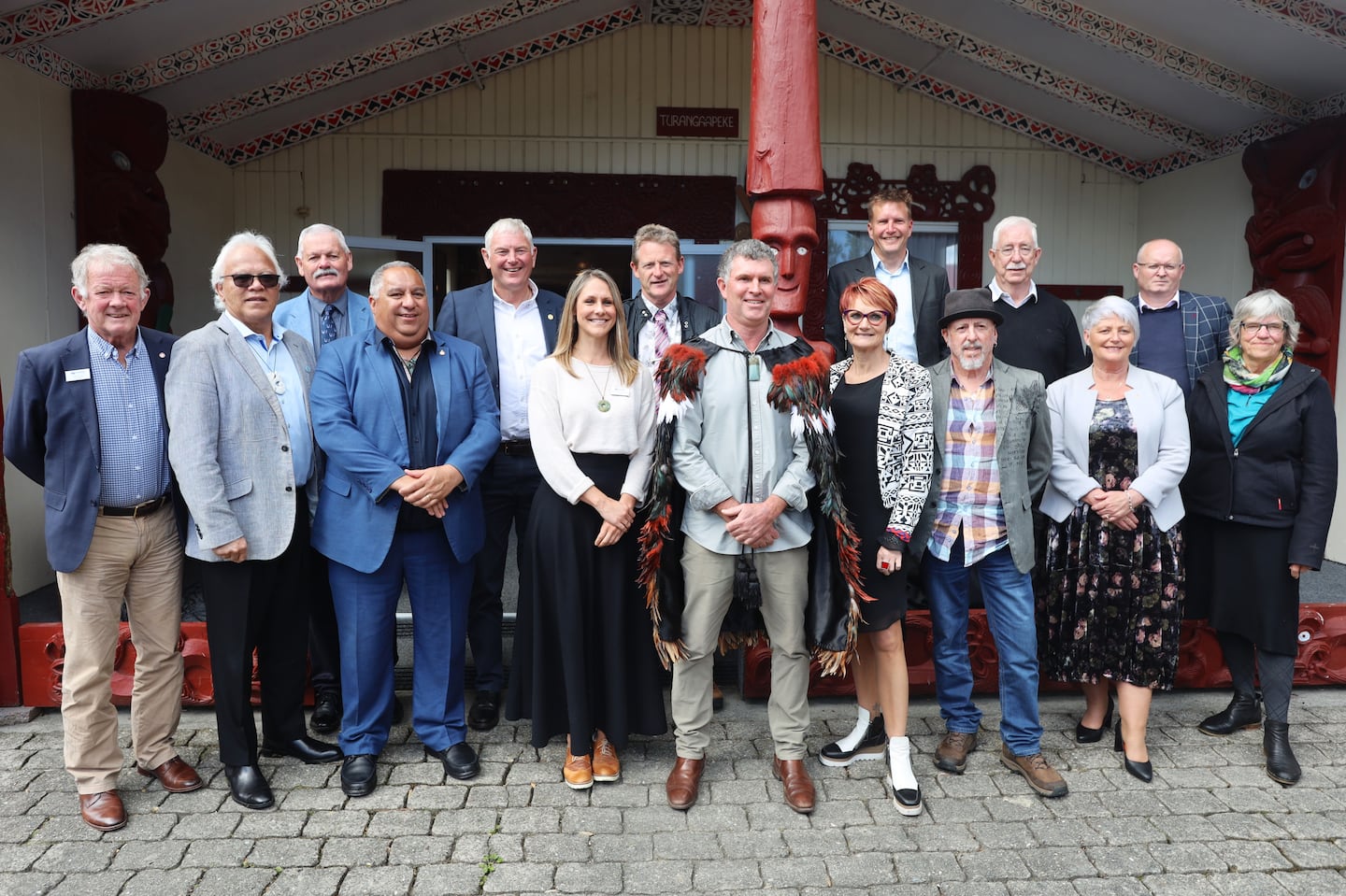
Iwi representatives will be able to sit and vote in Tasman District Council’s committee meetings, but not all councillors were on board with the idea.
The council was almost evenly split when the matter was voted on during Thursday’s meeting, with seven votes in favour and six against.
As a result, one iwi representative will sit on the full council and won’t have voting rights, while the single iwi representatives sitting on two council committees will be able to vote.
The Environment, Regulatory, and Operations Committee deals with managing natural and physical resources, while the Strategy, Finance, and Performance Committee has wide-ranging responsibilities, including culture, climate change, and environmental policies.
Iwi representatives held seats and voting rights on council committees last term, but only one of the seats was filled during the triennium.
The Iwi Chairs Forum for local iwi has already nominated representatives for each of the three roles for the current council term.
Councils have legal obligations to provide opportunities for Māori to contribute to decision-making processes, though council staff advised elected members that iwi representatives were not the sole method the council had to meet those legislative requirements.
Tasman District Council, alongside the Nelson and Marlborough councils, also signed a partnership agreement with the eight iwi of Te Tauihu (the Top of the South) and has additionally committed to the iwi representatives in its current long-term plan.
Nevertheless, the prospect of including iwi representatives with voting rights was not welcomed by several councillors.
Councillor Dean McNamara likened iwi to “lobby groups” and did not agree with giving iwi representatives voting rights.
“I don’t have a problem with them lobbying their interests… However, when it comes around the table, they are voting in their interests. They’re not sworn to vote in the interests of the whole community as we are.”
Councillor Mark Greening said the roles should be consistent, with none having voting rights, solving the “conflict” raised by Dean, while still allowing them to contribute to discussions.
However, he was still opposed to the iwi representatives because Māori were already guaranteed representation in the council chamber through the presence of the district’s new Māori ward councillor.
“To appoint them now undermines the value of the Māori ward.”

In the 2025 local election, 53% of Tasman voters opposed the Māori ward, which will be disestablished for the 2028 triennium.
Mark suggested that that would be a more appropriate time to appoint the iwi representatives.
Iwi representatives are different to Māori ward councillors, who are elected by voters on the Māori electoral roll and are required to act in the best interests of the whole community.
Māori ward councillors may, but are not required to, bring a te ao Māori lens to council issues.
In contrast, iwi representatives are nominated by regional iwi and can represent their views while bringing additional te ao Māori perspectives.
Deputy mayor Brent Maru defended the iwi representatives, saying the “lobby group” analogy was “offensive” and suggested that iwi were interested in ensuring the region could be “the best that it can”.
“We’re looking at the continuation of a partnership that has taken some time, some years, and a lot of work from both sides,” he said.
“This is about governance and diversity of views and skillsets around this table to have the right information to make decisions, and to do that on behalf of all of our district.”
Councillor Kit Maling has worked alongside iwi representatives on regional sewerage matters and said the cost of remunerating the appointments – $13,000 each per annum – was small compared to the “massive value” they bring to council work.
“They really help us with our value, and with understanding their cultural perspectives in how we operate.”
Councillor Jo Ellis agreed.
“What has turned out good for Māori has turned out very good for the rest of the population as well. I value that input around the table. To me, it is the most efficient way of getting the view of local iwi.”
Councillors Mark Hume, Mark Greening, Mike Kininmonth, Dean McNamara, Trindi Walker, and Dave Woods voted against the iwi representative roles.
But councillors Celia Butler, Jo Ellis, Kerryn Ferneyhough, John Gully, Kit Maling, Paul Morgan, and deputy mayor Brent Maru outnumbered them by one vote.
Mayor Tim King and councillor Timo Neubauer were not present.
Te Rūnanga o Ngāti Toa’s environmental relationships manager Matt Hippolite presented to the council in public forum at the beginning of the meeting.
He said that Ngāti Toa, and the other Te Tauihu iwi, had invested significantly in the region.
“That’s where our people are, and that’s where we want our people to return to,” he said.
“We will still be here in a hundred years. We have long memories, but we also have aspiring visions. We’re here to help this community grow and develop.”
Local Democracy Reporting is local body journalism co-funded by RNZ and NZ On Air