
A bill aimed at embedding health targets into the country’s health system is facing strong criticism from Māori health advocates and opposition MPs, who say it weakens Te Tiriti obligations and sidelines Māori decision-making.
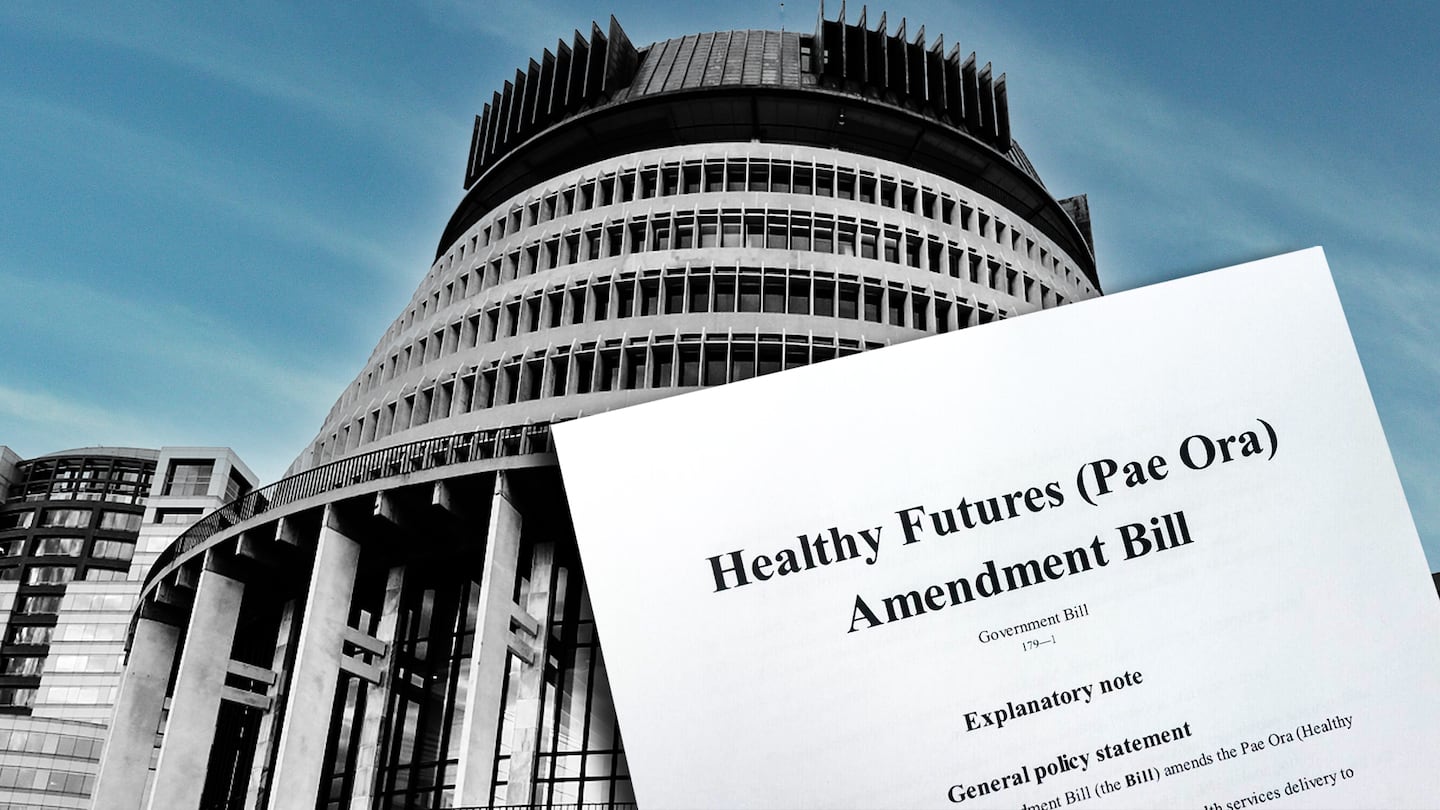
The Healthy Futures (Pae Ora) Amendment Bill, formerly Pae Ora (Healthy Futures), entered its second reading in Parliament this week, led by Health Minister Simeon Brown.
The Government says the changes are needed to improve performance across the health system, but many Māori argue the bill continues the dismantling of Māori-led health reform following the disestablishment of Te Aka Whai Ora, the Māori Health Authority, in 2024.
Wai 3307, the urgent Waitangi Tribunal inquiry into the disestablishment of Te Aka Whai Ora (The Māori Health Authority), claimants Lady Tureiti Moxon and Janice Kuka, say the legislation fails to address longstanding inequities in Māori health outcomes.

“The Select Committee process has delivered almost no meaningful changes,” Lady Tureiti said in a statement.
“The Bill retains universal health targets, advisory-only Māori committees, and a focus on buildings and private providers over communities. Nothing addresses the issues we raised about Māori decision-making, equity, or tino rangatiratanga.” She said.
The claimants argue the reforms further weaken Māori influence within the health system by limiting the role of iwi and Māori partnership boards and removing key Tiriti-based principles from legislation.
Janice Kuka said the direction of the reforms was clear.
“This is not a technical tidy-up or a neutral update. It continues and deepens the dismantling of Māori-led health reform initiated with the disestablishment of Te Aka Whai Ora. The Bill replaces Māori decision-making with Crown-appointed bureaucracy and entrenches inequity.” She said.

Te Tiratū Iwi Māori Partnership Board Co-Chair Tipa Mahuta said the amendments would sideline iwi authority in the health system.
“This government talks about strengthening Māori voices, but these amendments sideline our authority. Iwi Māori Partnership Boards exist to ensure equity and accountability in health, not just to provide advice when convenient. We need genuine power, not paper pathways,” Mahuta said.
Mahuta said weakening Section 30 of the Act would reduce Māori decision-making and strip away Te Tiriti protections.
“Our reports clearly show that iwi-led solutions improve access, outcomes, and efficiency across health services. From chronic disease management to cancer screening, the evidence demonstrates that local, Māori-led planning works. Yet the proposed reforms ignore this capability entirely.”
Te Tiratū represents more than 121,000 Māori across the greater Waikato region and is one of 15 Iwi Māori Partnership Boards nationwide.

Green Party MP Hūhana Lyndon echoed those concerns, warning the amendments amount to a retreat from embedding Te Tiriti in the health system.
She describes them as an “erosion” of the original intent, undermining the holistic vision that was designed to transform hauora outcomes.
“Mehemea ka kite iwi kua panoni ko tēnei te ingoa o tēnei ture mai i te Pae Ora ki te Healthy Futures, Pae Ora, he takahitanga i tō tātou reo Māori, he rawe kētanga anō i te Tiriti o Waitangi ki roto i ngā ture o te kāwanatanga,” Lyndon said.
She said the bill weakens Māori perspectives within the health system.
“Kua panoni katoa i tēnei wā, kua ngoikore te tirohanga Māori ki roto i tēnei ture.”
Lyndon also criticised the process behind the changes, saying many communities were unaware of the scale of the reforms.
“Ko tētahi o ngā raru o tēnei pire he mahi huna nā tēnei kāwanatanga, nō reira rawa tō tātou iwi e tino mōhio ana ki tēnei panonitanga nui mō te pūnaha hauora.”
Health Minister Simeon Brown rejected claims the bill undermines Māori health, saying the focus of the legislation is improving outcomes for all New Zealanders through clearer system targets.
“This government’s focused on improving health outcomes for all New Zealanders, including Māori,” Brown told Te Ao Māori News.
“It puts in place health targets at the heart of our health system.”
Brown said the previous government had removed health targets, which he argues contributed to declining performance across the system.

When pressed by Te Ao Māori News on how this bill plans to cater for the different needs, and disproportionate impact on health outcomes of Māori, he maintained and repeatedly argued that the amendments aim to cater to all New Zealanders.
“The last government removed health targets, and delivery went backwards for all New Zealanders, including Māori.
“We are focused on improving health outcomes, and this bill does that by putting health targets back at the centre of our health system,” Brown said.
The Minister also addressed long wait times for treatment and stated that improving immunisation rates was a key priority.
Brown says, “Ultimately, we want all New Zealanders to have a health system which works for them. We want all New Zealanders to be able to be seen faster and get the treatment that they need.”
Brown acknowledged that different communities may require tailored approaches but maintained the Government’s focus on a single national health system.
“We are focused on having one health system for all New Zealanders, which works to deliver better health outcomes for all New Zealanders,” he said.
“But of course there will always be targeted approaches for different groups,” Brown said.
Lady Moxon argues that the reforms risk repeating past failures and rely on universal targets that do not address entrenched disparities.
The claimants behind the Wai 3307 case say recommendations from the Waitangi Tribunal’s landmark 2019 Hauora report, including Māori-led commissioning and stronger Tiriti-based governance, remain largely unimplemented.
They are calling for urgent action to restore what they say would be a Te Tiriti-compliant health system capable of delivering equity for Māori.