

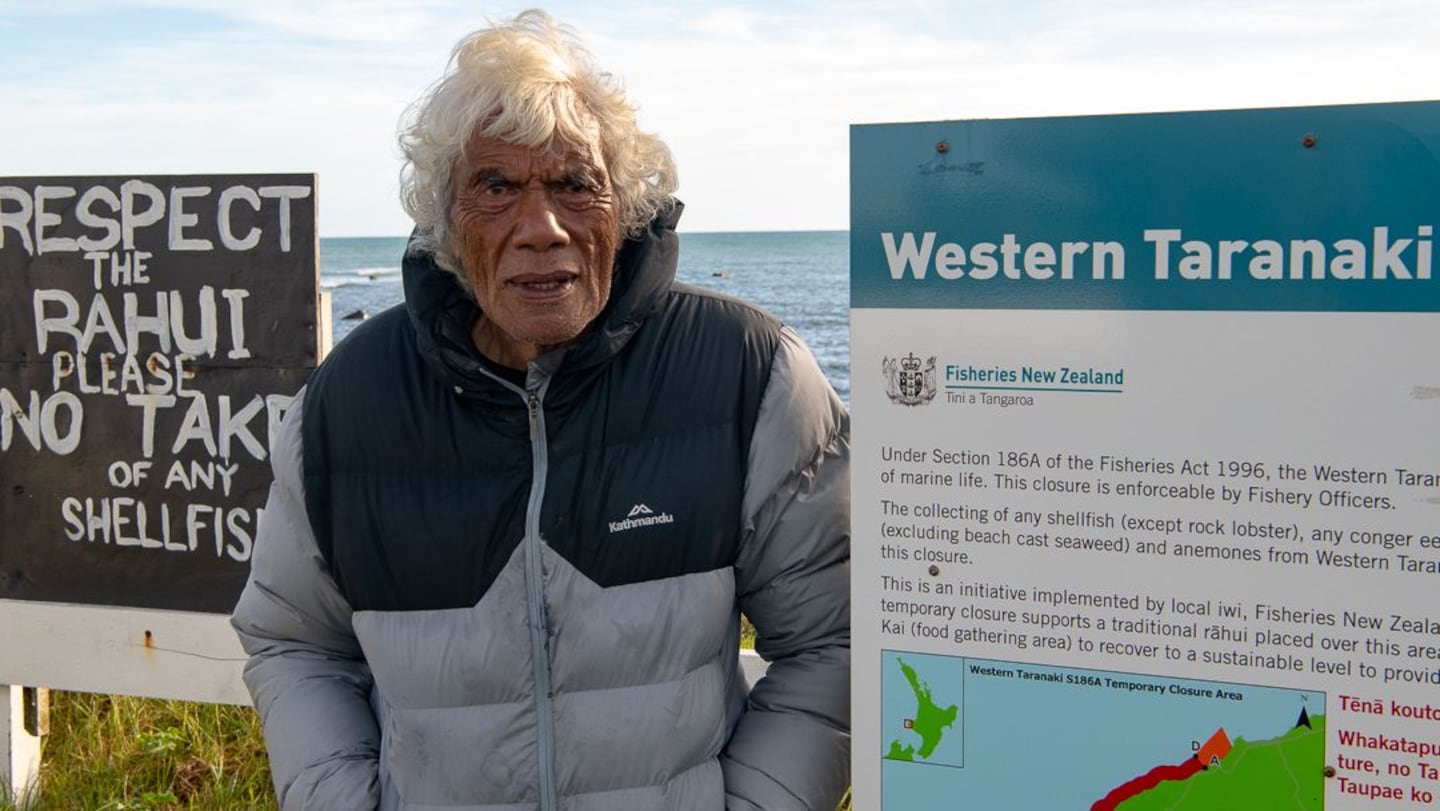
Hapū of Taranaki iwi say they’ll join with the wider community to manage kaimoana reserves planned for the region’s depleted western coast.
A four-year official ban on collecting shellfish from New Plymouth to Ōpunakē expires in December.
The hapū want to replace the temporary prohibition with mātaitai reserves – specific areas legally regulated by mana whenua to protect particular reefs, spawning grounds and the like.
Although hapū are leading the push to protect ravaged kaimoana, kaumātua and spokesperson Mahara Okeroa said everyone needed to share the responsibility, irrespective of ethnic origin.
“If we do get to the mātaitai reserves, then there’s a new ball game in which the community and the iwi and hapū will determine the key outcomes of the reserves,” Okeroa said.
“Looking after of Tangaroa is a principle that will involve everyone in the community, plus those people who are in the tribal organisations.”
Hapū experience and knowledge would remain core to managing mātaitai reserves under tikanga, along with wider community and scientific input.
Collecting kai might, for example, be allowed only seasonally, Okeroa said.
“The hapū have a right over their own area so … they can decide adjustments within their rohe.”
Okeroa said the existing ban under section 186a of the Fisheries Act must be extended because mātaitai reserves couldn’t be set up in time to beat the December deadline.
“If we lift the 186a ban … that would be disastrous, if there’s nothing in its place.”
The official ban began in December 2022, giving legal teeth to a rāhui that began a year earlier when Orimupiko marae placed the first customary ban around Ōpunakē.
Hapū were shocked by organised bus tours travelling to Taranaki to scrape seafood off the rocks.
It was the final straw after years of gathering by locals who also often ignored environmental or legal limits.
The rāhui spread hapū by hapū along 70 kilometres of coast before gaining government backing.
A 186a ban lasts for two years and was renewed in 2024.
Okeroa said organisers will this week apply to fisheries minister Shane Jones for another renewal – but it would only need to stand for 6 months to a year.
The hapū have applied collectively for rohe moana status– a coastal or marine area where mana moana and customary interests are legally recognised and protected.
Mātaitai reserves can only be established once a rohe moana is granted.
Okeroa admitted there was growing fatigue with the restrictions, and some were still going to the reefs for a kai.
“Let’s not just think about ourselves.
“We’re thinking about what measures do we have to take that are sustainable for generations that come after us, and what is the effect on the ecosystem out there?”
He said sceptics should realise Māori temporarily surrendered their legal right to collect kaimoana when the rāhui began five years ago.
Even under section 186a, each hapū could still allow gathering – but they unanimously promised not to issue any permits.
More than a dozen consultation and education hui are scheduled this year.
The next hui for marae, pā and hapū is at Te Pōtaka Pā, Rāhotu on Tuesday evening.
A community meeting last Sunday at Ōānui will be followed by another on June 28 at Ōākura, with more due to be promoted via Facebook.
LDR is local democracy journalism funded by RNZ and NZ on Air