

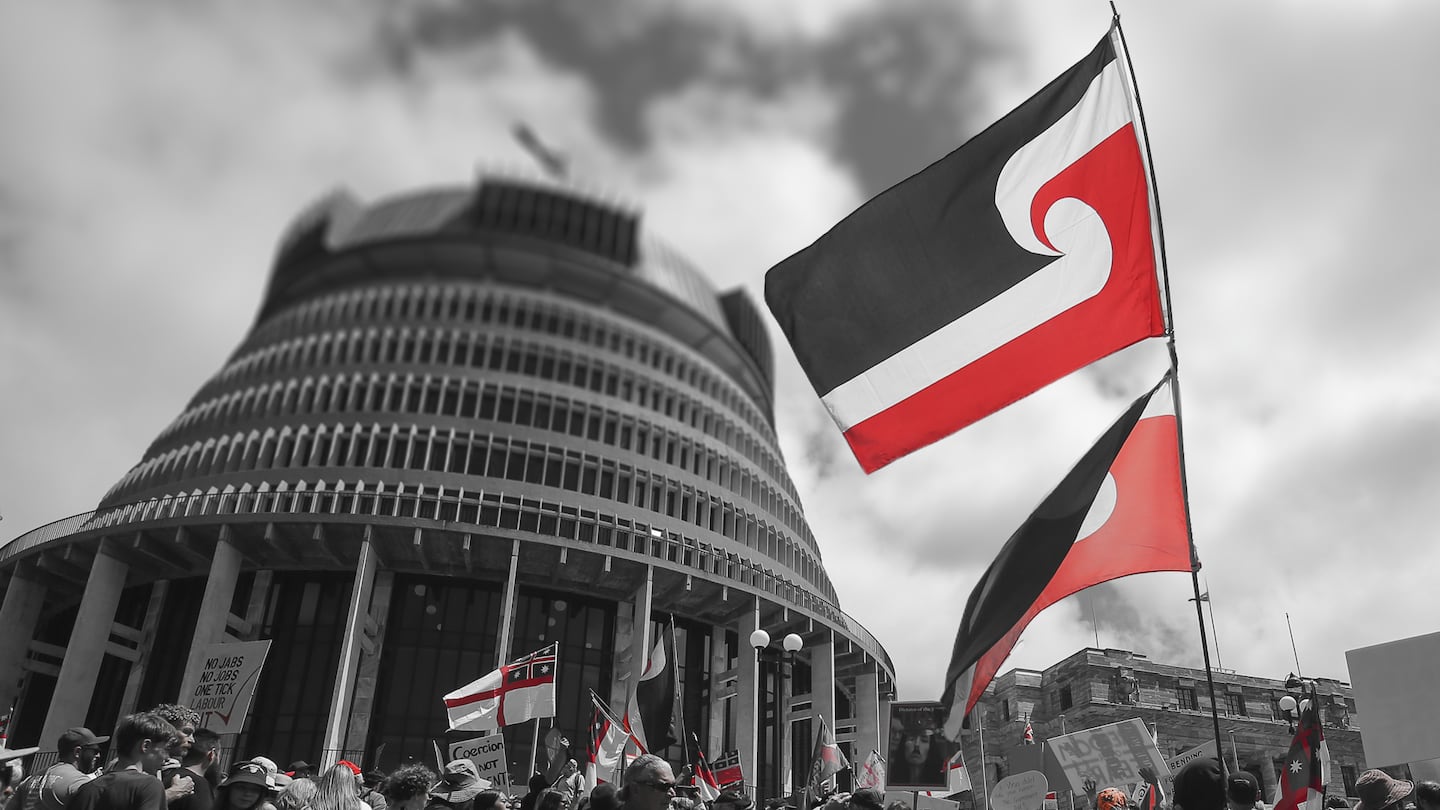
Te Kahu o Taonui has accused the Government of using Northland Māori as a political football after announcing plans to strip voting rights from non-elected members sitting on council committees.
The collective of Te Tai Tokerau iwi chairs says the proposed changes are not about strengthening democracy, but about removing Māori influence from local government decision-making.
Local Government Minister Simon Watts announced on Tuesday that the Government will amend the Local Government Act 2002 so only elected councillors can vote on council committees.
Watts said the changes were needed to strengthen democratic accountability, arguing that councillors are directly accountable to voters while appointed committee members are not.
The Minister pointed specifically to examples in the Far North, Tauranga and Hastings where non-elected members, including iwi representatives and people under the age of 18, have been appointed to council committees with voting rights.

“We’ve seen examples in the Far North, in Tauranga and in Hastings where individuals, such as iwi representatives and young people aged under 18, have been appointed to council committees and given voting rights without being elected by the community,” Watts said.
“That’s not democratic, so we’re fixing it.”
But Te Kahu o Taonui says the Government has deliberately singled out Māori participation to justify what it describes as a democratic rollback.
“Minister Watts has used our communities as a convenient prop to advance a pre-written ideological position. This is not about democracy - this is about silencing Māori voices in the rooms where decisions about our rohe are made,” Te Kahu o Taonui co-chair and recently announced Te Tai Tokerau Te Pāti Māori candidate, Aperahama Edwards said.
The changes would affect arrangements such as the Far North District Council’s Te Kuaka Māori Strategic Relationships Committee, which includes iwi and hapū representatives alongside elected members.
Te Kahu o Taonui says the committee was established through decisions made by elected councillors and reflects the demographic reality of Te Tai Tokerau, where Māori make up a significant proportion of the population.
The group rejects suggestions that Māori participation in council processes undermines democracy.
“Our participation reflects decades of Treaty partnership-building, legal recognition of our mana whenua status, and the practical reality that decisions about land, water, and environment in Northland cannot be made well without the knowledge we bring,” the collective said.
They also pushed back on the Government’s characterisation of the committee’s role, noting Te Kuaka is not a decision-making body and can only make recommendations to the full council.
According to its terms of reference, the committee exists to strengthen Te Ao Māori perspectives in council decision-making, support Te Tiriti-based partnerships between council and iwi and hapū, and improve engagement and shared decision-making practices.
Edwards questioned whether the Government’s understanding of democratic representation adequately reflected Māori communities.

“If accountability to voters is the standard, we ask the Minister, who are the councillors in Northland accountable to, if not the tens of thousands of Māori who live here? Democratic legitimacy does not stop at the ballot box.”
The proposed changes will be made through the Local Government (System Improvements) Bill, which is currently before Parliament. If passed, councils will have six months to review committee delegations and appointments before the new rules take effect.
The Government says statutory committees and appointments established through Treaty settlements will be exempt from the changes, along with appointments made under legislation outside the Local Government Act.
While the Government says statutory appointments and Treaty settlement arrangements will be exempt from the changes, Te Kahu o Taonui argues the wider signal is concerning.
The collective says the proposal sends a message to Māori that participation in civic life remains conditional and vulnerable to political change.
“We acknowledge the government’s position that Treaty settlement committees and statutory appointments will be excluded from this legislation. However, the message this sends to our rangatahi, to our hapū, and to future generations is clear: your presence in civic life is conditional, revocable, and subject to the political mood of the day.”
Te Kahu o Taonui is now calling on Watts to meet directly with iwi leaders before the legislation proceeds and is urging local authorities around the country to publicly defend the value of Māori representation in local government.
“We are not a political football. We are the tangata whenua of Te Tai Tokerau, and we will continue to exercise our responsibilities to our rohe - regardless of what Parliament legislates.”