

The Government is lowering the age for free bowel screenings in Aotearoa from 58 to 56 - a move it says will save lives.
But for patients like Cedric Rerehau, who was diagnosed with Stage 4 bowel cancer at 33, he says the change still comes too late.
“It’s just not enough,” he says.
“I just don’t think [the Government is] acting fast enough.”
Last month, the Government announced the change as part of Budget 2026, with more than $45 million going into the National Bowel Screening Programme.
For Rerehau, the announcement comes too late for many younger people developing bowel cancer.
‘I could’ve been dead’
After noticing symptoms, he went to the GP for a check-up. He says he was initially told it may be IBS, and to go to the emergency department if things got worse.

“I was diagnosed with my cancer at the ER at a ward via an emergency colonoscopy.”
A bowel screening test is free for eligible New Zealanders. Private at-home kits range from about $25 to $190, while colonoscopies typically cost $1,000 to $3,000 per procedure.
Rerehau says he was lucky to get the procedure because his original referral was declined, despite a strong whānau history of bowel cancer, which includes his grandfather and two uncles - one diagnosed in his 20s who died in his 30s.
“After I had already started [cancer] treatment, I received a letter in the postbox to say that I was declined for a colonoscopy while I was in the middle of treatment,” he explains.
“Had we waited on them, I could’ve been dead.”
Rerehau receives chemotherapy every fortnight and sees how these gaps affect young patients.
“I’m [next] to a person who’s not much older than I am, prognosis terminal, dying, and I just think it could have been avoided [had] screening been more accessible to people.”
‘Ka ora te tangata i ēnei panonitanga’
Health Minister Simeon Brown says the changes are expected to save hundreds of lives.
“Over the next 25 years, lowering the screening age to 56 is expected to prevent 638 bowel cancers and save 522 lives. Earlier diagnosis means faster treatment, better outcomes, and ultimately more lives saved,” Brown wrote in a statement.
He says the funding will provide more than 800,000 additional screening kits, increased workforce capacity, new diagnostic equipment and more than 6,000 additional colonoscopies.
During a pre-election debate in 2023, Christopher Luxon committed to lowering the free bowel screening age to match Australia’s age of 50, or 45 on request.
Brown says that hasn’t changed.
“We are committed to continuing to lower the bowel screening age to match Australia, but we need to ensure the health system has the capacity to deliver timely follow-up care and treatment,” he adds.
“That’s why we are taking a phased approach - expanding access step-by-step while building the workforce and infrastructure needed to support the programme safely and sustainably.

‘Me heke te pakeke māraurau o te Māori’
Māori health advocates say the new screening age still falls short.
From 2022–2025, Māori and Pacific people in Waikato, Te Tai Rāwhiti and MidCentral could access free bowel screening from age 50 through pilot programmes, which have now ended.
Louisa Wall, Chairperson of Tūwharetoa Iwi Māori Partnership Board (IMPB), says screening should begin earlier for Māori.
“It’s better than 60, but actually if we want to screen effectively for Māori, we should be screening from 50.”
Ministry of Health data shows 58 percent of Māori women and 52 percent of Māori men with bowel cancer are diagnosed before 60, compared with 27 percent of non-Māori.
She says Māori are often diagnosed later, reducing survival chances and placing greater pressure on the health system.
“We’re deferring prevention and treatment options for Māori, which means when we do engage, we’re so far down the pathway that we’re diagnosed at stage three and four.”
Peter Huskinson, Chief Executive of Bowel Cancer New Zealand (BCNZ), says the changes are a positive step, but still not enough.
“We have a real issue with avoidable deaths for bowel cancer in Aotearoa - around 10 extra deaths every year compared to Australia, who screen at age 45,” he says.
“Around a third of all non-Māori under 75, and a half of all Māori under 75, who are going to get bowel cancer, will get it at an age where they weren’t eligible to get the screening protection they need.”
“We’re kind of shutting the stable door after the horse has bolted because [we] screen so late.”
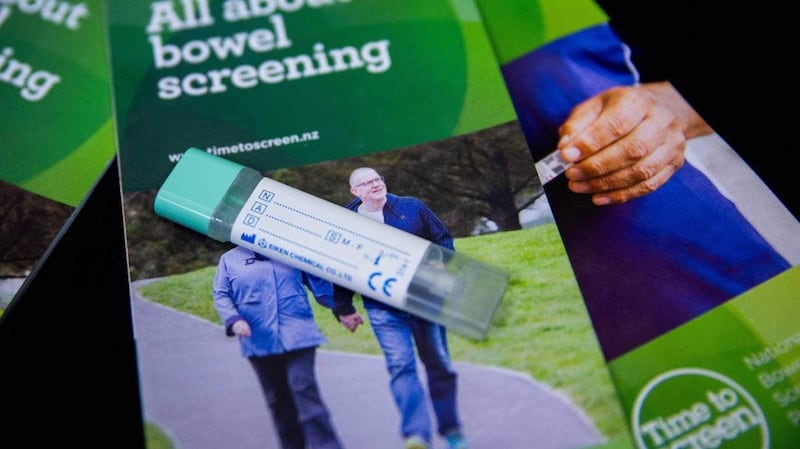
Huskinson says BCNZ supports lowering the screening age to 45 and reinstating earlier screening access for Māori and Pacific communities.
“Those two changes together are the things that will save the most lives, the fastest.”
Wall says this is a step backwards for health equity, but models like IMPB are just one example of an equitable health services for Māori.
“[Māori] also want services that come to them, they want mobile clinics.”
“We do want to be screened, but we also want to be screened in a way, and by people, who we trust.”
Me aronui ki te hauora o te tangata
Rerehau is now about a year into his cancer journey and says he wants to change the way his whānau and other whānau Māori think about health.
“I grew up in a family where health wasn’t really something [we] discussed, [so] for this to happen it seems almost like an inevitability,” he says.
“I like to remind [my friends] that health is all you’ve got.”
The changes will come into effect from 30 September 2026.