


As AI data centres emerge around the globe, the industry is starting to gain traction in Aotearoa.
New Zealand currently has 62 data centres, none of which are dedicated to artificial Intelligence. But that is set to change with a new AI data centre approved for Makarewa, north of Invercargill.
One of the major criticisms of AI data centres is their freshwater use. In te ao Māori, wai is a taonga and is viewed as the blood of Papatūānuku, giving life to everything.
In Aotearoa, the approved $3.5 Billion Datagrid AI Data Centre is expected to use 220 million litres of Groundwater per year.
How will the Makarewa AI Data Centre use wai?
AI Data Centres around the world usually use water to cool their systems. About 80 per cent evaporates, while the remaining 20 per cent is discharged back into the environment, according to the BBC World Service.
The Makarewa data centre will use a similar cooling process, but instead of discharging used water back into the environment, it will be cooled and recirculated back for another round of cooling.
However, the groundwater proposed for use is the same water used by local farms and a “regionally significant wetland”.
The wetland is known as Taylor Road Wetland and is located next door to the area proposed for the data centre.

Publicly available reports and applications on the Environment Southland website say it is up to Datagrid to find ways to mitigate any risk of draining in the wetland, “which supports indigenous vegetation, contributes significantly to regional biodiversity, and provides key ecosystem services and fauna habitat”.
It is not the only Wetland being affected by the build. There are two others, although they do not use groundwater. The Northern Upper Wetland will be completely removed, while the Southern Upper Wetland will remain around 10 metres from the development. Both have been ranked as “very low” for ecological value.
Mitigation plans have also been proposed for the Southern Upper Wetland.
Environment Southland, acting general manager of strategy and regulation, Bruce Halligan, said the public was not notified of the consent application for the proposed Makarewa data centre because the activities were assessed as having “no more than minor environmental effects”.
Halligan said the application was notified to, and approved by, Te Ao Mārama Inc on behalf of Te Rūnaka o Waihōpai, Te Rūnanga o Ōraka-Aparima, Te Rūnanga o Awarua, Te Rūnanga o Hokonui, the Tangata Tiaki of the Ōreti Mātaitai, and Te Rūnanga o Ngāi Tahu, as well as the Invercargill City Council, the Department of Conservation and landowners with potentially affected bores.
Should Aotearoa invest more in AI data centres?
The government is looking for $25-35 billion investments for data centres for Aotearoa, according to the Spinoff.
The new Datagrid development already has the full support of the South Island Minister, James Meager (Ngāi Tahu).
“This is the exact sort of infrastructure the South Island should be competing for: private investment that uses our natural advantages to create new opportunities for the region.
“Southland has an abundance of land, renewable energy potential, and a strategic location close to international data connections. Turning those strengths into a modern export industry is a huge opportunity.”
One of the big reasons Southland was picked to build the new Datagrid data centre was because of the cold climate, high rainfall and proximity to hydroelectric dams.
Meager asks the public not to be “afraid of ambitious projects”.
“If we want the South Island to grow, we need to back projects that diversify our economy and put us on the map in emerging industries. Data centres are part of that future,” he told Te Ao Māori News.
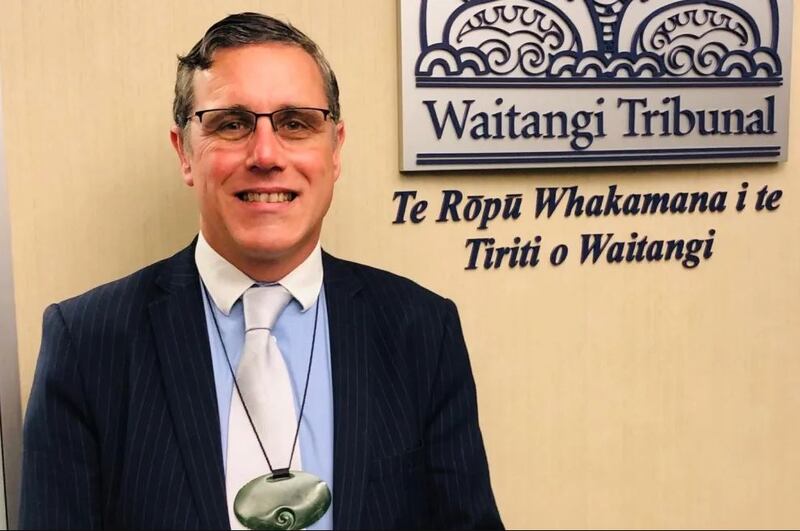
Tech expert Dr Karaitiana Taiuru (Ngāi Tahu, Ngāti Kahungunu, Ngāti Toa) believes iwi should invest in AI data centres but understands the environmental drawback.
“It’s one of the biggest commercial, you know, money-making schemes in the world right now, is AI data centres.
“I think if tribal and Māori organisations invested in AI data centres, then they could push more for those environmentally friendly solutions.
“If we don’t invest in data centres, iwi and Māori, then the likelihood of investing in clean, green environmental solutions may not be a top priority for other commercial entities that don’t value Papatūānuku.”
He claims the technology to make a greener AI Data Centre exists, but it would rely on a “mindset change” and investment.
What life near AI data centres can look like
A recent IPSOS survey showed 50 per cent of Kiwis did not believe the benefits of AI outweighed its environmental costs, compared with 53 per cent of Americans.
In the United States of America, there are multiple reports of those living near data centres facing unusable water, higher utility bills, noise pollution, and more.
Honor The Earth Executive Director, Krystal Two Bulls (Oglala Lakota, Northern Cheyenne), has been fighting against the build of AI data centres in the US.
She told Te Ao Māori News that the current American administration is fast-tracking multiple hyperscale data centres.
“They’re rolling back any protections, any guidelines, any policies or procedures that would delay critical minerals mining that would delay nuclear being on track, that would delay a hyperscale data centre being built, or delay the growth of generative AI.
“They’re stripping current protections that exist, like we have a National Environmental Protection Act, and they basically gutted the whole thing to allow for fast-tracking and to allow these things to go through.
“They’re rolling back protections of water. They’re redefining what waters can be protected or not,” said Two Bulls.

Many cities and urban communities in the US pushed back against proposed data centres in their neighbourhoods, which Two Bulls said was great, but the unintended consequence was that developers were increasingly looking to build on or near Native lands.
“We don’t have the same protections, the same access, and the same privilege as a lot of folks that are in the city areas.
“We also sit on many critical minerals reserves, a lot of our reservations have like large land masses and land bases, and we have access to water, and so, basically it’s the perfect location.”
Two Bulls said there is another layer, as there is a lot of confusion on who has jurisdiction over the Native land.
“Is it federal? Is it state? Is it tribal?
“We don’t have the ability, the legal infrastructure to hold international companies or any corporations accountable on Native lands.
“Our sovereignty is pseudo sovereignty.”
Honor the Earth created a national native coalition against data centres, with around 24 native nations represented.
It created toolkits and factsheets for leaders to take back and share with their community. It also invited everyone in Indian country to self-report any hyperscale data centre proposed for their lands.
“We’ve been able to take all of that information and upload it into an actual map so people can see where these site fights are happening."

There are more local coalitions, with Two Bulls being part of the Montana branch, helping file lawsuits against corporations, educating locals with webinars, and training future community organisers.
“I think we have to fight with everything that we have to prevent these things from being built, because right now, we’re partnering with a lot of black communities that already have hyperscale data centres built next to them, in like the amount of like cancers, miscarriages, health impacts, things like that that are happening is like it’s devastating,” said Two Bulls.
Indigenous communities urged to ‘educate the people’
Two Bulls advice for Māori and other indigenous communities is to resist allowing organisations to build big-scale data centres.
“Get educated, do all the possible research that you can and pull it together because they lie, these corporations that are pushing this.”
She also said educating the community in America had helped unify “unlikely alliances”.
“We have like white communities coming to us and asking us like, how to fight these things.
“Educate the people, educate the community and make sure it’s in a way that people can understand.
“The amount of water these things consume is just, it’s so dangerous, and especially in this moment of climate change.”
She also advises being careful of “our own people”.
“We have people who have sold out and who just want to make money and who don’t care and no longer have that relationship to Mother Earth or to the water.
“They are coming to our own people, and they are lying and trying to sell this to our own people so they can make money.
“That is the most atrocious role that any indigenous person globally can take on.”
Te Ao Māori News have reached out to Te Rūnanga o Ngāi Tahu, Te Ao Marama Inc., and Datagrid for comment, but as of the publication of this article, there has been no response.