

A group of central North Island iwi has unveiled a proposal to reorganise local government around the region’s mountains, river catchments and the communities connected to them.
Discussions between Ruapehu District Council, iwi partners and local communities have ramped up in the last week as the first deadline looms in the Government’s local government reform programme.
The iwi proposal, known as Te Kāhui Maunga, was developed by iwi that have settled their Treaty claims and covers the areas currently served by the Ruapehu, Whanganui, Taupō and Rangitīkei district councils.
The concept was presented to a council and iwi partners workshop last week and then formally introduced at community meetings in Raetihi and Taumarunui.
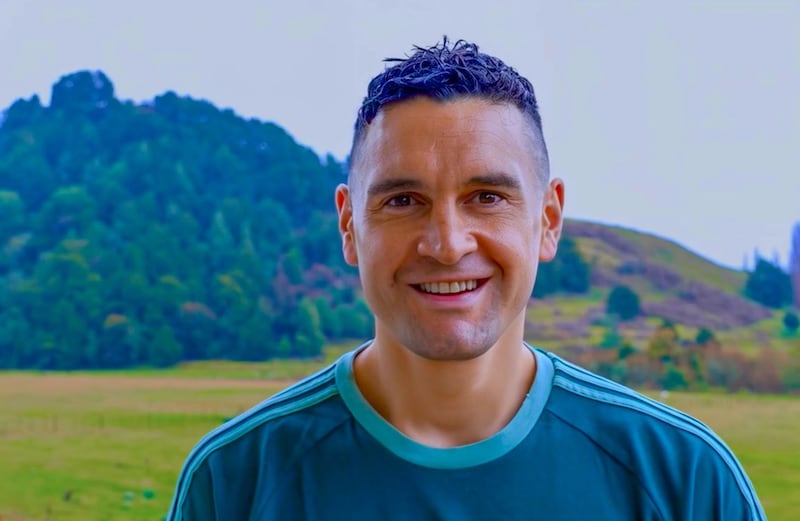
Presenting the proposal, Ruapehu district councillor Kuru Ketu described Te Kāhui Maunga (the cluster of mountains) as an iwi-led approach to amalgamation centred on the central plateau’s mountains, the rivers flowing from them, and the communities that rely on those landscapes.
“From there, we would look at the councils that service those areas. This is why the approach works in a local context – when we’re talking about the criteria for Head Start, every element has strong legislative direction to provide for the settlements that relate to the Te Kāhui Maunga area.”
Ketu described the proposal as “a values-based conceptual approach.”
Under the Government’s Simplifying Local Government reforms, councils have until August 9 to decide whether they will submit a proposal for structural change under the voluntary Head Start process.
The Government has directed councils to pursue amalgamation or alternative governance models, such as unitary authorities, with neighbouring authorities.
Any proposal must meet criteria set by the Government, including demonstrating how it would improve local representation, service delivery, financial sustainability and long-term planning.
Speaking at a community hui in Taumarunui on Thursday, Ketu said the proposal called for bespoke legislation reflecting the region’s unique legal and cultural framework, including legislation relating to Te Waiū-o-te-ika under the Ngāti Rangi Claims Settlement Act 2019, Te Awa Tupua under the Te Awa Tupua (Whanganui River Claims Settlement) Act 2017 and Te Ture Whaimana, the vision and strategy for the Waikato River.
He said those statutory frameworks already provided direction for district and regional council functions that could transfer to a future unitary authority.
The collective iwi proposal aligns closely with an option for a new unitary authority comprising the Ruapehu, Whanganui, Rangitīkei and Taupō districts, to be discussed by the Ruapehu council on Wednesday.
The iwi proposal was first raised during a community meeting in May and developed during iwi partners’ workshops in May and June.
The iwi involved include Maniapoto, Ngāti Rangi, Ngāti Hāua, Te Korowai o Wainuiārua (representing Uenuku, Tamakana and Tamahaki), and Ngā Tāngata Tiaki o Whanganui (NTT), representing iwi and hapū of the Whanganui River.
It encompasses the mountains and ranges of Tongariro, Ruapehu, Ngāuruhoe, Hauhungatahi, Pihanga, Hikurangi, Tuhua, Tauhara, the Kaimanawa Ranges, Titiraupenga and Aoraki, along with waterways including the Waikato, Taupō-nui-a-Tia, Rotoaira, Whanganui, Whangaehu, Ōngārue, Mangawhero and Hautapu rivers and lakes, among others.
It also identifies other iwi with interests across those landscapes, including Ngāti Tūwharetoa, Ngāti Maniapoto, Ngā Hapū o Te Iwi o Whanganui and Mōkai Patea Nui Tonu.
The proposal outlines Treaty settlement partnerships already established with councils across the region. Those settlements had shaped the approach to the future of local government, Ketu said.
“We’ve been told very clearly that this reform requires us to look at local government reform completely differently. I wouldn’t want to see us replicating the current system in different clothing.”
He said the model could meet the Government’s eligibility criteria by maintaining local representation and meeting the requirement for deliverability.
“The deliverability of workstreams by a new entity can only be achieved with iwi at the table.”
Ketu said the model would bring economy of scale, strategic partnerships and the ability to optimise outcomes for various communities, but more work was needed to flesh out the concept.
NTT kaihautū Nancy Tuaine said iwi had been thinking more widely than councils for a long time.
“We’ve been participating in decisions from the mountains to the sea. The opportunity of Head Start is about looking at what are the opportunities and where in this space are we working more broadly than the Ruapehu District Council.
“Our relationships are really strong inter-tribally within our regions. We are already aligned.”
Ngā Waihua o Paerangi Trust (Ngati Rangi) pou ārahi Helen Leahy described the proposal as “a foundational approach to the things that connect us”, including a relationship to the natural world.
“It’s a unified approach that will distinguish this region,” Leahy said.
Ruapehu Mayor Weston Kirton said the council was continuing to develop its position on the reforms and would look to make a decision at its meeting on Wednesday.