
Hundreds of people who died while in the care of the state and were buried in unmarked graves are set to be honoured with a permanent memorial, two years after the Royal Commission of Inquiry into Abuse in Care exposed decades of abuse, neglect and dehumanisation inside New Zealand’s institutions.
The memorial, to be built at Porirua Cemetery and Te Whenua Tapu, will recognise more than 1,600 former patients of Porirua Hospital and the former Porirua Lunatic Asylum who died while in state care and were never returned to their whānau.
For decades, many families had no idea where their loved ones had been laid to rest. For some, the memorial will be the first acknowledgement that their loved one existed beyond a patient file and a burial register.
The Royal Commission heard extensive evidence about people who died while in psychiatric hospitals, psychopaedic institutions and other state facilities, where survivors described widespread abuse, neglect, over-medication, isolation and the stripping away of their identity and dignity.
The memorial also comes as many former Porirua Hospital survivors continue to seek recognition and redress for the abuse they say they endured.
While only survivors of the Lake Alice Child and Adolescent Unit have been formally recognised by the Government as victims of torture under international law, survivors from Porirua and other psychiatric hospitals have long argued they experienced similar treatment.
The Government has acknowledged there should be a separate pathway for those survivors, although it remains distinct from the Lake Alice torture redress process.
The unmarked graves are among the most enduring reminders of that legacy.
While Porirua is one of the country’s largest known collections of unmarked graves linked to state care, it is not the only one.
Similar burials have been identified at former psychiatric hospitals and institutions around New Zealand, reflecting a wider practice during the era of institutionalisation where many people who died in state care were buried anonymously, often without their families knowing where they were.
Years of archival research are now helping reconnect whānau with tūpuna they never knew were buried there, including some interred in shared burial plots.
Following government funding announced earlier this year, Porirua City Council has received almost $195,000 to design and build a permanent memorial across both Porirua Cemetery and Te Whenua Tapu.
The project is expected to be completed by the middle of next year.
As part of the project, the council has published a searchable online database containing the names of those buried in the unmarked graves.
Whānau who believe a loved one may be buried at either cemetery are encouraged to search the database, contact the council to learn more and contribute to the memorial’s design.
The council says the database is not exhaustive and is encouraging anyone who believes they may have a relative connected to Porirua Hospital to get in touch, even if they cannot find a name listed.
More than 130 families have already come forward.
Project lead Claire Moloney said the response had been heartening, but she believes many more families are still unaware their relatives may be buried there.
“We’ve had 130 families come forward so far, which has been a great response, but we’re really keen to hear from as many families as possible. We’ve tried our best to make this a really inclusive process.”
For many families, the memorial project represents the first time they have discovered where their loved ones were buried and the first opportunity to help shape how they will be remembered.
Opened in 1887, the Porirua Lunatic Asylum grew into one of New Zealand’s largest psychiatric institutions. At its peak during the 1960s, more than 2,000 patients and staff lived and worked across the sprawling campus.
The Royal Commission found institutions like Porirua operated during a period when thousands of New Zealanders were removed from their communities for reasons ranging from mental illness and intellectual disability to grief, trauma, poverty and behaviours that today would be understood very differently.
Many experienced abuse, neglect, isolation and the loss of their identity while in state care.
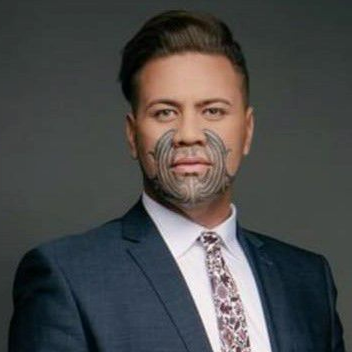
Award-winning journalist Aaron Smale has spent years reporting on the legacy of abuse in state care. Now, the story has become deeply personal.
Smale believes one of his own tūpuna may be among those buried at Porirua after being admitted while grieving his wife’s death. His whānau are still trying to determine exactly where he lies.
“It’s upsetting to me that he was grieving, and that became a reason to put him in a place for people who were unwell,” Smale said.
“He wasn’t unwell. He was grieving the loss of his wife.”
Standing among the unmarked graves, Smale said after years of reporting on abuse in state care, he thought little could still surprise him.
“You think you’ve heard it all and you can’t be shocked anymore and then suddenly something else comes and smacks you over. It’s hard to comprehend really.”
He said the discovery of so many unmarked graves represented more than forgotten burial sites.
“It’s almost a metaphor for people being silenced really. Death is the ultimate silencer.”
While survivors have spent decades fighting to have their experiences believed, he said many of those buried in the graves would never have the opportunity to tell their own stories.
“These people’s stories will never be told.”
Smale said New Zealand had become too comfortable forgetting the violence carried out inside its own institutions.
“The survivors don’t get that luxury. But as a country we do these terrible things to people and then forget about it, and then tell them they’re lying when they turn up and try and tell us to remember.
“I think as a country we should be ashamed of it really.”
Whānau who believe they may have a relative who died at Porirua Hospital are encouraged to search the online database on the Porirua City Council website or contact the council directly, even if they cannot find a name listed.