

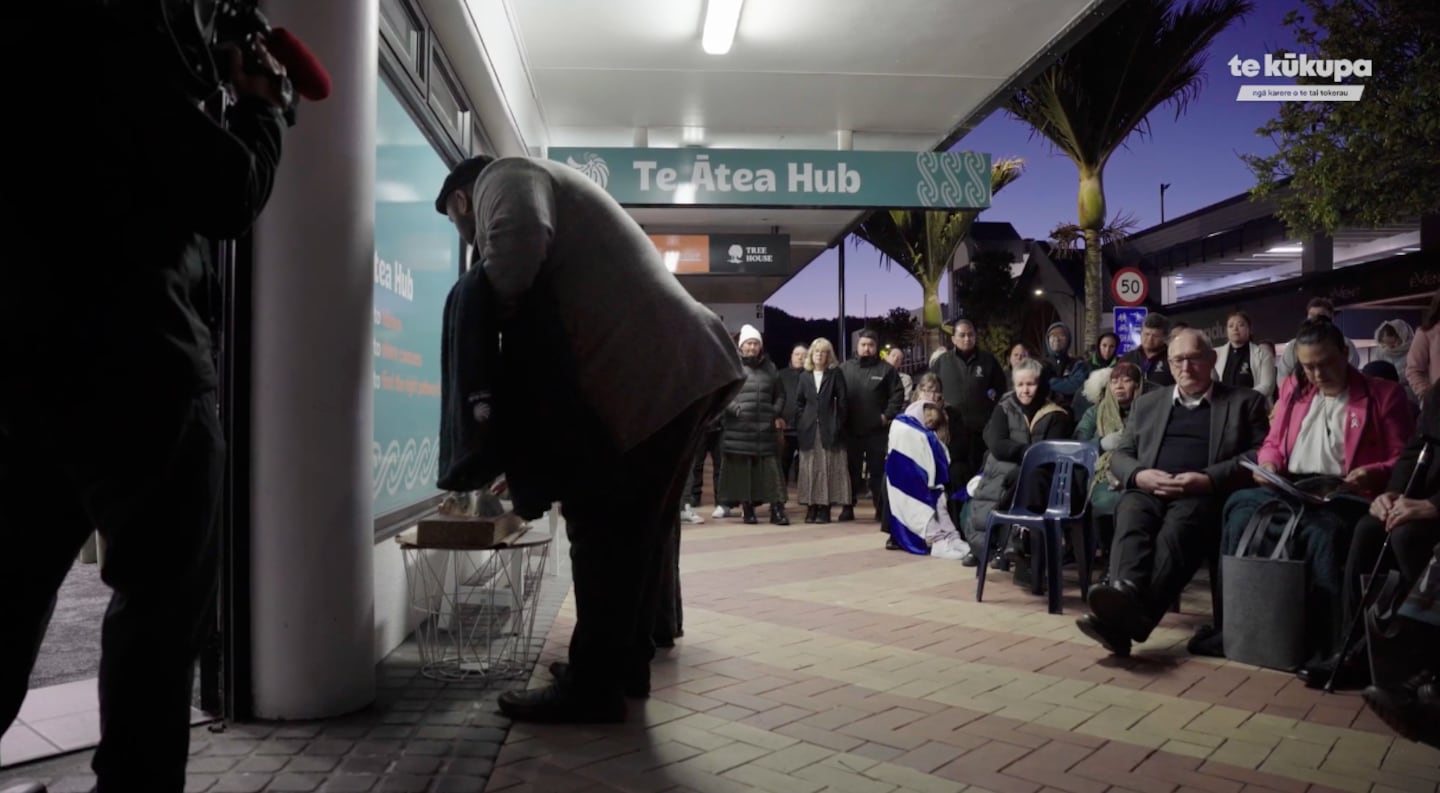
Supporting tamariki is at the heart of Tai Timu Tai Pari, which has opened its new Tama-Ariki initiative in central Whangārei. The kaupapa focuses on protecting tamariki and strengthening their wellbeing through early intervention.
Dozens of organisations came together for the opening and blessing of Te Ātea Hub, the new home of Tama-Ariki, signalling a collective commitment to supporting tamariki and whānau across Te Tai Tokerau.
Focusing on community-led approaches to tamariki wellbeing, Te Ātea Hub is a welcoming place that provides professional support and alternative pathways when concerns are raised about tamariki wellbeing.
Heather Richards is a Supervisor at Oranga Tamariki, and says the goal is prevention: “The purpose of Te Ātea is more around prevention, so bringing concerns in earlier in a space that can address them and try and alleviate or prevent tamariki from going into the system in the first place.”
According to reports, Tamariki Māori make up around 68% of all children in the care of Oranga Tamariki. Richards says it’s about making sure they have support as soon as they need it.
“We are utilising all of the community’s supports and agencies we have around us to put those fences in place at the top of the cliff rather than at the bottom.”
Te Ātea Hub and the Tama-Ariki kaupapa bring together community, support services, and agencies to provide more holistic support for whanau. The kaupapa is a collaborative effort led by Tai Timu Tai Pari and Oranga Tamariki, and will provide access to information, guidance, and help to whānau to find the support they need.
Sir Mark Solomon is a member of the Oranga Tamariki Ministerial Advisory Board and a long-serving advocate for the protection of tamariki. He says the answers are in the community, “I’m really chuffed with what’s happened up here. I’ve always been a staunch believer that a lot of the solutions are in the hands of the community.
He adds, “What I really like about this is that it’s several organisations coming together to work together, and to be able to address these issues with our kids. I think it’s the way to go.”
For Lead Facilitator, Chey Vett, the mahi is about making sure whānau are looked after: “Yes. Advocate for them, but also the physical part of it is actually taking whānau by the hand and taking them to those services rather than just putting in a referral and hoping for the best.”
A report from Aroturuki Tamariki | Independent Children’s Monitor has revealed the outcomes for tamariki and rangatahi Māori and their whānau in the Oranga Tamariki system during 2024/25.
“While most Māori have no involvement with Oranga Tamariki, data in this report shows that despite being only one quarter (27 per cent) of the youth population, tamariki and rangatahi Māori are over-represented in every part of the Oranga Tamariki system.”
- 57 per cent of reports of concern were for tamariki and rangatahi Māori.
- 68 per cent of tamariki and rangatahi in care are Māori.
- 59 per cent of police proceedings against those aged 10–18 were for tamariki and rangatahi Māori.
- 80 per cent of tamariki and rangatahi in youth justice custody are Māori.
The report also found that “Critical and very urgent reports of concern for tamariki and rangatahi Māori also have less timely responses from Oranga Tamariki.”
Aroturuki Tamariki Chief Executive Arran Jones said at the time of the release of the report in June,
“If the front door to the child protection system were working as needed, the right support would be provided at the earliest opportunity. There would be a reduction in renotifications, and tamariki Māori would not unnecessarily escalate through the care and youth justice system because of unmet need,”
“The consequence of unmet care and protection needs is evident in the data about rangatahi Māori in youth justice. We found:
- 95 per cent of rangatahi Māori involved in youth justice had a report of concern made about their safety or wellbeing when they were younger
- Half had more than 10 reports of concern made about their safety or wellbeing
- More than half had never even had a care and protection family group conference – fundamental to putting a plan in place to address the safety or wellbeing concerns.
He added at the time, “A lot of resource – and attention – goes into dealing with the offending behaviour. A greater focus on addressing care and protection needs earlier may reduce the need for youth justice responses in the future.”
Te Ātea Hub in Whangārei is now home to the Tama-Ariki kaupapa, providing a dedicated focus on the care, protection and wellbeing of tamariki across Te Tai Tokerau.
Nā Rukuwai Tipene-Allen nō Te Kūkupa