


ACT is taking another swing at how Te Tiriti o Waitangi and tikanga Māori operate in New Zealand law, unveiling a sweeping constitutional policy a Treaty law expert says appears to be an attempt to “re-litigate” its failed Treaty Principles Bill.
The party’s new “One Law for All. One Future Together” policy would amend several of New Zealand’s key constitutional laws, restrict the circumstances in which tikanga can influence court decisions and require governments to spell out exactly what Treaty obligations they intend when drafting legislation.
ACT also wants three principles written into the Constitution Act 1986: that Parliament is sovereign, the rule of law is fundamental, and all New Zealanders are equal before the law.
The party argues the changes are necessary because courts have increasingly developed Treaty principles and tikanga beyond what Parliament has expressly legislated, while governments have passed vague Treaty clauses that leave judges and officials to determine their meaning.
But Treaty law expert and head lecturer, Dr Carwyn Jones, says much of what ACT says it wants to restore already exists.
“My first reaction is that it does look like they’re trying to re-litigate the Treaty Principles Bill,” Jones said.
“That had overwhelming opposition and failed because of that overwhelming opposition.
“And so now it looks like they’re trying to achieve the same kinds of ends. We can see some of the same language that was in the Treaty Principles Bill, some of the same kinds of principles that were there and that also feature in the Regulatory Standards Act.
“there is a definite focus on trying to limit the legal effect of Te Tiriti.”
‘Parliament already has that power’
A major focus of ACT’s policy is what leader David Seymour describes as putting Parliament “back in charge of the law”.

The party points to recent Supreme Court decisions, including Ellis, Smith v Fonterra and cases concerning the Marine and Coastal Area Act, arguing judges have pushed the law further than Parliament intended.
ACT proposes restricting the use of tikanga by courts, saying it should generally apply only where it is directly relevant to a case, such as a dispute between iwi, or where Parliament has expressly provided for it.
The party says tikanga should not become a separate source of law applying across unrelated areas without Parliament deciding that it should.
ACT also proposes amending the Legislation Act 2019 to constrain the use of judge-made presumptions when interpreting statutes and defining the “rule of law” in the Senior Courts Act to make clear Parliament has the final say.
But Jones said the premise that Parliament needs to reclaim its law-making authority misunderstands New Zealand’s existing constitutional arrangements.
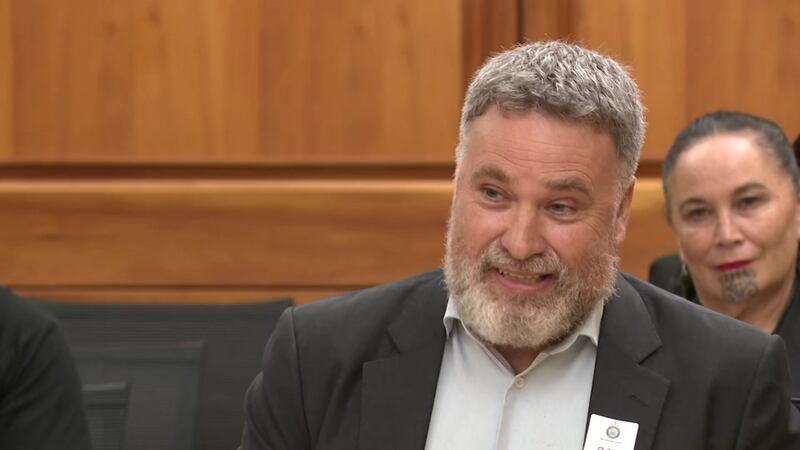
“Within New Zealand’s constitutional framework, Parliament is already the kind of supreme law-making body in that framework,” he said.
“There aren’t really limitations at the moment on what laws Parliament can and can’t pass.”
Unlike countries such as the United States, New Zealand does not have a supreme written constitution that allows courts to invalidate legislation because it breaches constitutional rights.
“Part of, I think, the odd thing about this policy is that it’s all about Parliament taking back its power. Parliament already has that power,” Jones said.
“And actually, we’ve seen that where Parliament has decided to change the law as a result of court cases, that it’s been able to do that. There’s been nothing stopping it from doing that.”
Activist judges claims
The policy also marks another escalation in ACT’s criticism of the judiciary.
Seymour accused judges of expanding tikanga into areas Parliament never intended and said elected lawmakers, rather than unelected judges, should determine the law.

Jones said portraying judges as activists ignored the deliberately cautious way the common law develops.
“This is a tactic that you see being applied by kind of populist parties and governments all around the world. This is a familiar tactic,” he said.
“The judicial approach and the approach in the common law is a very conservative approach. Judges are very careful about making sure that they have precedent that they can rely on.”
The common law, however, was designed to develop over time, he said.
“The whole point of the way our common law system works is that it does allow for our law to develop, to respond to changing needs of society.”
That includes tikanga Māori.
ACT specifically points to the Supreme Court’s decision in Ellis, which considered tikanga in deciding whether Peter Ellis’ appeal should continue despite his death.
Ellis was not Māori, illustrating that tikanga as a source of legal reasoning is not necessarily applied according to the ethnicity of the people before the court.
Jones said legislation could also never anticipate every factual situation in which it would eventually have to operate.
“Parliament can never make a law that is going to tie down every single circumstance that might come up,” he said.
“It can’t take account of all the different kinds of context in which you need to apply this, which is why we have the courts there in the first place.
“They take the law that Parliament has set, and they determine how that ought to be interpreted and applied in particular circumstances.”
Another Treaty fight before the election
The policy comes almost two years after ACT first introduced its controversial Treaty Principles Bill, which sparked one of the largest public submission processes in Parliament’s history before being overwhelmingly voted down at its second reading in April 2025.

That bill sought to define the principles of the Treaty in legislation and generated unprecedented public participation.
More than 307,000 submissions were lodged, the highest number ever received on a bill, with the Justice Committee hearing 80 hours of oral submissions.
The bill was ultimately defeated 112 votes to 11 in April 2025 after National and New Zealand First withdrew their support beyond select committee, as agreed in their coalition arrangements.
Its introduction also became a focal point for opposition from iwi, hapū, Māori and large numbers of non-Māori and helped galvanise the nationwide Hīkoi mō te Tiriti to Parliament.
ACT’s latest proposal does not revive that bill or attempt to define the Treaty principles in the same way, although Seymour has promised that another iteration of it will be included in their campaign this year.
Luxon has ruled out considering any type of iteration of it, acknowledging the harm it caused to Māori-Crown relations at the time.
This policy, which isn’t overtly the Treaty Principle’s Bill 2.0, would change the legal framework surrounding how Treaty obligations and tikanga are interpreted and applied.
Before any future bill containing a Treaty reference was drafted, ACT would require Cabinet to explicitly determine what Treaty interests were engaged, who they applied to and what obligations they created.
When existing legislation was amended or replaced, Treaty interests would also have to be specifically identified, and what ACT describes as vague or high-level Treaty clauses removed.
Treaty clauses already under review
It comes as the Government is already progressing a separate review of Treaty clauses across existing legislation, stemming from the National-New Zealand First coalition agreement.
That review originally covered 28 Acts and has since narrowed to 19 Acts administered by 11 agencies. Cabinet has agreed, among other changes, that where a Treaty standard is considered necessary, it should be no stronger than “take into account”, replacing stronger requirements such as “give effect to” in some legislation.

It has also proposed repealing a number of Treaty-related provisions and making others more specific.
The Waitangi Tribunal has strongly criticised that process and recommended the Government pause the reforms, finding the Crown had breached Treaty principles and warning the changes represented a significant constitutional regression.
Justice Minister Paul Goldsmith rejected that recommendation and confirmed the legislation would not be passed before the November 7 election.
That means questions about the legal place of Te Tiriti, Treaty principles and tikanga are again likely to follow political parties onto the campaign trail.
Why is the Te Tiriti debate important?
For Jones, the debate should not be confined to lawyers, judges and constitutional academics.
His new book, Matangi Rau: The Enduring Potential of Te Tiriti o Waitangi, brings together his writing on Treaty principles, tikanga and constitutional issues over more than a decade.
Jones said Te Tiriti should not be viewed simply as an historical document, or even only as an abstract constitutional issue.
“It actually provides a really important framework or a blueprint, ways of engaging in kind of collaborative relationships that can help us to address a whole lot of our current issues that we need to find ways of dealing with,” he said.
He points to climate change as one example where different forms of knowledge and different approaches will be needed to address a problem collectively.
Jones said the relationship envisaged through Te Tiriti also demonstrates that tino rangatiratanga and kāwanatanga do not necessarily have to exist at the expense of one another.
“I think about our tīpuna and the kind of imagination and courage that they showed in creating that space for tino rangatiratanga and kāwanatanga to exist in the same space.
“And I think if they can set that framework, then I feel like we’ve got the tools there to be able to deliver on that relationship and to address what seem like really hard problems that we’re confronting in very practical ways,” Jones said.