


A Sāmoan medical student at Otago University has made the decision to temporarily suspend her six-year medical studies to concentrate on the effects of Rheumatic fever in Pacific people in the South Island.
Studies from the University of Auckland show Pacific children are 80 times more likely to contract Rheumatic fever than their non-Pacific counterparts.
But a significant portion of the data stems from studies conducted in populated Pacific areas, particularly Auckland and Wellington.
So Tahlia Su’a plans to research the causes and potential solutions for this disease within Pacific communities in the South Island.
Su’a emphasises that overcrowding, poor housing conditions, and various social factors contribute to the risk of developing Rheumatic fever within these communities.
Her research aims to shed light on the disease in Canterbury, how it affects families, and whether improvements can be made in healthcare delivery.
Growing communities
“We have a growing Pacific population here in Canterbury in little pockets. In Ashburton, there’s a growing population.
“So it’s important that we don’t forget about our Pacific and Māori population down here,” Su’a says.
Pasifika Medical Association president Kiki Maoate emphasises the importance of addressing this issue on a national scale.

“We can always go for the higher numbers as seen in Auckland and certain areas in Wellington but it’s good to have the whole country wrapped up.
“It’s like leaving Sāmoa out of it and just having the other countries in the Pacific,” Maoate says.
Su’a’s research project is receiving crucial support from organisations like Research for Children Aotearoa and Te Papa Hauora.
She plans to spend a year analysing 10 years’ worth of clinical data from patients, with the goal of identifying key patterns and interventions.
Financial support is also essential for Su’a’s mission.
Maoate emphasises the need to enable Su’a and other researchers to have the resources necessary to tackle this issue effectively.
“Our role is how we can contribute to support Su’a from a financial point of view.
“Then, how do we enable that to happen so she also has her Pacific people around her,” Maoate explains.
For Su’a, this dedicated year of research provides a unique opportunity to delve deep into a critical issue close to her heart.
“Over two years you have to cover all the bases and all the medical specialties, so it has been nice to have one focus for the year that you can really sink your teeth into to find out more about and something that really means a lot to you,” Su’a says.
One of her primary goals is to empower her community to take charge of its own health.
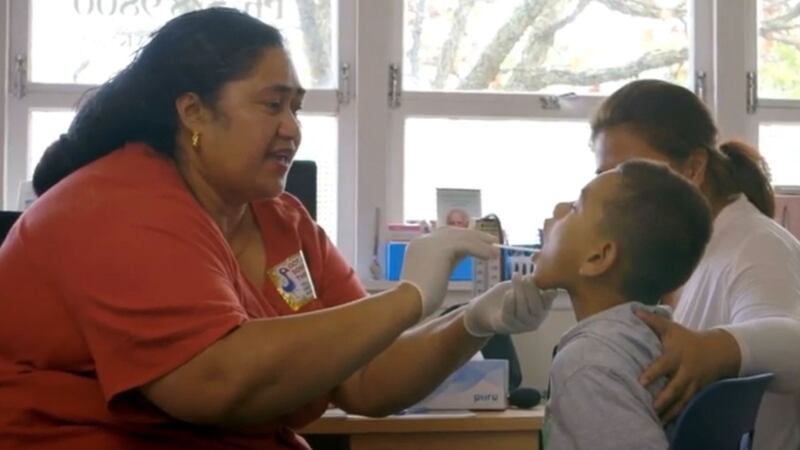
She recommends Pacific and Māori insist on throat swabs and antibiotics if they go to doctors with a sore throat.
“If anyone tries to tell you otherwise, bring it up.
You can Google the guidelines, show your doctor, and say, ‘No, I need to be getting this,’’ Su’a says.
For those seeking more information on Rheumatic fever and how to deal with it, the Heart Foundation website provides valuable resources and guidance.
