

Wrapping up a big year, Deputy Prime Minister David Seymour says he is happy with what his government has achieved, particularly in the last quarter, as Parliament passed bills long advocated by Act.
“The earthquake strengthening laws, Resource Management Act, the Arms Act, the Holidays Act, the Methane Targets, and the Regulatory Standards Act. They’re all things that Act campaigned on up to 20 years. In many cases, it was us against everyone else at the start.”
Seymour highlighted the significance of these legislative wins, saying they represent long-standing policy priorities finally reaching fruition.
“These are the things we’ve been pushing for decades. Some people thought they’d never happen, but persistence and focus have brought them across the line,” he said.
On the Regulatory Standards Bill, he called out Māori leadership for what he says led whānau down a “rabbit hole.”
“I think there’s been, frankly, for a long time, some weak leadership in Māori. And rather than looking at it that way, by actually reading the bill, they’ve taken people down a rabbit hole.”
Of the 159,493 submissions made to the Finance and Expenditure Committee on the bill, 98.7% were opposed and 0.7% in support, highlighting the significant public scrutiny and controversy surrounding the legislation.
He kai kei aku ringa – or not
Reflecting on the school lunch controversy, Seymour says that despite challenges, saving money has been a key focus, something the government has achieved.
“We’ve saved about $140 million, some of that, $4 million of that, we’ve actually used to fund [programmes] for 10,000 tamariki at early childhood. So, you know, that’s gone really well too. There are 10,000 kids now getting lunches who wouldn’t before, and these are the smallest children, where I think it probably makes the biggest difference.”
He admits there are flaws and hopes to improve the lunches-in-schools programme if reelected.
“Right now, you’ve got children from wealthy households in poor schools that get the free lunches. You’ve got children from poor households in wealthy schools that get no assistance.
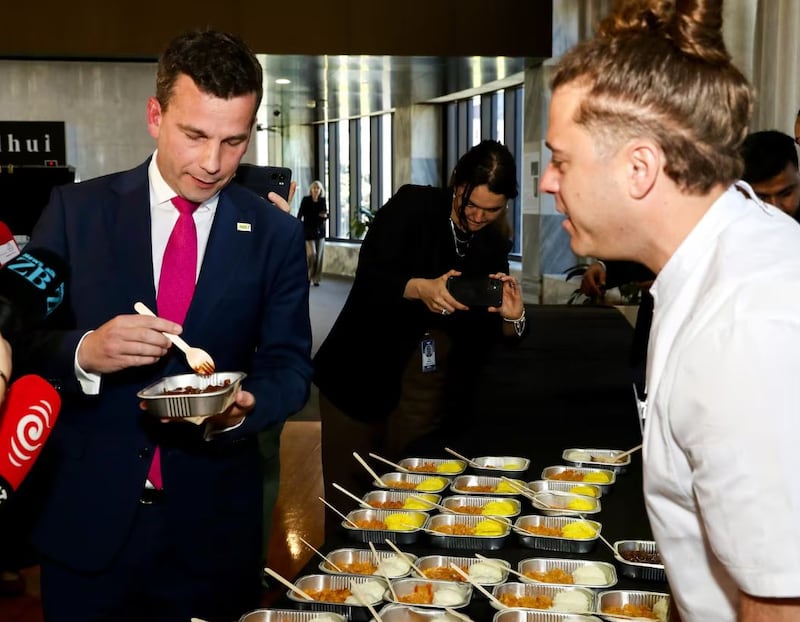
And then people say, hang on, if hunger is really a problem, why do you have them at school for three hours and then wait till lunchtime to feed them? That’s crazy.”
Seymour indicated that targeting support more accurately and assessing nutritional outcomes are key areas for future policy adjustments.
Tangata Tiriti – Tangata Whenua
On the Treaty Principles Bill being thrown out, he says there are major issues to resolve, including Māori–Crown relations.
“So we’ve seen that this year, all this division, are we tangata whenua and tangata tiriti and going to be, you know, forever divided by our founding documents into two categories of human? I don’t believe that that is a successful programme.”
Seymour emphasised that constructive dialogue between the Crown and Māori is critical, particularly in areas such as resource management, education, and health policy, where Treaty principles continue to guide legislation and governance.
He concluded by saying the government will continue to pursue policies it believes deliver practical benefits while encouraging debate on broader constitutional and societal issues.
“We want to make sure we’re delivering tangible outcomes for all New Zealanders, while at the same time having honest conversations about how we manage relationships with Māori communities, and how legislation affects every part of our society.”
For the full interview, watch the video above.
