

Data shows Māori are twice as likely to die from heart disease as non-Māori, and in some communities, life expectancy is up to 10 years shorter.
To address this, Kura Raumati, a Māori-led programme, has welcomed 15 new students from across Aotearoa into its third cohort.
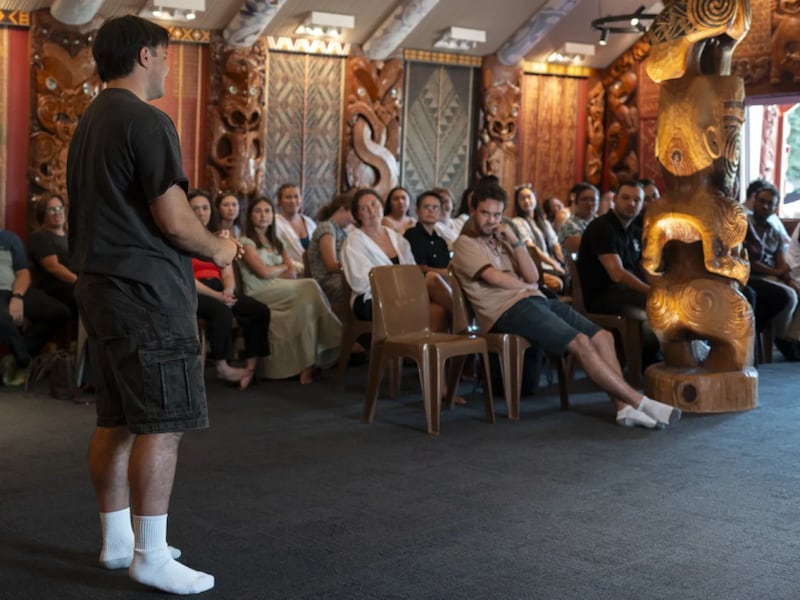
The kaupapa allows students to begin on a marae before returning home to their own communities to conduct research through a Māori lens.
From the lab to the Marae
Arihia Waitai-Morehu (Ngāti Whātua Ōrākei) has worked with her iwi for two years and was seeking something that aligned with her current focus.
“I heard this kaupapa through a friend who had taken part. And for me, I was looking for something that was whānau-focused, te ao Māori-focused.”
Oaklea Bowden-Morris (Te Tairāwhiti) recently completed her honours at Māori Ki Ōtākou Whakaihu Waka. While she spent a year researching in a lab, she felt drawn to community-based research, where she now conducts research aimed at helping vulnerable whānau in Ruatoria.
“I actually don’t whakapapa back to Ruatoria, so I find that it’s a privilege that whānau are able to open up to me, and trust me with their concerns”
Whāia te pae tawhiti, whakamaua kia tina
I tōna ōrokohanga mai ka whakawhiwhia a Kura Raumati ki ngā moni a Te Ara Poutama. Ināianei nā, mā Pūtahi Manawa ngā moni e hoatu ki te kaupapa nei.
Me te tūmanako nui, ka ora rawa atu ngā mahi rangahau hei ngā tau maha kei mua i te aroaro.
“Research funding comes and goes,” says Associate Professor Karen Brewer, Co-Director Māori at Pūtahi Manawa.
“Usually, projects are funded for two or three years, and the community misses out on a good relationship or seeing positive change”
Nā te tokoiti o ngā kaimahi Māori kei te rāngai hauora o Aotearoa, kei te whai mana ēnei tūmomo, i tēnei wā tonu, e 5% noa iho o ngā tākuta kei Aotearoa, he Māori.
E ai ki a Erika Korohina, kairangahau matua o Kura Raumati, he mea nui tā te tangata kite i te kanohi Māori ki te rāngai hauora.
“Many of our whānau told us it was important for them to see our own people working in those heart health services.”
Hei a Pepuere, ka whakaaturia ngā kitenga rangahau ki ngā whānau me te hapori whānui.