

This article was first published by APTN in Canada
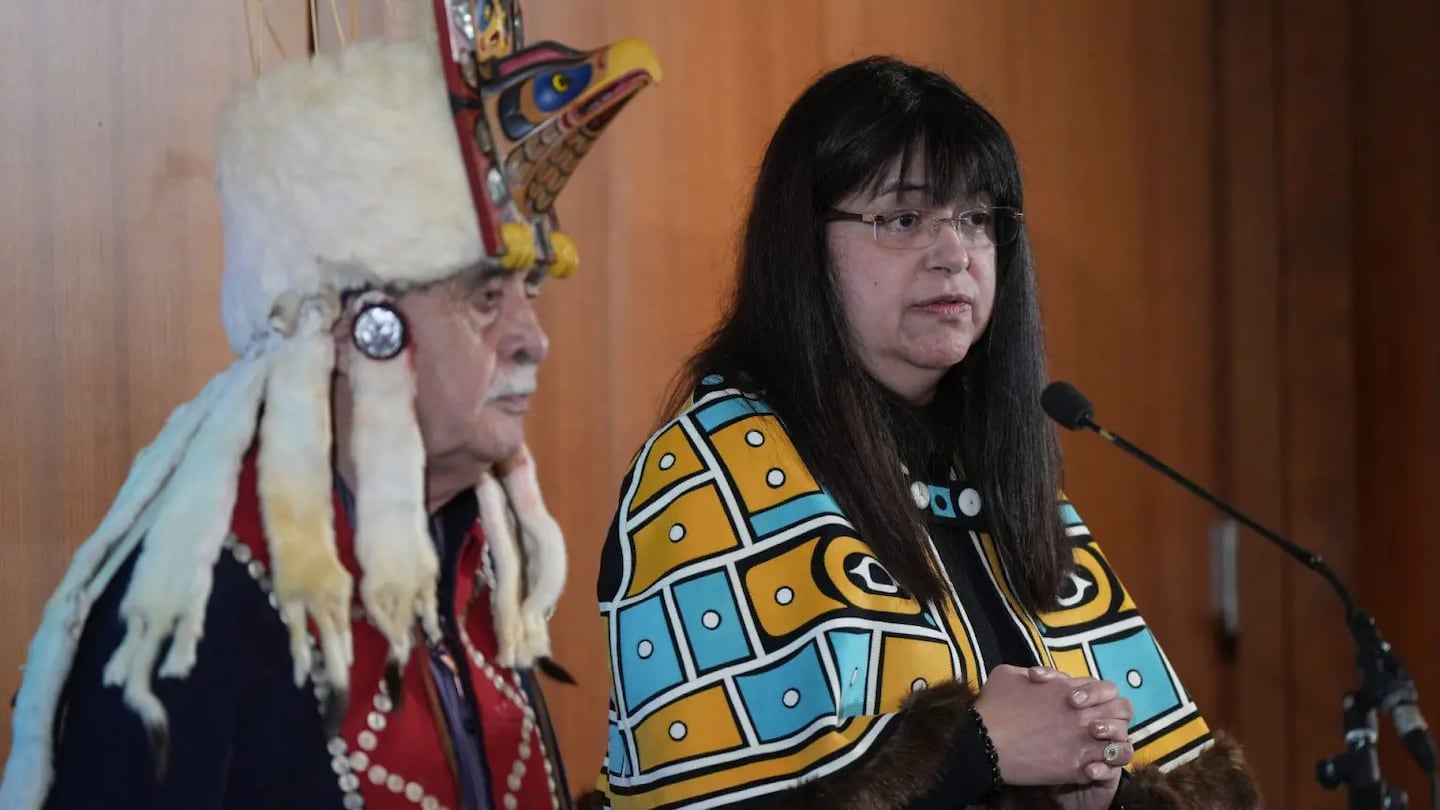
The president of Coastal First Nations (CFN) says she delivered a firm message to Prime Minister Mark Carney at a meeting last Tuesday morning that they’re standing firm against a pipeline to the northwest coast of British Columbia.
“Anytime there is a discussion about our territories, we need to be in the room,” Slett said of why they invited Carney to join them in Prince Rupert.
The group which advocates for nine member nations, including Haida, Heiltsuk, and Nuxalk First Nations along B.C.’s coast, said they’ll never support the lifting of the Oil Tanker Moratorium Act.
The law bans large oil tankers capable of carrying over 12,500 metric tonnes of oil from stopping, loading, or unloading crude oil on British Columbia’s north coast. The Act became law in 2019, with the intent of safeguarding salmon, wildlife, and coastal economies while allowing smaller shipments for local needs, according to the government of Canada.
When asked if there was a possibility of a change of mind in the future, the CFN was firm.
“It’s loud and clear. That’s a no, and our interest isn’t about money in this situation. It’s about the responsibility of looking after our territories and nurturing the sustainable economies that we currently have here,” Slett said.
“Just one spill would ruin our way of life.”
Speaking with media just before entering the meeting with the CFN, that also works to protect the B.C. coastline and the Great Bear Rainforest, Carney said there’s a “huge responsibility” to protect the environment.
“So how do we work together to preserve that, to enhance it while we’re looking for opportunities for development?” he said.
“Today is not a day for big announcements. It is a day, as I said, for dialogue, for listening and working.”
CFN Vice President and Haida President Jason Alsop said they were very clear in their message, especially around the pressure for a pipeline coming from Alberta Premier Danielle Smith.
Tensions between the federal government and CFN heated up in the fall when federal officials failed to meet with the group before signing a Memorandum of Understanding (MOU) with Alberta, opening the door to a pipeline to B.C.’s coast.
“Well, I think the premier of Alberta has been consistent. For us, it’s just continuing to do what we’re doing, build relationships with the federal government, continue to work with (the B.C.) provincial government, to work together as nations in sharing why it is a no for us,” Alsop said.
He said they want to help British Columbians and Canadians understand their role as title and rights holders and understand they have existing sustainable economies that rely on a healthy ocean.
“(We) continue to educate on why this is not a good idea, which includes, again, factoring in a greater understanding of the geography and the risks, but also looking at this current picture of shipping in this area and the increases and the unsustainability of trying to do it all,” Alsop said.
When asked what would happen if Carney pushed ahead with projects, despite CFN not providing consent, Alsop said, “We would expect that the federal government to abide by its commitment to free prior and informed consent, detailed in UNDRIP, and that this would mean that the federal government must take meaningful effort to secure consent by affected indigenous communities.”
When asked about the deep division between the mandate of Coastal First Nations to protect the environment and the government’s goal of development, Carney said it would be part of the discussion.
“And that’s part of a true dialogue…working through things and determining where we can move forward together very much in conservation as well as economic opportunity,” Carney said.
“So, how we work together to preserve that, to enhance it, while we’re looking for opportunities for development.
Carney was joined at the meeting by a handful of ministers, including Natural Resources Minister Tim Hodgson.
The Coastal First Nation leaders said the minister apologized this morning for comments he made in December when the CFN said it couldn’t make it to a meeting with the federal minister due to the short notice given. Hodgson joked about a meeting via Zoom.
“We talked about the apology and the importance of not just the words but also followed by actions,” Slett said.
By Leanne Sanders of APTN
