
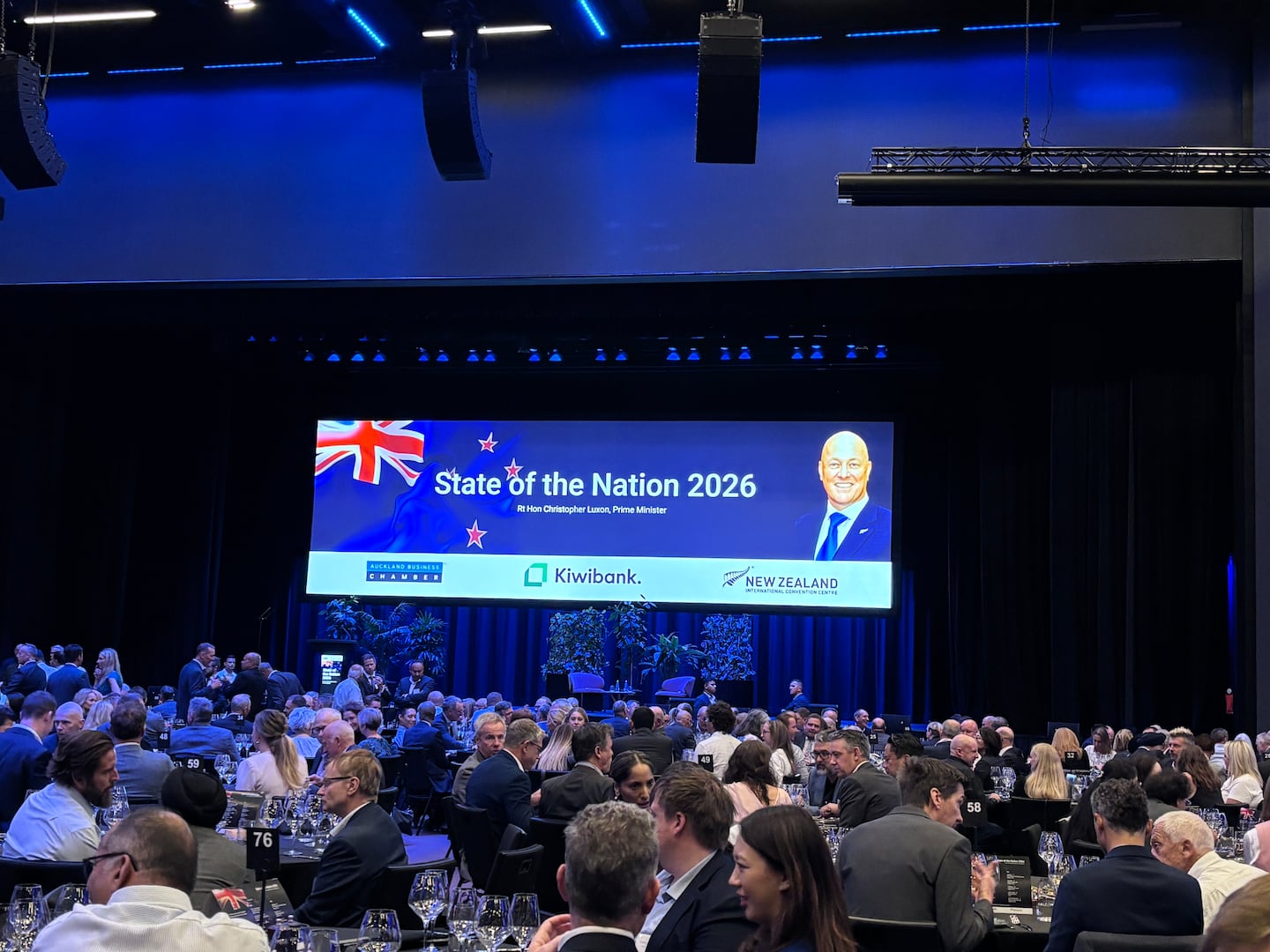
The Prime Minister has used his State of the Nation speech in Tāmaki Makaurau today to frame 2026 as an election year focused on economic recovery, law and order, and what he described as “fixing the basics” but stopped short of announcing an election date or unveiling new policy, with a notable, but unsurprising, absence of Māori specific references.
Christopher Luxon said the election date would be “locked in soon”, telling the audience National was already shifting into campaign mode.
“Now heading into the election this year, National will campaign on a bold plan to build the future and leave a legacy of prosperity and opportunity for future generations,” Luxon said.
Earlier today, Luxon also signalled potential retirements within the National Party caucus, which could lead to changes in ministerial portfolios, though he did not identify who may be stepping aside.
The Prime Minister used the speech to reinforce National’s core election themes, highlighting law and order, education reform, and reducing red tape, while doubling down on fiscal restraint amid ongoing cost-of-living pressures.
“Any party that wants to ramp up spending is being economically irresponsible,” Luxon said.
“The only way to spend more money is to borrow it or to raise taxes.”
He pointed to what he described as “encouraging” signs of economic recovery, citing falling inflation, easing interest rates, and rising business confidence.
“I feel more confident than ever that the recovery has now arrived and Kiwis can look forward to a year which is brighter than the last few,” he said.
On law and order, Luxon claimed significant progress, saying violent crime had reduced by 38,000 victims, youth offending was down 16 per cent, and ram raids had fallen by 85 per cent since National took office.
“When it comes to violent and retail crime, we’re fixing the basics,” he said.
Global instability was also a key focus, with Luxon warning the international rules-based system was “rupturing” and signalling a continued shift toward higher defence spending and deeper strategic partnerships in the Indo-Pacific.“
“In a more dangerous world, it would be reckless to continue banking the dividends of peace,” he said.
Despite the breadth of the speech, there was no direct reference to Māori rights, Te Tiriti o Waitangi obligations, iwi-Crown relationships, or kaupapa Māori policy, nor any acknowledgement of Māori-specific impacts in education, justice, economic development, or health.
The only implicit references to Māori were within broad national statistics on education achievement and crime, with no mention of Māori-medium education, Māori land and resource interests, or Treaty-based considerations in proposed reforms to NCEA, KiwiSaver, or the Resource Management Act.“
“National is fixing the basics and building the future,” Luxon said.
A future outlined largely in universal economic and security terms, without targeted commitments to Māori communities or Treaty partnerships.