

Tainui Stephens is encouraging Māori storytellers not to limit themselves, saying it’s possible to tackle even the deepest issues with humour.
He says the new film Holy Days does just that, reflecting the complexities of Māori grief and where it meets church faith carried in a uniquely humorous way.
“He kaupapa hōhonu, engari ka kawea mā te wairua ngahau,” Stephens says.
Set in the 1970s and based on a novel by Joy Cowley, the film explores grief, love and faith through the story of young Brian Collins, struggling with the death of his mother. Determined to stop his father from remarrying, Brian takes refuge in a convent, dreaming of reuniting with his mother through prayer.
When he discovers the convent may be shut down, he sets off on a journey to the Southern Alps, aiming for his tupuna maunga, Aoraki.
“Tētahi taha, ko te hiahia o te tangata whai rawa kia riro whenua mai, tētahi taha ko te mahi nui kia mauri tau ai te mamae.”

Stephens, a trailblazer in Māori broadcasting and filmmaking for more than 40 years, served as cultural producer on the film. He worked closely with mana whenua, including Ngāi Tahu (Ngāti Huirapa), to ensure the respectful use of tikanga Māori, particularly in scenes featuring Aoraki.
“I tono mātou i tō rātou whakaaetanga kia whakaahuatia tō rātou tūpuna maunga, ā, i tukuna hoki ngā karakia e tika ana kia māmā ake ai te huarahi.”
The film stars a young talented Elijah Tāmati (Ngāti Kahungunu) as the lead, alongside Judy Davis, Merema Golis and Jacqui Weaver.
“He pakari, he whakamīharo ā rātou mahi. Ka patere ngā roimata i te kite atu i ēnei mahinga katoa.”
Ngā taukumekumetanga
Although the movie is set in the 1970’s, the release comes at a time when conversations about the Church’s historical relationship with Māori remain prominent, particularly following the 2024 Royal Commission of Inquiry into Abuse in Care.
Stephens says he had reservations when he first read the script.
“[I] kī katoa taku hinengaro i ngā āhuatanga kikino, mō te tāmitanga, mō te tūkinotanga o ā tātou tamariki i roto i ngā hāhi, i ngā institutions pērā,”
“Me taku aroha pū ki ngā piripono o te Hāhi Katorika, e korekore ka pā te ngaringariā, te whakamā ki a rātou mō ngā mahinga a wētahi o rātou.”
He acknowledges this, and says Holy Days may offer another perspective.
“Ka whakaaro au, he huarahi kē tēnei e taea e te marea te tino kite i te aroha o ngā piripono o te hāhi.”
Stephens says the original novel did not feature a Māori lead, but changing the character added spiritual and cultural depth.
“I īnoi a Joy kia whakaae kia Māori kē te tamaiti i roto i te kiriata, ā, ka whakaae ia. Nā tērā ka puare te ara ki te wairuatanga Māori ki roto i te kaupapa.”
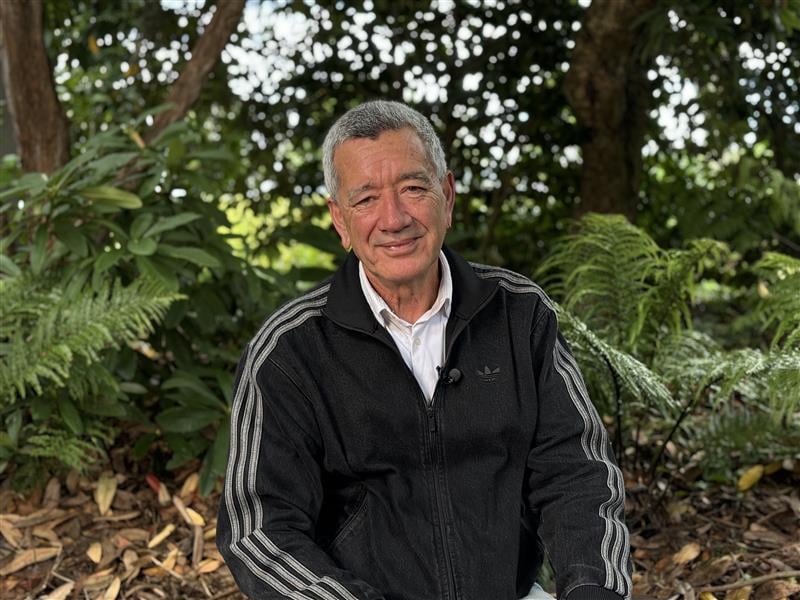
Stephens says Māori storytelling has evolved over the last four decades and encourages creatives not to limit their vision.
“Ehara i te mea me whāiti tā tātou titiro ki ngā kōrero, e tika ana kia tukuna ki te ao,” he says.
“Kua whānui kē ināianei, whakangahau mai, whakamataku mai. He nui tonu ngā kōrero kei mua hei mahi mā tātou.”
Holy Days screens in cinemas nationwide on February 26.