

This article was first published on APTN News in Canada.
First Nations leaders across Quebec have thrown their support behind the Innu community of Ekuanitshit following an aggressive raid of an Elder’s cabin by police and wildlife officers.
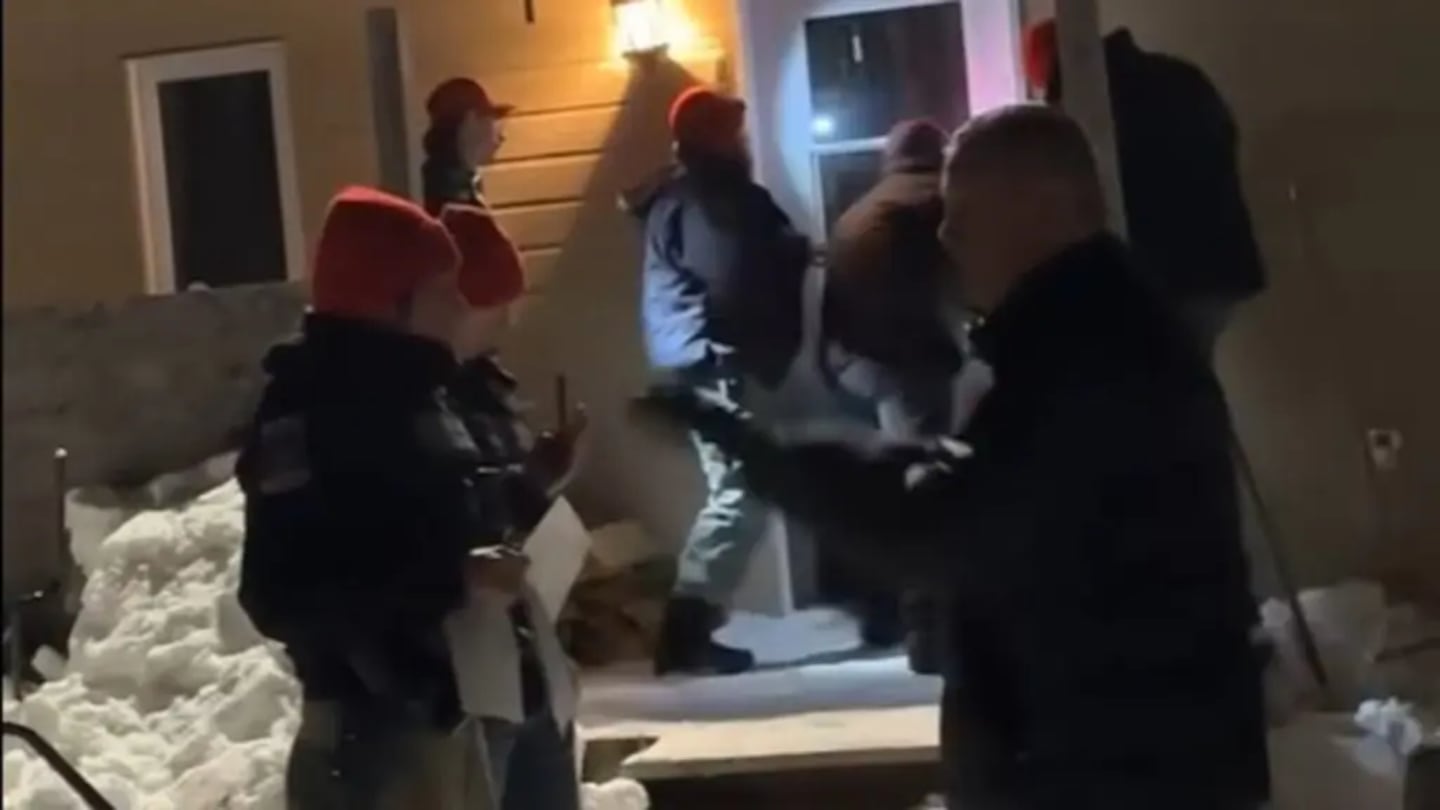
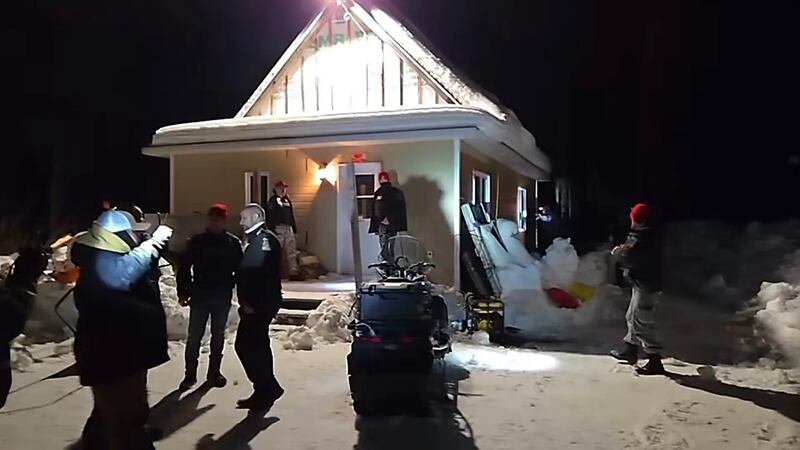
In the evening of Feb. 23, at least eight wildlife protection agents, accompanied by members of Quebec provincial police called the Sûreté du Québec [SQ], attempted to serve a warrant on a hunting cabin in Ekuanitshit.
The community, more than a thousand kilometres northeast of Montreal, doesn’t have its own police force.
Wildlife protection agents were looking for the carcass of an endangered woodland caribou, which they said the Elder, identified by Canadian media as Evelyne Piétacho, had in her cabin as a result of poaching. According to the Government of Quebec, there are roughly 7,000 such animals left in the province, giving woodland caribou “vulnerable” status, while the caribou are considered “threatened” at the federal level.
When Piétacho refused to open the door, police resorted to breaking it down. Piétacho reported she was injured when broken glass struck her face.

Videos shared on social media show the raid being carried out, as well as angry Ekuanitshit residents confronting officers. In one video, community members yell at officers that there is a child in the dwelling. In another, a local man appears to be pushed by a police vehicle with its lights on.
The next morning, the police service in the neighbouring Innu community of Pakua Shipi posted a statement on social media declaring that they would not allow wildlife officers to make interventions in the community at the current time.
“The relevant authorities have been contacted to ensure that no deployment takes place on the territory,” the statement said.
“This decision is intended to prevent any escalation and to ensure the safety of everyone. Recent events that occurred near another community demonstrate that the absence of structured dialogue can create unnecessary tensions and compromise the safety of both officers and community members.”
The Assembly of First Nations Quebec-Labrador [AFNQL] issued a statement of its own, condemning what they called “the disproportionate intervention” by the SQ and Wildlife Protection Officers.
The statement argued the raid was “carried out without an adequate understanding of the local context, generated unnecessary tensions, heightened feelings of insecurity, and weakened relations with the community.”
Regional Chief Francis Verreault-Paul called for the Minister of Wildlife and other connected authorities to share all documentation and evidence with leaders of affected First Nations to explain why such an aggressive intervention was necessary in the territory of a First Nation.
While the AFNQL statement reaffirmed the necessity of protecting caribou, it also noted that “the recent intervention may infringe upon the inherent right to customary hunting, a right that is recognised and essential to the identity, culture, food sovereignty and overall well-being of First Nations.
“Access to caribou is not a recreational activity; it is a pillar of food security and community health,” the statement read, “particularly in remote territories where alternatives are less accessible and more costly.”

Vice-chief Marcel Mestokosho of Nutashquan, the next closest Innu community, followed up with a social media post expressing solidarity with the people of Ekuanitshit.
“Wildlife officers, who called in the SQ for assistance, believing that a caribou was in a house, used force, causing serious trauma,” Mestokosho wrote.
“An elderly woman was injured near her eye, and her granddaughter was deeply traumatised. This is totally unacceptable. Our elders and our children must be protected. We always help each other when serious things happen, and mutual aid between our communities is essential at times like this.”
Subsequently, Grand Chief of the Wendat Nation Pierre Picard posted a statement on social media stressing that the incident in Ekuanitshit was a reminder that First Nations have rights that cannot be dismissed or refused by provincial authorities.
“We carry out our customary activities on land that we have never ceded or abandoned,” he wrote. “For First Nations, hunting is not a leisure activity: it is an essential means of meeting basic needs in a very real context of food insecurity. […] Violence has no place, whatever form it takes, and even less so when it targets the exercise of a right and responsibility that is inherent to us.”
The president of Quebec Native Women, Marjolaine Étienne, also made a social media statement expressing “solidarity with and deep concern for” Ekuanitshit.
Étienne highlighted the fact that an Elder was injured in the incident, and said no intervention should threaten the safety of First Nations women and girls, nor their rights or dignity.
“This intervention highlights the urgent need to end practices and behaviours that undermine trust and threaten the safety of families and communities,” Étienne wrote.
“It is essential that services be rooted in First Nations realities and based on a safe approach.”
Comments about the incident raged online as well.
For some, the incident harkened back to a past of ugly relations between Innu and wildlife protection agents.
One Facebook user posted a quote from pioneering Innu author An Atane-Kapesh’s landmark 1976 book Eukuan nin matshi-manitu innushkueu / « Je suis une maudite Sauvagesse » (I am a Damned Savage), reading “If the gamekeeper knows nothing about the inland areas and is unfamiliar with all the species of Indian animals, we Indians have no use for him and do not want to see him.”
The Innu perspective on caribou
For Guy Bellefleur, the Innu Nation’s lead on caribou issues, the centre of the conflict is a misunderstanding about Innu hunters’ relationship with woodland caribou.
“The word poaching does not exist in our vocabulary,” Bellefleur told APTN in a French interview.
“But someone who lacks respect for the animal, yes, that exists. And our Elders have always told us to never disrespect the animal. Those are values that must continue to exist.”
Though the Quebec and federal governments have designated woodland caribou an endangered species, Bellefleur said that designation is the product of discussions that did not include Innu hunters.
“What we have tried to do with the Quebec government is to get them to involve us in research and inventories, which is not the case,” he said.
“So we mistrust and don’t believe the data they have; we have never trusted the Quebec government.”
Bellefleur stressed that when Innu representatives spoke with Quebec about the caribou, they said the most pressing risk was the destruction of caribou habitat by forestry. That was a message Bellefleur said the Quebec government and forestry companies alike did not want to hear.
“We are decreasing the space of the caribou,” he said.
“If we continue to disrupt its environment, the caribou at some point will be endangered.”
For several years, the Quebec government has failed to present an expected plan for the protection of woodland caribou, which the CAQ government and former Minister of the Environment have suggested is at odds with the economic development of Quebec’s forestry sector.
When the federal government pressured Quebec to deliver such a plan in 2024, then-Environment Minister Benoit Charette called any measure limiting forestry activities to protect caribou an “arrogant” threat to Quebec’s economic survival.
“[The woodland caribou’s] natural habitat covers tens of thousands of square kilometers in regions with very different realities,” Charette said in French.
“We are talking about what happen to be the most devitalized regions in Quebec. So not only are jobs being threatened, but regions that are already extremely, extremely disadvantaged are being targeted.”
Bellefleur expressed bafflement that the same government that refused to take action against forestry operations to protect caribou habitat felt the need for an eight-agent search against an Innu Elder in possession of a single animal.

He said the aggression of the raid was especially striking considering the ongoing situations in numerous First Nations communities of increased hard-drug traffic and consumption, and increased violence.
“When it comes to safety in our communities, drugs are a major scourge,” he said.
“People are killing each other within their communities, and nothing is being done about it. But for a caribou, the number of officers who were there is incredible.”
Bellefleur said the same aggression was not directed at the companies destroying caribou habitat, whose offices, he noted, had not been broken into by police.
“Because it’s all about economic benefits,” he said, “which take precedence in this situation.”
Innu hunters, Bellefleur said, will continue to hunt woodland caribou regardless of its status in the eyes of the province or the federal government. But, he stressed, they will do so in a manner that reflects the animals’ tiny numbers.
“We never said there should be no hunting,” he said. “We accept that people hunt woodland caribou. If you take one, that’s fine, because it’s a matter of food supply. We tell the young people to shoot one, not more. Because you have to ensure the permanence of the species.”
Bellefleur said Innu hunters would, above all, like to be left alone to manage caribou as they always have.
“We never asked to govern cows and pigs,” he said.
“We have to govern the species that has always lived with us. We are the ones who have helped them survive.”
By Jesse Staniforth of APTN News.