

Opposition MPs have sharply criticised the Government’s response to the United States and Israeli strikes on Iran, saying Prime Minister Christopher Luxon has failed to clearly denounce what they describe as an unnecessary escalation of violence and a missed opportunity to advocate for peace.
Green Party Co-Leader Marama Davidson said the ongoing air strikes by the US and Israel cannot be justified as a path to peace and that New Zealanders deserve stronger moral clarity from their leaders.
“Kāore i te pai te pakanga hei ara ki te rongo, ki te rangimārie,” she said, asking, “Kei hea te mana o te Pirimia a Luxon ki te whakahē i tēnei pakanga o te US o Israel ki Irāna?”
“Kāore te pakanga he pai mō ngā tāngata ki tēnā whenua, ki ngā tāngata Iranian, huri noa i te ao ki konei, ki Aotearoa,” she said.
She argues diplomacy must be prioritised over military escalation.
“Ko te ara ki te rangimārie, ko te whāriki o te kōrero,” she said, maintaining that dialogue, not bombs, lays the foundation for peace.
Davidson directly challenged the Prime Minister’s stance.
“Where is Luxon’s moral courage and leadership to denounce this illegal war from the US and from Israel to Iran? Does he believe in just letting the whole world be a free-for-all, where countries can just decide individually because they don’t like a leader, that they are going to start a war?
“Is that what the Prime Minister is standing on? He needs to be upfront; he needs to condemn this war because more will just continue to bring more violence, more bloodshed. And that is a pattern that the US particularly has already proven over these past decades,” she said.
Labour Leader Chris Hipkins is calling for de-esclation
“We need to see an immediate de-escalation, a return to diplomacy and a return to the international rules-based order that New Zealand has consistently advocated for in the past,” Hipkins said.
“It’s clear the international rules-based order is under a threat. It is not being followed in this situation, and New Zealand should be principled and calling for a return to the rules that we rely on as a country and that the rest of the world should be able to rely on as well.”
“Succesive New Zealand governments have expressed significant concern about the Iranian regime. But that does not justify any action, particularly when it breaches international law.”
“New Zealand should stand up for our own values and we have always been willing to stand up for international law. We haven’t blindly followed other countries.” Hipkins said.
Te Pāti Māori shares that sentiment.
“Aotearoa must not be complicit. Our foreign policy should be grounded in international law, multilateral diplomacy, and the protection of civilian life.”
The party also called for concrete action.
“We call on the New Zealand Government to publicly condemn unilateral military aggression, advocate for immediate de-escalation, support diplomatic pathways through the United Nations, and prioritise humanitarian aid and civilian protection.”
Te Pāti Māori co-leader Rawiri Waititi said New Zealand must take an independent position.
“Me noho a Aotearoa ki tōna mana motuhake,” he said.
He said the Prime Minister must clearly rule out any military involvement.
“Ko tāku ki te Pirimia, whakamutu atu tō mitimiti i te tau o Amerika, me whakamutu atu tērā mahi.”
Waititi said New Zealand should break alignment in matters of war.
“Tapahi, motuhia te here ki Amerika.”
He warned that political leaders who follow larger powers are complicit.
“Mēnā kei te whaiwhai koe i wērā momo tangata, ehara koe i te tangata rerekē ki a ia. Ko tāu mahi hei taituarā mōna.”
“Ko tāku ki a Christopher Luxon, mēnā kei te whaiwhai koe i wērā momo tangata, ehara koe i te tangata rerekē ki a ia, ko tāu mahi hei taitua rā mōna,whakamutu atu, e kore rawa mātou Te Pāti Māori tautoko ki tērā tūāhuatanga, e kore rawa te iwi Māori tautoko ki tērā tūāhuatanga. Me noho a Aotearoa ki tōna mana motuhake, tapahi, motuhia. te here ki Amerika, motuhia te here ki ngā whenua e kaiapo nei i ngā rawa a wētahi atu e whakamatemate tamariki, e whakamatemate.”
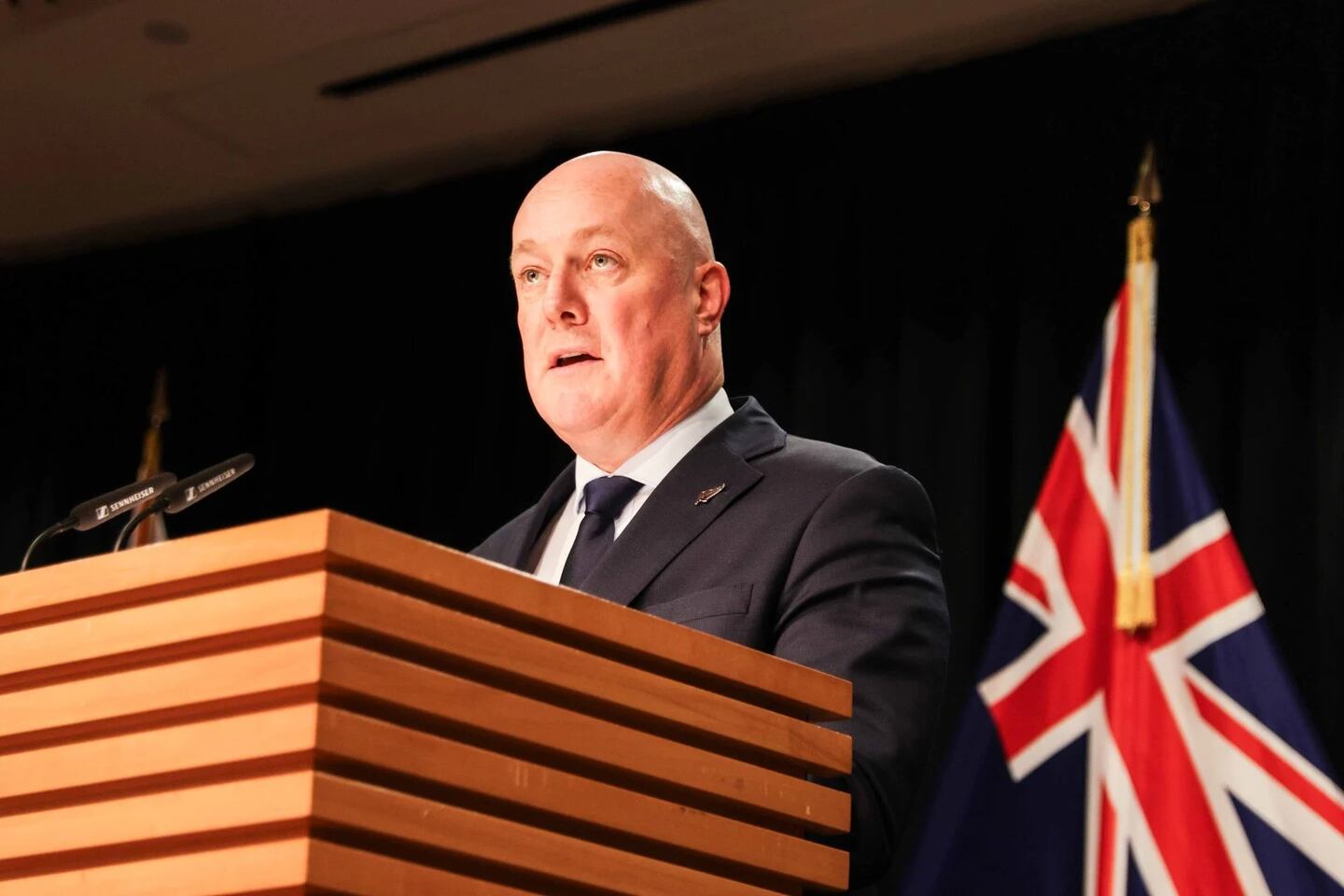
However, speaking at his weekly post-Cabinet press conference, Prime Minister Christopher Luxon said the US actions were designed to prevent Iran from continuing to threaten international peace and security.
“This is a regime that is killing its own people, a regime that has been pursuing a nuclear weapons programme,” Luxon said.
He said New Zealand was not “best placed” to determine whether the US-Israel strikes breached international law.
“Issues of legality are for US and Israel to talk to,” he said, adding that New Zealand was not party to the intelligence and information available to those governments.
Luxon said New Zealand had long supported efforts to prevent Iran from accessing nuclear weapons or suppressing its people, describing it as “an evil regime that is killing its own people”.
He reiterated that New Zealand had consistently condemned Iran’s nuclear programme, its destabilising activities in the region, and its repression of its own people.
In a joint statement released Sunday morning, Luxon and Foreign Minister Winston Peters said.
“In this context, we acknowledge that the actions taken overnight by the US and Israel were designed to prevent Iran from continuing to threaten international peace and security.”
The Government also condemned what it described as Iran’s “indiscriminate retaliatory attacks” across the Gulf and said civilian life must be protected.
Luxon said New Zealand stood “with the brave people of Iran” who had demanded change and that “the Iranian people must be allowed to determine their future”.
He confirmed New Zealand embassies were closely monitoring the situation and urged New Zealanders in the region to register on SafeTravel.
Luxon said 1,750 New Zealanders had registered, more than 1,000 in the United Arab Emirates, 71 in Israel and 26 in Iran, but acknowledged the true number in the region would likely be higher.
Asked how New Zealand’s position compared with Australia’s, which has ruled out military involvement, the Prime Minister said.
“When you look at what the Australian Foreign Minister has said, they are saying pretty much the same thing … they also don’t want to ever see Iran with a nuclear weapon … I don’t think our positions are that different.”

