

Rob Ruha, alongside current Mataatua regional kapa haka champions Te Taumata o Apanui and the New Zealand Symphony Orchestra, have joined together to cement te reo Māori, waiata Māori and kapa haka on an orchestral stage.
The performance known as TEIWA was featured within the 2026 Aotearoa New Zealand Festival of the Arts that took place in Wellington on Saturday.
Festival co-director Tama Waipara says the performance platforms the collaboration of both Māori and the traditionally recognised form of European music are on an equal level, breaking barriers.

“The parallels of excellence are on show with this kaupapa. It’s about recognising the mana of all artistic disciplines and seeing them come in to that space where they can play together,” he says.
Furthermore, the creative lead for TEIWA, Rob Ruha, says the inclusion of Te Taumata o Apanui is a chance for his whānau to find a new stage to share their performance with the world.
“Ko te TOA, he kaupapa kawe kaupapa, waha kaupapa, ā, tēnei anō hoki o ngā whakaaturanga, he ara anō hoki hei tuku atu ki te ao, te kaha o te Māoritanga.”
Embodying past aspirations
The performance is not the first time a kapa haka group has shared the stage with the New Zealand Symphony Orchestra.
In Gisborne, Waihīrere performed alongside Dame Kiri Te Kanawa and the NZSO in a concert welcoming the new millennium.
Furthermore, in recent years the NZSO have collaborated with many Māori artists, including Rob Ruha, Teeks, Maisey Rika and others.
Waipara says TEIWA reflects longstanding aspirations to see te reo Māori used more widely and serve as a bridge between communities.
“Everything we do in this festival is about trying to connect with our community as a whole. But, we have to be real about it; there are communities, and it requires a real kanohi ki te kanohi, mana ki te mana in order for those true conversations and those places of meeting to occur. And, I think if we actually just start from a place of practising our values, not just putting them on a policy document, but actually living them, then that’s the first place we can start.”
Furthermore, for Ruha whos solo career has spanned more than a decade, he has seen the change and implementation of te reo Māori and waiata Māori in many music spaces, saying te reo Māori has normality in these spaces.
“I reanga kē atu tēnā pea ko te reo Māori te whāriki takatakahī mā te kaupapa, engari i roto i ngā kaupapa i ngā tau nei, i roto i tēnei reanga me te reanga hou e pihi mai ana, kua kite ko te reo Māori e noho māori noa iho ana ki roto i ngā whetiwara, i roto i ngā kaupapa pūoro.”
“Changing the DNA of European Orchestra”
The NZSO welcomed new chief executive Marc Feldman early last year. He says performances such as TEIWA are reshaping the traditional European orchestral form.
“The DNA of the European orchestra is changing, and it’s changing because of our collaborations with Māori culture, with other cultures around the world and this to me is what the most exciting thing about what we’re doing,” he says.
Indigenous artists around the world have increasingly taken to orchestral stages in recent years. In 2023, Indigenous Australian didgeridoo player William Barton performed with the Queensland Symphony Orchestra as part of the “Hidden Sounds of the Americas” performance, blending traditional First Nations instruments with contemporary orchestral compositions.
Those involved in TEIWA say they hope that, within the next two decades, seeing kapa haka performed alongside an orchestra will no longer be a ground-breaking sight.
Furthermore, the goal for those involved with the TEIWA performance is that in 20 years, the idea of seeing kapa haka on an orchestral stage will be normal.
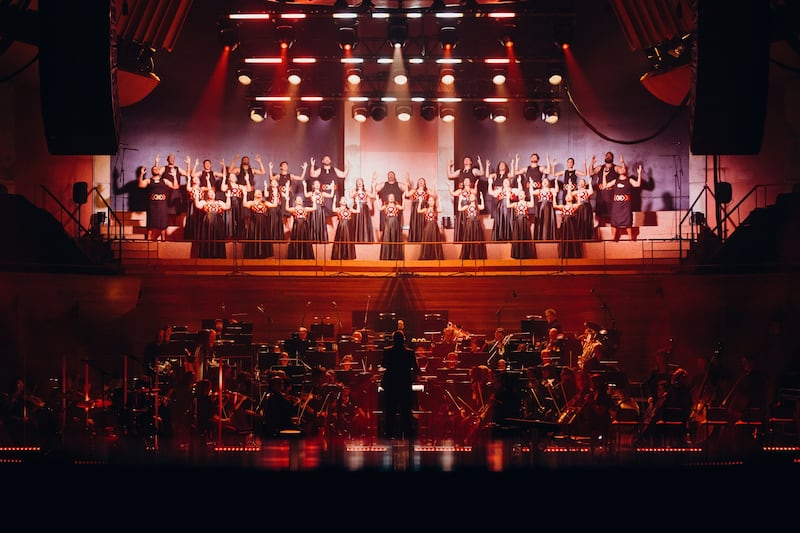
“What do I hope in 20 years? I hope that this is not something, and I’m going to say something crazy here, I hope it’s not so special. I hope this becomes something that is almost normal,” Feldman says.
“But, I think that Rob’s artistic vision,n and obviously with the orchestra, with Mahuia Bridgman-Cooper’s arrangements, with Te Taumata o Apanui and the world of haka, none of this will be ordinary, but maybe in 20 years it will,” says Waipara.
