


I whakaputahia tuatahia tēnei atikara e RNZ
Hira Nathan (Ngāti Kahungunu, Ngāti Tūwharetoa, Ngāpuhi) carries a name rooted in whakapapa, identity and connection to four generations of his whānau.
But at a job interview for a roofing gig in Hamilton a few years ago, he was referred to as “Harry the Marry” and told his name was “too hard” to pronounce.
The now best-selling writer told the interviewer that his name wasn’t “that hard”, but it was laughed off. That person carried on introducing him that way to other staff, and “everyone laughed”.
A video about that experience, which he recently posted online through his platform The Mindful Māori, gained more than 100,000 views, with hundreds of people sharing similar experiences of having their Māori names changed, shortened or mispronounced.
“At the time, you just absorb it,” Nathan told RNZ.
His journey navigating identity, belonging and connection inspired his pukapuka, Whakawhetai: Gratitude, Piki te Ora, and Māori Ora, a bilingual gratitude journal to help others reconnect with mātauranga Māori and embrace their Māoritanga in everyday life.

A person’s name, Nathan says, is a part of their tuakiri (identity).
“I didn’t like it, but I took it. I showed up, I did the mahi and answered to a name that wasn’t mine... That’s how subtle and easy systemic racism is. It isn’t always loud. It’s not always someone yelling at you.
“It’s often a joke. It makes people feel small. And over time, you learn not to make a big deal about it, just to fit in and not be difficult.”
At the time, he remembers feeling “helpless”. He would “put my headphones on, do my mahi, go home and not talk to anybody”.
“That teaches you that your name, your culture, your identity is optional.
“There’s no way I would take that because these days I stand confidently in my identity and my whakapapa as Māori. And I’m just not about making myself feel smaller so other people can stay comfortable.”
As he got older, he recognised it for what it was. He challenged a colleague at another workplace who joked he should break into a locked truck because he was “the Māori”. The colleague later apologised and thanked him for speaking up.
Moments like that taught Nathan he no longer had to quietly accept disrespect, he says.
“I know what wrong feels like now.”

Nathan feels lucky he grew up connected to his whenua. He was raised in Hawke’s Bay beneath his maunga Kahurānaki, where he caught tuna at Lake Poukawa near Te Hauke, rode horses and helped his whānau prepare for hui and tangihanga.
While he describes his upbringing as “tino Māori”, he still felt disconnected.
“I felt like I missed out on something because I wasn’t at the front of the marae learning the reo. I was out the back doing the mahi.”
A kōrero with a friend, who is was fluent in te reo Māori and grew up in kura kaupapa, shifted his whakaaro over their shared feeling of disconnection.
“We had different experiences of our Māoritanga, but it was all special and our own unique haerenga,” Nathan says.
“That’s when I realised there’s no one way to be Māori.”
That understanding inspiredMāori Ora - pukapuka grounded in mātauranga Māori - daily practices of connection, to self, to whānau and te taiao.
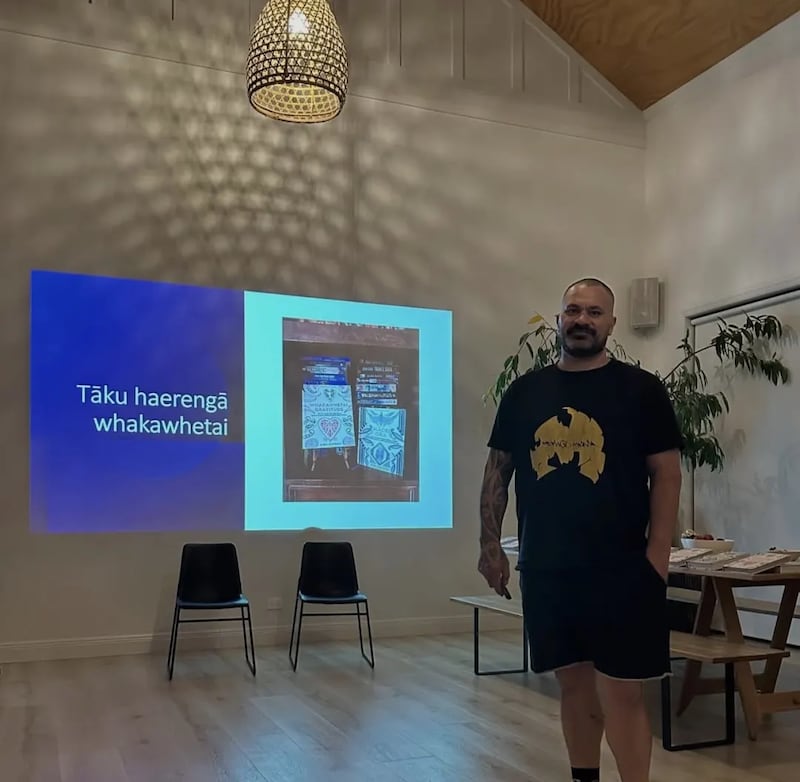
“I thought no one would be into it,” he admits.
But the first print run of Whakawhetai: Gratitude sold out in days. Within a few months 4000 copies were sold.
Nathan, now a project manager for KiwiRail in Tāmaki Makaurau, also runs wellness retreats grounded in mātauranga Māori. Much of his mahi, he says, is about reminding Māori of the importance of identity and belonging - that they do not need to shrink themselves to fit into other spaces.
“When we have our names taken from us, when we have our reo taken from us, the easiest way to marginalise someone is to take away their identity,” he said.
“You take away our language, we lose our voice. You take away our names, we lose part of who we are.”
Nā Layla Bailey-McDowell nō RNZ