
Former Ardijah lead singer Betty-Anne Hall has launched her debut solo album, Slow Burn, stripping away the massive synth-funk productions that made her a household name for a raw new sound.
Speaking from her living room with Te Ao Māori News, where she performed an acapella rendition of her new track, Betty-Anne said the album marks her first major release as a solo artist.
Unpacking ‘Pūmau Tonu Koe’

The featured track, “Pūmau Tonu Koe”, is a direct reo Māori translation of her English-language song “You Remain”. The track addresses the raw emotional struggle of past heartbreak and the process of moving on from a relationship.
To bring the song into Te Reo Māori, Betty-Anne leaned on close friends to help translate the lyrics, ensuring the emotional weight of the original material was preserved.
“I wanted to share this waiata in the reo, it’s beautiful, it’s poetic as well, you know, and the feeling for it for me is very emotional,” Betty-Anne says.
The composition captures the weight of looking back at a definitive chapter of her life. While the English version laid the groundwork, Betty-Anne said performing the track in Te Reo Māori brought a different emotional reality to the surface, reflecting the pain of a love that cannot be forgotten.
“It’s a journey of loneliness,” Betty-Anne said. “You know it’s a memory or memories and they just keep...going on and on, the experience of once was.”
Those memories belong to her time as the lead singer of the legendary band, Ardijah.
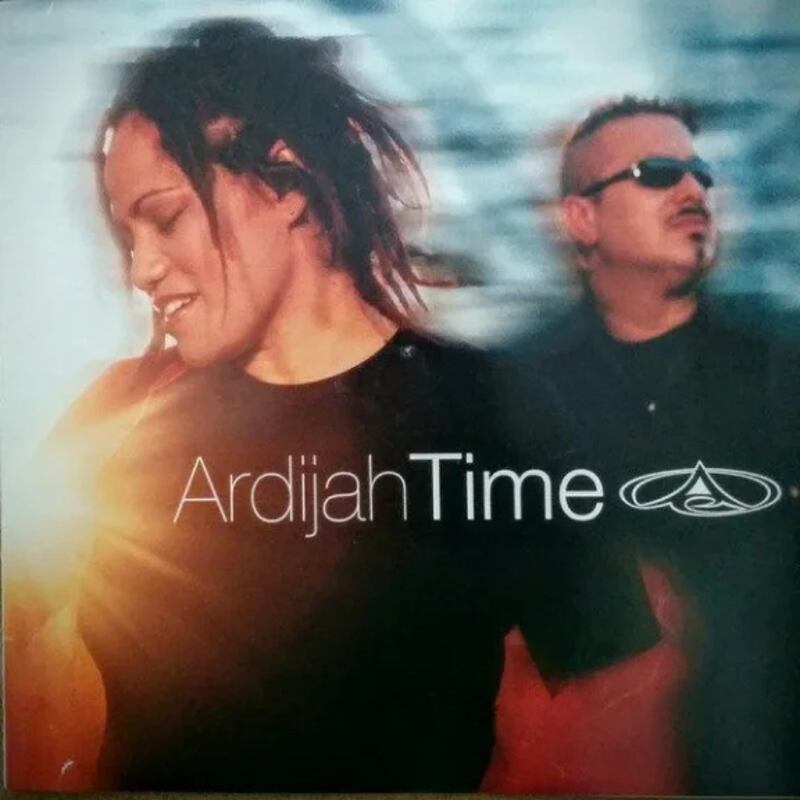
Alongside her former musical and life partner, Ryan Monga, they formed an iconic duo that heavily influenced the soundscape of Aotearoa. Stepping away from that shared legacy to release her first standalone record meant confronting those moments completely exposed.
As a grandmother, Betty-Anne admitted she initially felt the pressure to put up a strong front, thinking that in her role as a nanny, she should not show weakness. However, through this musical process, she realised it is okay to be vulnerable.
“We still feel, you know, it’s still so real, and I suppose I really felt that this is something, it’s honest, and it’s quite real, and I’m okay to speak it, to share it,” she said.
Reclaiming identity

In entering this new era, Betty-Anne has also reclaimed her Māori identity by receiving her moko kauae.
She said the decision followed an internal calling she did not take lightly, especially given her whānau’s history. Growing up, the practice was not normalised in her environment, and she had no visible examples in her daily life to look up to.
“Last few years, I’ve been, I don’t know, it’s a calling for me, but not taken lightly, you know,” Betty-Anne said.
“And on my mum’s side is of a generation where there were no nannies that I could see, no aunties.”
“I did confide in some wāhine who I respect, and they guided me, and I just felt it was the right time with the right people,” she said.
When the time came to receive her moko kauae, her family was not around to witness the process. However, the generational impact of her choice became clear later on when her own moko saw her with it. Inspired by seeing her grandmother carry the taonga, her moko told her that she would like to receive one too when she grows up.
For Betty-Anne, being able to normalise the art form for the next generation of her whānau brings a deep sense of fulfilment.
Her new solo album is out now, showing that it is never too late to find your own voice. Kua puta ināianei tana kōpae hou e whakaatu ana kāore he mutunga ki te kimi i tō ake reo.