


Considered one of the most influential thinkers and cultural leaders in te ao Māori over the past century, Tā Hirini Moko Haerewa Mead has died, leaving behind an extraordinary legacy in Māori education, language revitalisation, scholarship and the preservation of mātauranga Māori.
A distinguished professor, author, artist and tribal leader of Ngāti Awa, Ngāi Tūhoe, Ngāti Tūwharetoa and Tūhourangi descent he is being remembered as being a master mind who shaped Te Ao Māori.
Green Party MP Tamatha Paul, also of Ngāti Awa, reflected on Tā Hirini’s impact on generations of Māori students and academics.
“I think we are so lucky to have had him for almost a century...He is the most special taonga from Ngāti Awa.”

Over the last century, Tā Hirini authored more than 70 books, papers and articles; founded New Zealand’s first university-based Māori Studies department; co-curated the landmark Te Māori exhibition; helped lead Ngāti Awa’s Treaty settlement; and played a central role in bringing Te Whare Wānanga o Awanuiārangi into being.
Atu i Te Teko ki te ao
Tā Hirini spent his early years in the Bay of Plenty, where he trained as a teacher and artist. He served in schools across the East Coast, Bay of Plenty, Waikato and Hawke’s Bay before becoming a principal. Teaching, he would later say, was always his calling.
He earned his BA and MA at the University of Auckland before completing a PhD at the University of Southern Illinois in 1968. He then taught in Canada at McMaster University and the University of British Columbia, where his reputation as a scholar of te ao Māori continued to grow.
“What was stunning about him was that he was so koi and brilliant right until the end,” recalls Labour MP Willie Jackson.
“He tangata, he rangatira momo, tika ana ki te maumahara tēnei rangatira. Rerekē ia ki ngā kaumātua i te mea hoki ko ia te kaiārahi o ngā academics i roto i tēnei ao, he tauira mō tātou te iwi Māori.”
In 1977, he returned home to become the country’s first Professor of Māori at Victoria University of Wellington, where he established New Zealand’s first Māori Studies department and helped oversee Te Herenga Waka Marae, the first university-based marae in the country.
Te Māori: Te huringa o te tai
In 1984, Tā Hirini co-curated Te Māori, the landmark exhibition of taonga Māori that opened at the Metropolitan Museum of Art in New York before touring the United States and returning to Aotearoa.
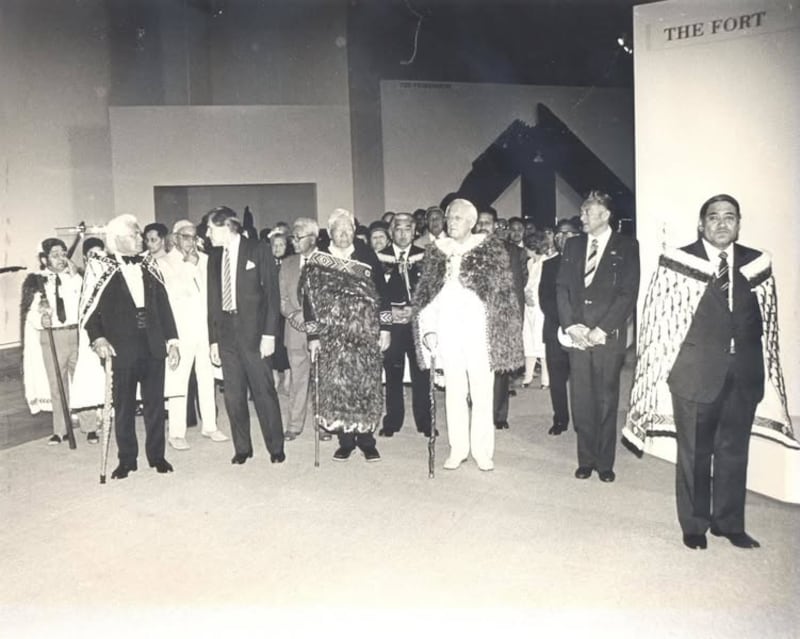
It helped reshape how Māori art was presented and understood, placing te ao Māori firmly at the centre of the exhibition.
“Nāna, nā tana wahine, tā rātou momo hoki i whakapuare i te kūaha o ngāi tātou ki te ao,” reflects Māori Development Minister Tama Potaka.
He was also instrumental in the repatriation of tāonga Māori, maintaining that questions of stewardship and mana over cultural treasures were matters of deep significance.
Te Whare Wānanga o Awanuiārangi
After retiring from Victoria University, Tā Hirini turned to another ambition: establishing a Māori university in Whakatāne. When others questioned whether the resources could be found, he said he held fast to faith and hope.
Te Whare Wānanga o Awanuiārangi was the result. He served as Chair of Te Mana Whakahaere o Awanuiārangi from 2003 to 2020 and became its inaugural Writer in Residence in 2020.

The institution stands as an enduring expression of his belief that Māori could build their own centres of knowledge, on their own terms.
Upon further reflection, Tamatha said many Māori would not have had access to the opportunities they enjoy today without his pioneering work in tertiary education.
“He was the first Māori professor, the first Māori studies lecturer. He created the first marae at university, and now every university has a marae.”
He anga whakamua i a Ngāti Awa
Alongside his academic life, Tā Hirini answered the call of Ngāti Awa. After being asked by elders Eruera and Matarena Rēneti to help reunify and renew the iwi, he became a central figure in advancing its Treaty claim from 1980 onward.
The Ngāti Awa Treaty settlement was reached in 2005. He later served as inaugural Chair of Te Rūnanga o Ngāti Awa, was appointed to the Waitangi Tribunal in 2003, and in 2010 became inaugural Chair of Te Pourewa Arotahi: Post-treaty Settlement Futures.
Tā Hirini was a prolific writer whose works, including Tikanga Māori: Living by Māori Values, Ngā Pepeha a Ngā Tūpuna, and Landmarks, Bridges and Visions, remain foundational texts. He was also a composer of waiata for Ngāti Awa that continue to be sung.
Te Pāti Māori MP Oriini Kaipara said generations of Māori continue to benefit from the foundation he laid through his writing and scholarship.
“Nāna katoa ngā whakataukī, ngā whakatauākī, ngā pepeha, ngā tikanga, tikanga marae, whaikōrero, nāna ngā pukapuka i tuhi i mārama pū ai te whakareanga o nāianei.”
He was made a Distinguished Companion of the New Zealand Order of Merit in 2007 for services to Māori and education, and in 2009 became a Knight Companion, Tā Hirini Moko Mead, KNZM, FRSNZ.
Tōna makau, tōna pou
Tā Hirini often said his late wife, Lady June Mead, made much of his work possible. She taught alongside him in primary schools, supported the establishment of Te Whare Wānanga o Awanuiārangi, and helped raise their family. ‘Most of what I was able to do, I could not have done it without her,’ he said.
He is survived by his children, including Professor Linda Tuhiwai Smith, Dr Aroha Te Pareake Mead, and Hinauri Mead.
Te Ao Māori News understands he is currently at Whakatāne Hospital and will be taken to Kokohinau marae in Te Teko on Saturday, 30 May.
The nehu will take place on Tuesday, 2 June.
Nō reira, e te pou o te ao Māori, e Tā Hirini, moe mai rā.