

Health Minister Simeon Brown has been accused of political interference after declining to reappoint the first wahine Māori chair of the Medical Council, saying the regulator had become distracted by politics and an “ideological agenda”.
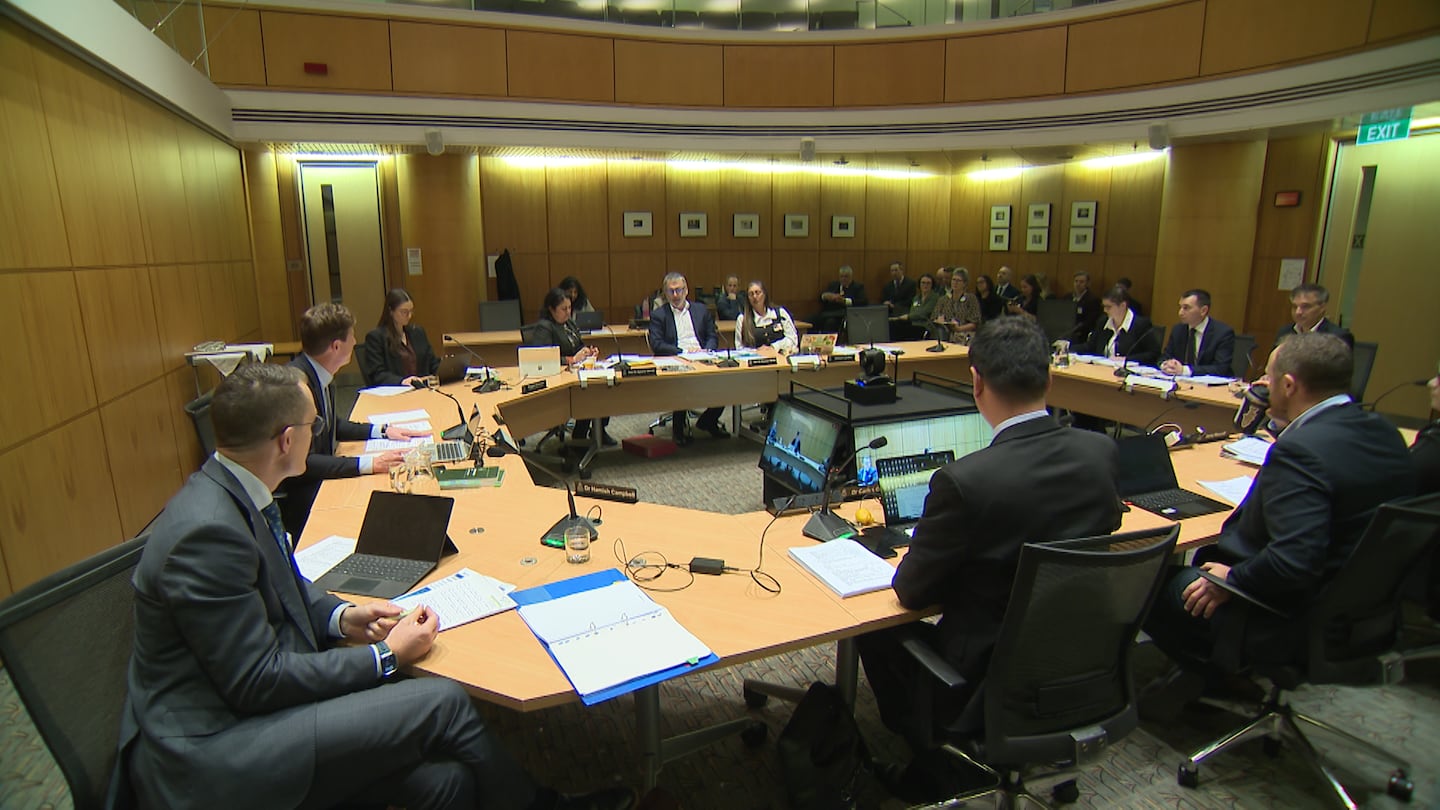
The decision not to reappoint Dr Rachelle Love and deputy chair Simon Watt was one of the many issues the Minister was grilled on by the Health Select Committee as scrutiny week continues at Parliament.
The move has sparked backlash among senior doctors and health leaders, who argue the minister is undermining the independence of an evidence-based regulator while dismissing efforts to address longstanding Māori health inequities.
Brown declined to reappoint Love and Watt when their terms expired, despite both remaining eligible for another term.

Minister says Medical Council was ‘distracted by politics’
The Medical Council is responsible for registering doctors, setting professional standards and ensuring practitioners are competent and fit to practise.
Explaining his decision earlier this week, Brown pointed to the council’s recent consultation on cultural competence, cultural safety and Māori health and wellbeing.
“The Medical Council has become increasingly distracted by politics instead of focusing on its core responsibilities of improving patient outcomes and ensuring New Zealanders can get the care they need, when they need it,” Brown said.
“You only need to look at the council’s recent consultation documents, which ask doctors to examine their own ‘privilege’, to challenge the ‘dominant culture’ of the health system, to study the difference between cultural appreciation and cultural appropriation, and to help ‘dismantle’ systems.
The council’s draft statements outlined expectations that doctors understand how culture can affect health outcomes and how bias and systemic factors can contribute to inequities in healthcare delivery.
Love, a Christchurch-based head and neck surgeon of Ngāpuhi and Te Arawa descent, was elected chair by fellow council members in March 2024 and became the first wahine Māori to hold the position.
Before opposition response
Questioned during Parliament’s Health Committee scrutiny hearing on Tuesday, Brown doubled down on the decision.
“My view, our view was the Medical Council was distracted. We want it to focus on patients, we want it to focus on strengthening workforce and that’s what my decisions were,” he said.
Brown also criticised aspects of the council’s work on cultural safety and equity.
“I want doctors focused on strengthening access to care for patients, not dismantling systems. I want them focused on making sure they treat patients based on their needs.”
The minister maintained that appointments to the council were ultimately a matter for ministers and Cabinet.
“Ministers make decisions every day on ministerial appointments. I’ve taken responsibility for this decision.”
However, Labour health spokesperson Dr Ayesha Verrall said Brown was substituting his own judgement for that of medical experts.

“As a doctor, I know that to be effective you have to know what is medically right but be able to communicate that in a way that the person you’re caring for can take on board,” she said.
“Of course, you have to pay attention to people’s backgrounds, their culture and what they say. The Medical Council is full of our top medical professionals. They know those things. Simeon Brown has no idea and yet he’s decided that he’s going to substitute his judgment for that of the Medical Council.”
“It is an overreach.”
Verrall said ministers should engage with regulators but not dictate professional standards.
“I don’t believe a minister who thinks the very essence of how you do medicine is something that he knows better than the Medical Council. That is utterly ridiculous.”
She said the decision reflected misplaced priorities.
“I think the minister is prioritising a petty fight with Māori over actually doing his job, which is delivering the workforce that New Zealand needs.”
Green Party health spokesperson Huhana Lyndon described the move as “ministerial meddling”.
“This is a body that sets standards for the medical profession. It’s evidence-based, the health professionals are all coming out offended as to what’s happened.”

Around the Cultural Safety Debate
Lyndon said cultural safety and cultural competence were established professional standards that benefited all patients.
“Cultural safety and cultural competence is something that benefits all New Zealanders. Māori, Pacific, whaikaha, takatāpui.”
She said the decision would send a concerning message to Māori leaders working within the health system.
“She’s the first wahine Māori leader within the New Zealand Medical Council and she’s a celebrated Māori health professional.”
“There are grave fears with the way that the minister is directing the traffic and the way that professional standards will be implemented moving forward.”
Association of Salaried Medical Specialists executive director Sarah Dalton said Brown appeared to fundamentally misunderstand the Medical Council’s role.
“He fundamentally seems to misunderstand their core role, which is about ensuring that medical practitioners are qualified to keep patients safe.”
“They don’t have a role in building the workforce in the way that he describes.”
Dalton said the council’s work on cultural safety had been underway for years and forms part of existing competency requirements for doctors.
“The work that they have been leading about cultural safety started when Dr Andrew Connolly was chair back in 2016-17 and has been integral and does form part of the competency standards that doctors and medical practitioners are required to meet.”
She said Brown’s criticism of the council’s work ignored the reality of persistent health inequities.
“Every patient isn’t the same and if you’re talking about outcomes and life expectancy, we don’t all have the same outcomes and life expectancy depending on gender, ethnicity and socioeconomic status.”
“If a doctor chooses to be blind to those things in access to care and treatment pathways, then they are not treating patients safely.”
Dalton argued the Government was projecting its own ideology onto professional regulators.

“I think it’s a classic example of this government, it has its own ideological drivers and they’re mirroring them onto the regulatory bodies that they are now trying to shape.”
She warned that the decision represented political interference in an independent regulator.
“I think it’s an overreach of politicians. They need to have confidence in the work of regulatory bodies that are run by the profession for the profession.”
“This is not about doctors going off piste. This is about the Medical Council being entrusted with ensuring patients can receive safe care wherever they live.”
The leadership change comes as the Government considers reforms to the Health Practitioners Competence Assurance Act.
Dalton said the latest appointment decision would heighten concerns across the sector.
“It’s an attack on their independence and I think any regulatory body should be worried about what is going on at the moment.”
‘Committed to Treaty obligations’ Health Minister
MP’s also pressed Brown on how he is delivering across the board for Māori and health inequities.
During Tuesday’s scrutiny hearing, Brown repeatedly pointed to improving childhood immunisation rates among Māori and Pacific children as evidence that the Government was delivering better outcomes for Māori and upholding its Treaty partnership.
“We have obligations and we are committed to meeting those obligations,” Brown said.
“An example of that is the Immunising our Tamariki programme which is funding hauora Māori providers to be able to deliver immunisations for children.”
Brown also highlighted investment in Māori health providers and improving immunisation rates among tamariki Māori as evidence that the Government was addressing inequities.
However, analysis of the Government’s own Budget decisions undermines that argument.
Analysis by the Association of Salaried Medical Specialists shows Budget 2026 ends $48.5 million in time-limited Hauora Māori service delivery funding, including $25 million previously allocated to the Immunising Our Tamariki programme, $22.2 million for other Hauora Māori health programmes and $1.3 million supporting Kahu Taurima, a maternal mental health and wellbeing assessment tool used within hauora Māori services.
While Budget 2026 includes a $37 million cost-pressure uplift for Hauora Māori services, ASMS calculates that leaves an overall funding deficit of $11.5 million.
Around Immunising Our Tamariki
The Immunising our Tamariki programme was launched in 2023 with $50 million in funding and has frequently been cited by ministers as a successful example of Māori-led healthcare delivery.
In June 2025, Brown described it as “a clear example of how backing local health providers and frontline workers delivers better outcomes for the communities they know best”.
ASMS warned that the decision not to renew the programme’s funding could worsen existing immunisation inequities. While recent data shows improvements in Māori childhood immunisation rates, a significant gap remains between Māori and non-Māori children.
The union said ending the programme risks reducing opportunities to engage whole whānau in preventative healthcare and could contribute to avoidable hospitalisations from vaccine-preventable illnesses.
Lyndon said the scrutiny hearing exposed a disconnect between the Government’s rhetoric and its Budget decisions.
“With Hauora Māori appropriation, $11 million being cut. And when there’s already only about two per cent of Vote Health available for hauora Māori specific appropriation, every dollar counts.” Lyndon said.
She questioned whether ministers fully understood the impact the changes would have on frontline Māori health providers.
“It was interesting to hear the way that he had promoted it, but then also didn’t realise that Tamariki Ora was being cut in such a significant way.”
Dalton also challenged the Government’s reliance on immunisation gains as proof that its approach was working.
“We know we’ve seen it in the Budget that Immunising our Tamariki, which is a really important initiative, funding for that has been cut.”
“They need to reverse those decisions. They cannot pretend that two per cent of the overall health budget for hauora Māori is going to address those issues.” Dalton added.