

For generations, the whenua of Mangamāhoe sustained the hapū of Ngāti Parewahawaha. Today, beneath that same land, an invisible plume of PFAS ‘forever chemicals’ continues to move through the groundwater.
The contamination came to light in 2017 when the New Zealand Defence Force (NZDF) told Ōhakea community members that toxic chemicals from firefighting foam used in routine training since the 1980s had seeped into groundwater beneath the base.
The underground plume spread beyond Defence Force land, affecting nearby drinking water bores, soil, and food gathered and produced from the land and water, including animal products, produce and fish.
The contamination included per- and polyfluoroalkyl substances (PFAS), including PFOA and PFOS, chemicals associated in international research with increased cancer risk.
Watch the full series of Toxic Whenua on Te Ao Māori News YouTube page.
A few years after the contamination report was publicly reported, Pita Richardson, one of the many descendants born on the whenua, died there in January 2019, aged 83.

Before his death, Pita learned that PFAS contamination had been identified in groundwater near his home. Like many residents, he was not told at the time that some PFAS compounds had been associated internationally with cancers he was already living with.
After his death, his children found medical letters referring to two cancer diagnoses: kidney and testicular cancer. Both are among cancers types examined in international PFAS research.
This investigation traces what happened beneath Ngāti Parewahawaha’s ancestral whenua, what Crown agencies knew, when they knew it, and the questions that remain before the Waitangi Tribunal.
What is PFAS?
PFAS (per- and polyfluoroalkyl substances) are a large family of human-made chemicals known as “forever chemicals” because they do not easily break down.
Once released into the environment, they can move through soil, groundwater, waterways, animals, and food sources, accumulating over time.
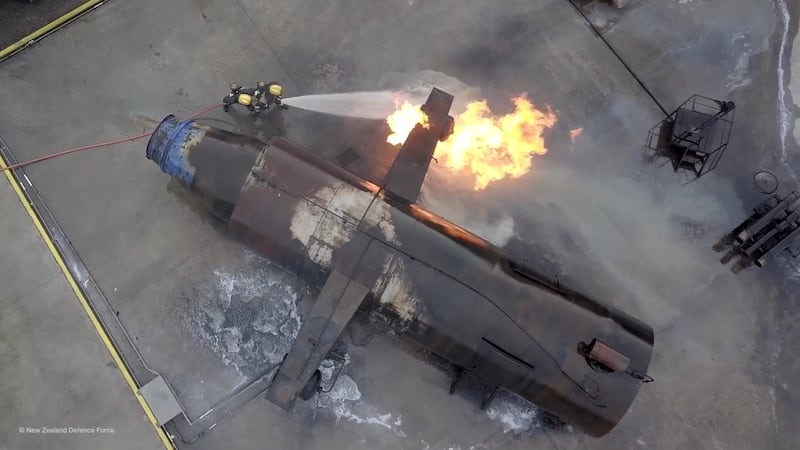
PFAS were widely used in AFFF firefighting foam on military bases from the 1970s onwards.
During firefighting training exercises, the foam was discharged onto the ground, allowing the chemicals to enter the soil and the groundwater beneath.
What’s the difference between PFOS and PFOA?
PFOS (perfluorooctane sulfonate) was one of the principal PFAS compounds used in historic AFFF firefighting foams.
It is the primary PFAS compound identified around Base Ōhakea and in tuna liver samples collected from the Mākowhai Stream.
The International Agency for Research on Cancer (IARC) classifies PFOS as possibly carcinogenic to humans.
PFOA (perfluorooctanoic acid) was widely used in the manufacture of products such as Teflon and food packaging and is more mobile in groundwater.
IARC classifies PFOA as carcinogenic to humans, placing it in the same hazard classification category as tobacco and asbestos.
This classification reflects the strength of the evidence that it can cause cancer, not that the level of risk is the same.
Both compounds have been found around Ōhakea and can persist in the environment because they do not easily break down.
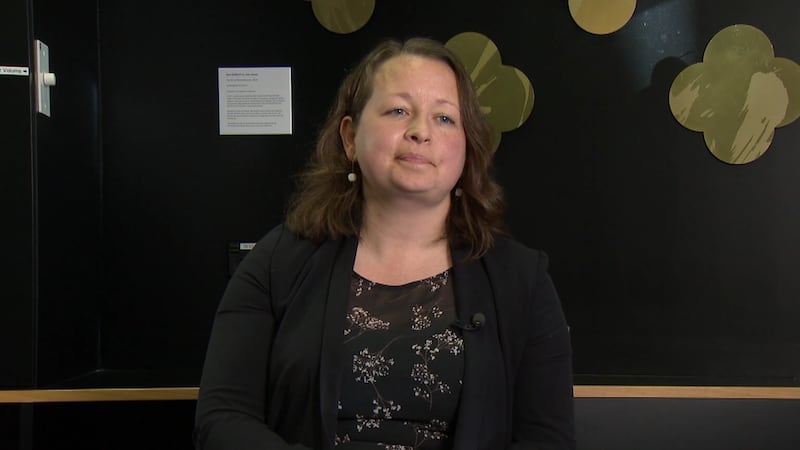
Environmental health researcher Erin Leitao said more localised research is needed to understand the full extent of PFAS contamination in Aotearoa.
“A lot more testing needs to be done; it’s very hard to ban the whole class.
“Of course, when you can’t see something, it doesn’t mean it’s not there, and unfortunately, in a lot of these environmental contaminants, we don’t see it. We just have to rely on the testing and the detection and then put trust into the system that is telling us that we’re safe or not safe.”
Who lives with the consequences?
At the centre of this investigation is one extended whānau - the Richardsons, the Savages, and the Te Aho whānau - whose whakapapa has been woven into this whenua for generations.
For more than sixty years, Pita Richardson farmed the land and drank from his bore during the decades when AFFF firefighting foam was used at Base Ōhakea.
His sister, Mel Te Aho, had worked at the Ōhakea base for over three decades.
“I used to see those trucks, fire trucks, they used to be all around base.
“You could see all this foam and stuff coming out of the big trucks and all that sort of thing going on when I was working there.”
Her husband, Jimmy Te Aho, died of cancer at the age of 54.
While there was no evidence linking his illness directly to PFAS exposure, she still wonders if it played a part.
“I look back, and I think, ‘Oh my gosh.’ He lived in that area, and he worked in that area at times, shearing and all that,” she says.
“You don’t know if it’s built up in his system…He gathered food, found food, watercress, pūhā, all that sort of stuff," she told Te Ao Māori News.
Mel’s nieces and nephew, Robbie, Kim, and Peter Darryl continue to live on their ancestral whenua where their father, Pita, lived.
Robbie’s a rongoā Māori practitioner, but she says she can no longer safely harvest some traditional plants from contaminated land.
It’s like it’s gone
— Robbie Richardson
Peter Darryl Richardson, says he was also later diagnosed with multiple cancers, including testicular and kidney cancer.
“I knew he had a full-blown kidney cancer — but I suppose you think about it now. I knew he got his ball bag out but I didn’t know he had a cancerous ball bag."
He told Te Ao Māori News, about growing up seeing the “big black plumes of smoke” coming from the base during fire drills, not realising that those drills were contaminating the land and the water.
It was water they used to swim in.

In January 2025, Robbie and Kim built their papakāinga on Mangamāhoe whenua near their father’s home. It now sits on land recorded on the Hazardous Activities and Industries List (HAIL) because of contamination linked to historic Crown activities at Base Ōhakea.
Eldest sister Kim Savage says that they have been left out of conversations with Crown entities.
“Everything’s been done around us, not with us,” she told Te Ao Māori News.
How Far Has the Contamination Spread?
NZDF modelling estimates the PFAS plume currently affects around 3,600 hectares surrounding Base Ōhakea.
The contamination is mapped across three zones:
Zone 1 — Core contamination: Groundwater where PFAS levels currently exceed New Zealand’s drinking water standards.Estimated area: 1,100–1,600 hectares.
Zone 2 — Contaminated area: Land where PFAS has been detected through ongoing monitoring. Estimated area: 3,600 hectares.
Zone 3 — Projected extent: The maximum predicted spread of the plume over the next 50 years. Estimated area: 4,300 hectares.
According to NZDF modelling, the PFAS plume is not expected to begin shrinking for another 75 to 100 years and could remain in groundwater for 125 to 150 years.

Ngāti Parewahawaha evidence also identifies PFAS detections west of the Crown’s official plume boundary, including at Te Puna Wai and Matahiwi locations, which the hapū says are not reflected in the Crown’s model.
A disaster they didn’t know was coming on whenua that could carry this plume for another 125 to 150 years.
— NZDF Comprehensive Site Investigation Report (2019)
26 months of silence
PFAS contamination was identified at Base Ōhakea in April 2015, but neighbouring communities were not publicly informed until December 2017, which was a delay of 26 months.
During an initial Waitangi Tribunal hearing, NZDF’s Director of Environmental Services described the delay as a “conscious decision”.
For Ngāti Parewahawaha and the wider public, an official notification did not come until March 2018.
Ōhinepuhiawe Marae spokesperson Clifford Brown said iwi were never approached directly, with communication instead directed at the wider community.
“Our Māori whānau were just part of that, as opposed to having the particular status as kaitiaki in their area of affected whenua,” said Brown.
| Date | Timeline of events |
|---|---|
| April 2015 | NZDF identifies PFAS contamination at the fire training area. The Dead Zone begins. |
| October 2015 | NZDF meets Horizons Regional Council. The public is not informed. |
| 2015–2017 | For 26 months, whānau have continued drinking bore water, gathering kai and living on contaminated whenua without knowing PFAS had been detected. |
| 7 December 2017 | Public notification begins. |
| March 2018 | Ngāti Parewahawaha are engaged as affected residents rather than recognised as mana whenua. |
| February 2020 | Their papakāinga is designated HAIL land. Whānau are advised not to eat food grown there. |
| 2022 | The Ōhakea Rural Water Scheme opens following government funding. |
| 31 December 2025 | Final deadline for PFAS firefighting foams to be removed from service in New Zealand. |
| July 2026 | The Waitangi Tribunal hears Ngāti Parewahawaha’s PFAS claims as part of the Wai 2200 inquiry. |

Legal in New Zealand, restricted in the United States
New Zealand’s drinking water standard for PFOS is 70 nanograms per litre (ng/L), adopted in 2022 and based on Australia’s 2017 interim guideline.
In the United States, the legally enforceable PFOS limit was reduced to 4 ng/L in 2024, making the US standard 17.5 times stricter than New Zealand’s.

The gap is even greater for PFOA, with Aotearoa permitting 560 ng/L, while the United States allows 4 ng/L.
The difference reflects more than drinking water standards. It also reflects how scientific understanding of PFAS has changed.
In 2019, following the all-of-government response to Ōhakea, the Ministry of Health advised affected communities that there was “no conclusive evidence that PFOS and PFOA exposure will result in future health problems”.
Seven years later, the Ministry’s position has shifted only slightly. In a new statement, it said the current evidence for longer-term health effects from PFAS is “unclear”.
Over seven years, the Ministry’s position has shifted from “no conclusive evidence” to “unclear”, while IARC has classified PFOA as carcinogenic to humans.
What does the science say?
Two developments have significantly changed the international understanding of PFAS and cancer.
In 2023, the International Agency for Research on Cancer classified PFOA as carcinogenic to humans (Group 1) and PFOS as possibly carcinogenic to humans (Group 2B).
After this, a 2025 study published in the Journal of Exposure Science & Environmental Epidemiology analysed PFAS drinking water data alongside cancer incidence across approximately 156 million Americans.
Researchers estimated that PFAS contamination in drinking water may contribute to 6,864 additional cancer cases each year in the United States of America.
The study found higher cancer incidence rates associated with PFAS exposure, including:
- Gallbladder: +60% (IRR 1.60)
- Oesophagus: +37% (IRR 1.37)
- Mouth and throat: +33% (IRR 1.33)
- Thyroid: +28% (IRR 1.28), primarily females
- Soft tissue: +75% (males); +56% (females)
- Leukaemia: +86% (males)
- Kidney: Elevated incidence (IRR 1.10–1.28), associated with PFOS and PFHxS
For Ōhakea, the PFOS findings are particularly relevant because PFOS is the principal compound identified in the Mākowhai Stream and the wider plume.
None of this research establishes that PFAS caused cancer in any person. Instead, it identifies associations between PFAS exposure and increased cancer incidence across large populations.

University of Auckland associate professor George Laking (Te Whakatōhea) believes the research has brought some relief to whānau.
“It seems to be a relatively small effect, but it’s there. And saying that it’s a relatively small association, that’s going to be extremely cold comfort if you personally happen to be one of the people or whānau affected by the type of cancers that these things can cause.”
He hopes the country as a whole will take heed of the situation.
“I’d really like to see a political movement getting behind stronger public health response to the protection and safety of water supplies,” he says.
“It is a hara, a hara towards Papatūānuku, because the way that this happens is by permitting these chemicals to contaminate the water table, so the water that people and indeed the whenua depends on for life. That’s wrong. That should never have happened.”
How does contamination become human exposure?
PFAS does not readily break down in the environment or the human body. Instead, it accumulates over time through the food chain.

Groundwater: Contamination originated at the Base Ōhakea fire training area, where AFFF firefighting foam was used from the mid-1980s until 2016.
Surface water: PFAS moves through groundwater into the Mākowhai Stream and Rangitīkei River. NZDF modelling estimates the plume advances 50–100 metres each year.
Mahinga kai: Traditional food sources become contaminated. Massey University research found average PFOS concentrations of 1,637 ng/g in tuna livers from the Mākowhai Stream.
Farm animals: PFAS can accumulate in eggs, milk, and meat from animals exposed to contaminated land and water.
Human exposure: People may be exposed through contaminated drinking water and food. PFAS can remain in the body for many years.
The Ministry for Primary Industries issued individual consumption advice covering eggs, homekill, and vegetables to affected residents in 2017. No updated advice has been issued since.
What next?
Ngāti Parewahawaha’s PFAS claims are being heard as part of the Waitangi Tribunal’s Porirua ki Manawatū Inquiry (Wai 2200).
The Tribunal is examining whether the Crown’s response to PFAS contamination, including its engagement with Ngāti Parewahawaha and its obligations under Te Tiriti o Waitangi, met the standards expected of the Crown.
During the inquiry, NZDF director of environmental services Robert Owen apologised for the Defence Force’s failure to adequately engage with tangata whenua and acknowledged the 26-month delay in notifying the community.
Beyond the Tribunal, Ngāti Parewahawaha is also seeking long-term remedies. One proposal is a 37-hectare solar energy development on contaminated whenua that can no longer be safely used for food production.
Lead government agencies and the New Zealand Defence Force declined interview requests from Te Ao Māori News.