


This story is part of the Te Ao Māori News Matariki 2026 series and relates to Waitā, the Matariki star associated with the ocean and marine life, reminding us of our responsibility to protect the moana.
Around Te Motu Ārai Roa, or Waiheke Island, the health of Tīkapa Moana (Hauraki Gulf) is under increasing pressure, with scientists warning the marine ecosystem is approaching ecological collapse.
Rising sea temperatures, declining species populations, pollution, sedimentation and overfishing are placing increasing pressure on Tīkapa Moana, with the State of Our Gulf report warning these interconnected pressures are driving ecological decline.
Across the island, iwi, conservation groups and local communities are restoring habitats, advocating for stronger protections and reconnecting people with the moana in an effort to restore that balance before it is too late.
Born and raised on Waiheke, Eric Hillman (Te Whānau-ā-Apanui, Te Āti Awa) has spent around three decades diving in the waters of Tīkapa Moana.
Over that time, he says he has watched kelp forests disappear, fish populations decline, pollution spread and the balance of the ecosystem begin to unravel.

The whakataukī He tai moana, he tai ika. He tai timu, he ika nunumi reflects the relationship between the health of the moana and the abundance of marine life.
According to NIWA, the overfishing of key predators such as kōura (crayfish) and tāmure (snapper) has contributed to the over-abundance of kina.

Often described as the forests of the sea, kelp provides food, shelter and nursery habitat for hundreds of marine species while capturing carbon, oxygenating the water, buffering ocean acidification and reducing coastal erosion.
But kina are not the only pressure reshaping Tīkapa Moana.
Marine ecologists warn bottom trawling can severely damage seafloor habitats by disturbing sediments, damaging habitats and reducing biodiversity, all of which the State of Our Gulf report identifies as contributing to the ecological decline of Tīkapa Moana.

As the Waiheke Local Board’s representative on the Hauraki Gulf Forum, Ranson said the forum has unanimously backed a ban on bottom trawling. Earlier this year, all 21 Auckland local boards signed a letter, led by the Waiheke Local Board, calling for an end to the destructive fishing practice.
READ MORE: Iwi, conservation advocates and marine scientists criticised amendments to the Tīkapa Moana Marine Protection Bill allowing limited commercial fishing in new protected areas.
Declared a marine park in 2000, Tīkapa Moana has gradually gained greater protection through legislation.
Last year, the Hauraki Gulf Marine Protection Act expanded the Gulf’s highly protected areas from just 0.3 per cent to around 6 per cent through new High Protection Areas and extensions to existing marine reserves.
“We would love to see that go further through to 30 per cent by 2030,” she said.
Ranson also raised concerns about aspects of the Government’s proposed Conservation Amendment Bill, warning provisions that prioritise economic development on conservation land risk undermining biodiversity protection during a biodiversity and climate crisis.
“When you zoom out and look at what’s been happening with this Government, what we’ve described as a ‘war on nature’ is really a prioritisation of economic development and privatisation over conservation values and the wellbeing of our biodiversity and ecosystems.”

Ranson has also been a prominent voice in local environmental campaigns.
She was one of the spokespeople of Protect Pūtiki, the occupation led by Ngāti Pāoa and residents opposing the Kennedy Point Marina, arguing the development proceeded despite the opposition of mana whenua with customary interests and much of the wider community.
The campaign also raised concerns about the impacts of coastal development on the bay’s kororā habitat, with opponents arguing the development would place further pressure on an already vulnerable coastal ecosystem.
READ MORE: The latest State of Our Gulf report urges the Government to expand marine protections as iwi-led restoration efforts gather pace across Tīkapa Moana.
Despite these challenges, restoration is already underway on the motu.

What began as a community-led initiative has grown into the Waiheke Marine Project’s Kelp Gardeners programme, where divers remove kina to allow kelp forests to regenerate and restore ecological balance.
Waiheke Marine Project team member Emily Griffith (Ngāpuhi, Ngāti Whātua, Ngāti Pāoa, Waikato-Tainui) said volunteers have become the “missing link”, removing kina to help restore an ecosystem thrown out of balance by human activity.

“The kelp is just lush and thick, and you’re seeing so many different types of species,” Griffith expressed.
“You can feel the difference, the mauri of it.”
Tāmure, wheke, stingrays and other marine life have returned to the restoration site, she said, demonstrating how quickly ecosystems can respond when pressure is reduced.
The project combines mātauranga Māori, citizen science and Western science.

Working in partnership with mana whenua through a Tiriti-based approach, the project also provides pathways for local people, particularly uri of Ngāti Pāoa, to gain scuba and freediving qualifications before taking part in restoration and monitoring.
For Hillman, kaitiakitanga is practised every day.
“The daily kaitiakitanga often starts here. I drop our little seedlings around the ngahere here, often go down to either the awa or coastline,” he said.
His daily mahi includes clearing waterways, feeding local tuna, removing plastics and discarded nylon that threaten ika and kororā, culling kina barrens, feeding some of the harvested kina back to fish in the moana, and sharing the rest with the community.
“To me, kaitiakitanga for the moana is responsibility, a duty to care, a commitment to rectify the utu, to help bring balance before my time here is up,” he said.
“In terms of decolonisation, it’s re-establishing yourself with te taiao, with the ngahere, with a small place. Love your little corner of the creek - that’s the pathway back to a greater connection.”
Hillman said the commitment lies in picking up the torch from those who came before him, the likes of his Aunty Sandra Lee-Vercoe, a former Minister of Conservation between 1999 to 2002, Uncle Mike Lee, who championed Forest & Bird, and his Te Whānau-ā-Apanui tūpuna, for whom caring for te taiao was simply a way of life.
“They put in the mahi in their time, and it’s my job to do the same.”
Elected to the Waiheke Local Board in the 2025 local elections, Hillman said the role has strengthened his ability to support the environmental work already being led across the motu.
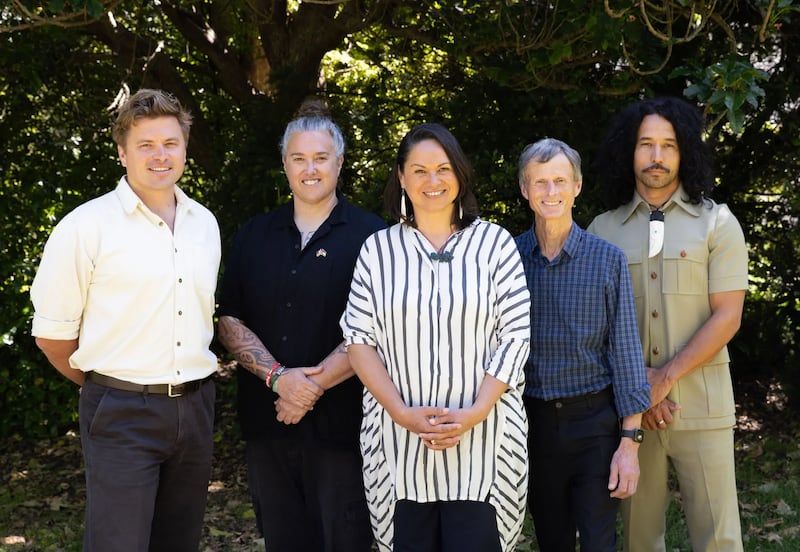
Rather than replacing his grassroots mahi, he said the position has enabled him to advocate for community-led conservation.
The Waiheke Local Board has more than doubled its environmental funding for the 2025/26 financial year, allocating $419,400 towards environmental programmes. These include the Lovell Wetlands Programme, the Waiheke Water Quality Project, community planting initiatives, Ngāti Pāoa’s Beach Ambassadors programme and the Waiheke Marine Education Initiative.
Among the initiatives Hillman is most excited about is the Waiheke Marine Education Initiative, which creates pathways for rangatahi into environmental restoration. Through the programme, young people are introduced to diving, marine restoration and kelp regeneration, helping turn a passion for kaitiakitanga into future careers.

Yet even as communities restore habitats, local leaders strengthen protections and more rangatahi are drawn into kaitiakitanga, the moana continues to face mounting pressures.
While restoration efforts are showing encouraging results, Griffith believed climate change remains the greatest challenge facing Tīkapa Moana.
Rising sea temperatures are driving the spread of invasive species, including caulerpa and the long-spined Centrostephanus kina into the Hauraki Gulf, placing increasing pressure on native species adapted to cooler waters.
READ MORE: Last Matariki, Te Ao Māori News examined the growing threat of deep-sea mining and why scientists and Māori are calling for a moratorium to protect the moana.
At Native Bird Rescue on Waiheke Island, founder and general manager Karen Saunders is witnessing those pressures through the native birds brought into her care.

“In those days we used to have big populations and colonies. Now I’ll be lucky to see three or four gannets, whereas it used to be you’d go out kayaking, and there’d be like 50 diving around you. But now they’re all gone,” Saunders stressed.
The Moana Project’s sea surface temperature and marine heatwave forecasts have become an important tool for Saunders. When unusually warm waters are forecast in the Hauraki Gulf, she knows she is likely to see more starving kororā arrive at the rescue centre.
As oceans warm, fish species central to the penguins’ diet, including anchovies and sardines, move deeper or further offshore in search of cooler waters. Because kororā typically hunt in shallow coastal waters, they must travel further to find food. During breeding season, that becomes especially challenging, as adults must return regularly to feed their mate and chicks.
Saunders said mass seabird mortality events, once considered a once-in-a-decade occurrence, are now happening every few years as ocean warming, starvation and increasingly severe weather events place growing pressure on marine life. During the summer of 2017–18 alone, Waiheke saw hundreds of dead and dying kororā.

Despite witnessing that decline, Saunders remains hopeful.
Saunders said campaigns such as Protect Pūtiki had also helped raise awareness of kororā conservation, prompting stronger monitoring and protection measures for penguins in coastal developments elsewhere in Aotearoa.
“My hope is young people will start to wake up and realise that everything is one, that the whole environment is what we as humans rely on to live.”
“If we put protections in place, nature can heal itself. We just have to stop abusing it. It’s simple. Protect it, and it will heal itself.”