

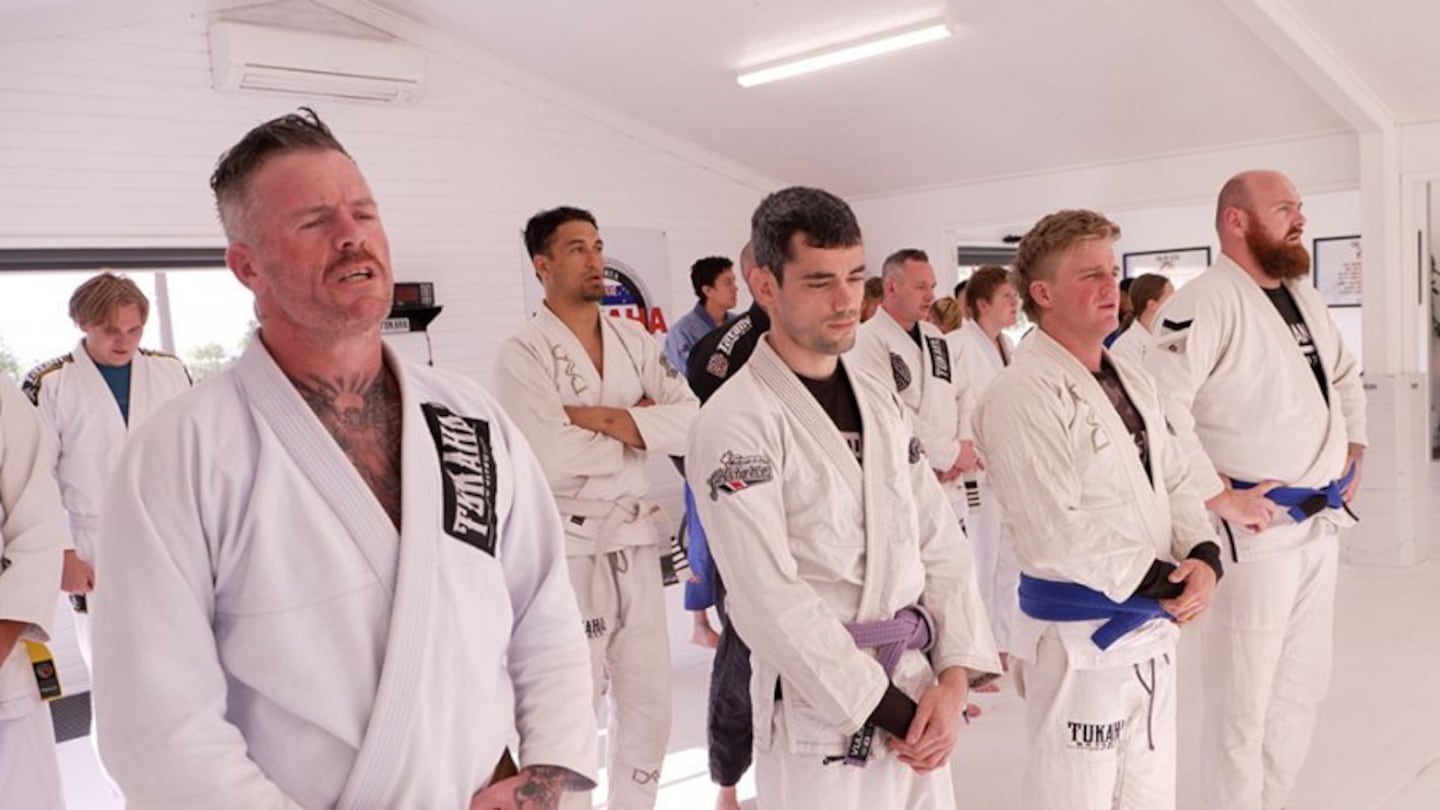
Jiu-Jitsu black belt Anaru Grant Jr of Te Arawa has introduced Te Reo Māori and tikanga Māori into his club, Tukaha, in Rotorua.
He says he is doing so as the majority of his students are from kohanga reo and wharekura, and this also creates an opportunity for others to learn.
This week his club of 150 members is preparing to go to the nationals and showcase not only Jiu-Jitsu talent but also Te Reo Māori and tikanga.
“There are a lot of positive outcomes with the Māori language, with Jiu-Jitsu also. Therefore to join both and make that normalised here at the club is something great,” Grant says.
This year he has promoted the Māori language and culture within the cub to normalise a Māori worldview within it, do because the language and culture are important to him.
Anaru Grant Jr's Jiu Jitsu club incorporates te ao Māori into his teachings.
Normalising the reo
He believes it should be normalised everywhere and if he can do it in the club, “well, why not. At the beginning and end of class, we pray. We have translated Jiu-Jitsu words into Māori. And speaking Māori and English within the club is what we do,” he says.
Kiaani Witana has been training in Jiu-Jitsu for the past three months and is from Ngāti Kahungunu ki Te Wairoa. She is inspired by her Pākehā mates at the club who are embracing her language and culture and is willing to learn also.
“I’m really glad to be here because Anaru is taking the time to teach our culture and language while training.”

‘Giving it a really good go’
And another student, David Dorfliger from Rotoiti says, “I’m Pākehā, and I’m just starting to learn Māori. I’m driving into town and I’m using a Māori Made Easy app playing on my radio every morning, I’m learning, I’m giving it a really good go.”
Tukaha started in Rotorua in 2019 and is the brainchild of Pedro Fernandes from Brazil. Grant has been part of Ju-Jitsu since 2010 and is a black belt. He leads a team of six instructors.
There are Pan Pacific and New Zealand champions in the club, ranging from children to adult ages.
Fernandes supports the teaching and fusion of te reo Māori and culture in the Te Arawa club and the students likewise.
‘Walking in both worlds’
Twenty-three-year-old blue belt one tab Dorfliger sometimes finds it a little bit confusing but he is slowly learning Jiu-Jitsu in the Māori language which he appreciates.
“We end up learning huri atu huri mai and then we will start to learn the sequence from there. And it’s good for when you are competing as well because they will be calling something out in Māori and one of the moves we have learned and the other teams don’t know what it is.”
Ju-Jitsu is growing by 10-20 percent each year.
The first Oceania championships held in New Zealand pulled in 1500 competitors.
The success of New Zealand's UFC fighters on the world stage has played a big part in that growth and standard. “
These students can now walk in both worlds, Māori and Jiu-Jitsu because they know a bit of both. And this is the desired goal for our club, for our whānau,” Grant says.