

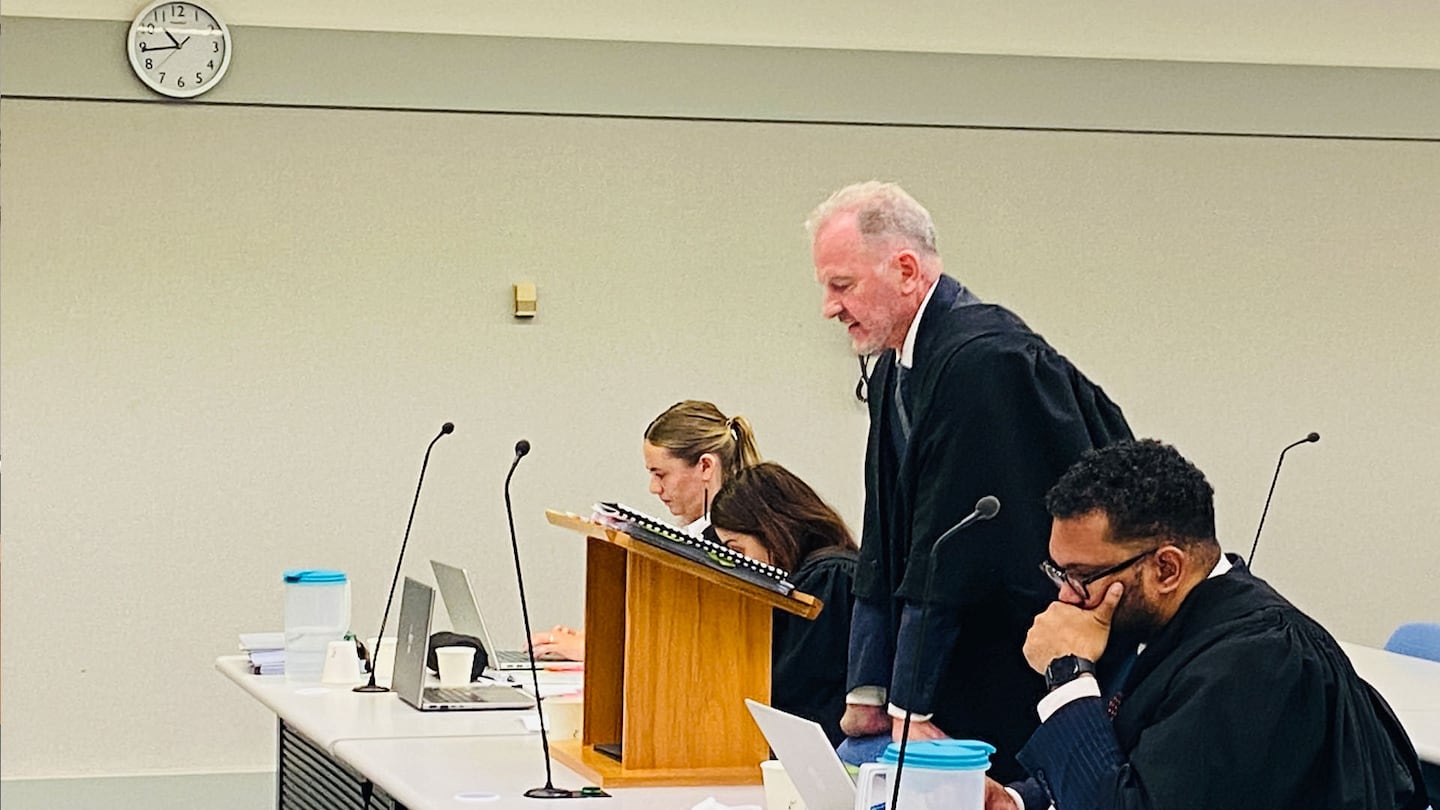
Lawyers for expelled Te Tai Tokerau MP, Mariameno Kapa-Kingi, and members of the Te Tai Tokerau Executive were in the High Court at Wellington today seeking an interim injunction that, if granted, would reinstate her into Te Pāti Māori ahead of a substantive hearing early next year.
Her counsel, who is representing her pro bono, alleges there were fundamental flaws at every step of the decision-making process that led to her suspension and expulsion, a process they say breached the party’s constitution, tikanga, natural justice, and basic fairness.
The urgent hearing is the latest escalation in the party’s increasingly public internal breakdown.
Both Kapa-Kingi and Te Tai Tonga MP Tākuta Ferris were expelled in October after months of internal tension and have since been sitting as independent MPs.
Applicants argue expulsion was outside party rules
Mike Colson KC, appearing for Kapa-Kingi, told Justice Paul Radich that the MP had reluctantly come to court after repeated efforts to resolve matters kanohi ki te kanohi.
But the expulsion process, he said, was unlawful and fundamentally flawed.
Colson submitted that the National Council had no power to suspend or expel members, and that disciplinary authority sat solely with a disputes and disciplinary committee, a body he said had never been established.
He argued that Parliamentary Service funds were wrongly characterised as party funds, that there was no misuse of any funds, and that key decisions were made without notice, without a hearing, and without providing evidence to the MP.
He said tikanga had been breached, the constitution had not been followed, and Kapa-Kingi had not brought the party into disrepute.
The court, he submitted, should preserve her position pending a full substantive hearing in February, particularly in light of the party AGM in Rotorua this weekend, where it was understood the leadership intended to formalise the expulsions.
Colson also argued the presidency of John Tamihere was unlawful, pointing to questions around whether his reappointment met constitutional timeframes.
That point received limited attention today and will be addressed in detail at the February hearing.
Respondents push back: ‘This is not an overwhelming case’
Representing party president John Tamihere and the Te Pāti Māori National Council, Davey Salmon KC pushed back strongly against the applicants’ characterisation of the case, saying the suggestion it was overwhelmingly strong was simply not correct.
Salmon said the Constitution expressly gives the National Council a broad power to cancel memberships if the council believes criteria are not met.
That power, he said, is not displaced by the disputes process and sits alongside it as a primary mechanism for maintaining membership standards.
He said this is not a public law case but a contractual one, and natural justice applies only to the extent required by the Constitution or implied contractual terms.
Salmon criticised aspects of the applicants’ evidence as selective.
When the contemporaneous messages and documents are read in full, he said, the narrative is less clear-cut than presented.
He said reinstating the MP would thrust her back into a fraught and disharmonious environment for little practical benefit, given she continues as an MP with full pay, platform and resources.
“She does not lose her voice or her ability to represent her electorate. She simply cannot insist on continuing to be part of a private contract while that contract is under challenge.“ Salmon asserted.
The court was told Te Pāti Māori had offered undertakings not to move any resolutions affecting Kapa-Kingi at this weekend’s AGM.
However, Salmon noted the MP is no longer a member and therefore has no automatic right to attend.
Colson argued she should not be barred, but Salmon said forcing her into what counsel described as a politically charged and unsafe environment would increase tensions, not reduce them.
Presidency challenge to be argued later
The court briefly touched on claims that Tamihere’s presidency expired due to late election cycles, but Salmon said the applicant had participated in and accepted his 2024 reappointment and could not now challenge it.
Decision due Friday
Justice Radich has reserved his interim decision and expects to release it by 4pm tomorrow.
A substantive hearing on the legality of the expulsions and the broader constitutional questions is set down for early February.