

This article was first published on RNZ.
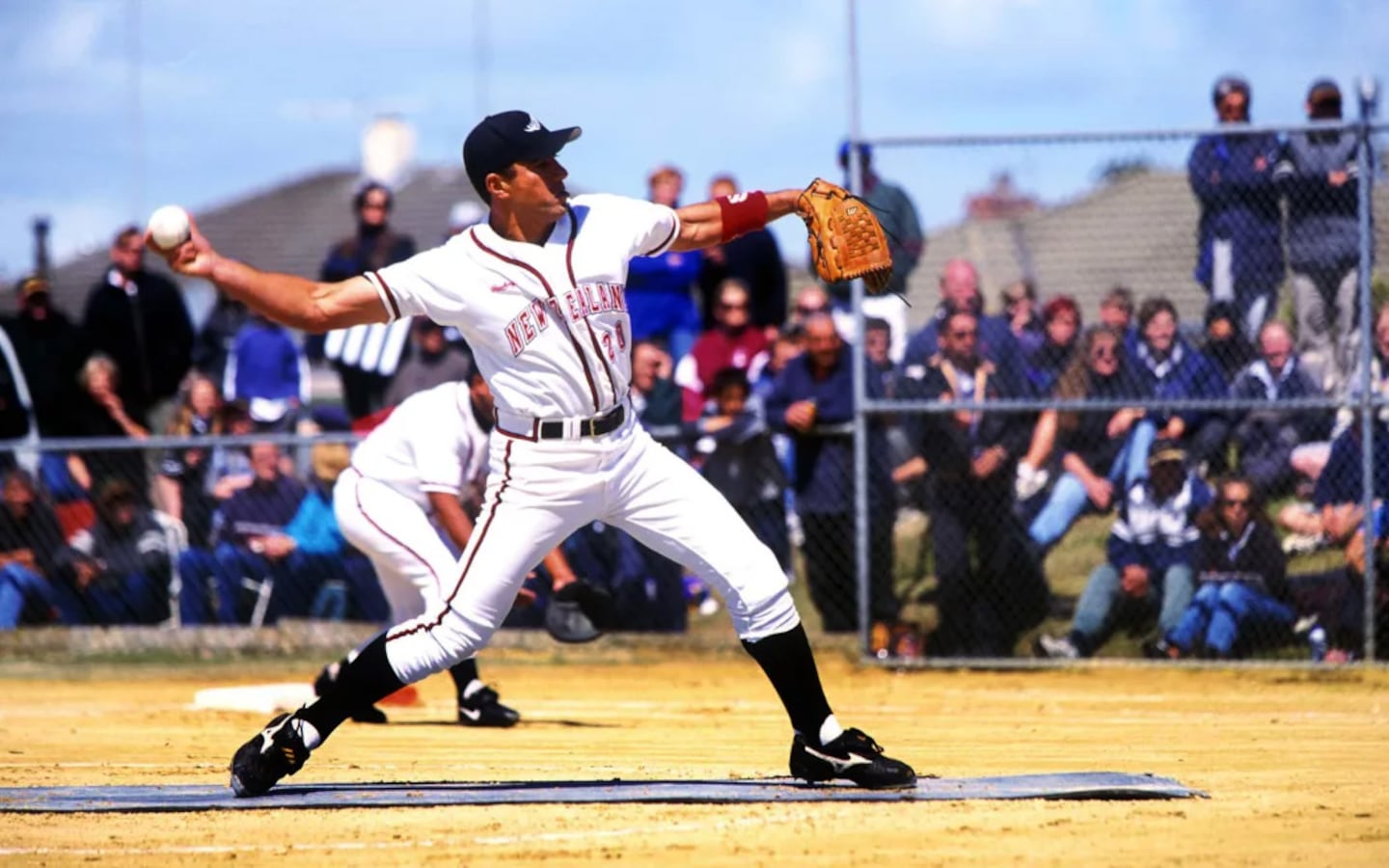
Former Black Sox pitcher Marty Grant has been inducted into the WBSC Softball Hall of Fame, recognised for a career that helped shape one of New Zealand’s most dominant eras in men’s softball.
But for Grant, the honour was less about individual success and more about the teammates, coaches and whānau who built that legacy alongside him.
Grant (Ngāti Porou, Ngāti Kahungunu, Rangitāne o Wairau, Ngāti Apa o Te Rā) was officially inducted in late February in Ōtautahi, joining more than 280 members across 38 countries honoured for their contribution to the sport.
Standing at Softball New Zealand’s pinnacle event, the National Fastpitch Championships, the moment was still sinking in for the man many know as Marty “Wah”.
“It’s obviously a very emotional time,” Grant said.
“People that know me will expect me to try and soak it up, but I’m not very good at it.”
A tearful Grant said it was special to be surrounded by those he cared about most.
“It’s lovely to have the family here, especially. Some people that are really special to me. So it’s great to share that. I think that’s what it’s about today for me.”

Grant made his debut for New Zealand in 1990 and went on to attend five world championships: Manila in 1992, Midland in 1996, East London, South Africa in 2000, Christchurch in 2004 and Saskatoon in 2009.
He played a central role in three world title campaigns, including pitching a no-hitter in the Black Sox’ win over Japan in the 2000 world final. He also claimed silver medals in two other World Cups, and was part of the New Zealand side that won the first and only Commonwealth Championship title in 2006.
Grant won New Zealand Softball player of the year in 1991, and pitcher of the year five times. The Nelson based hurler also secured eight provincial championships playing for Wellington, six of them back to back, and claimed five national club titles with Poneke-Kilbirnie.
But when asked about his most memorable moments, Grant did not point to his various medals or titles.
“There’s been some highlights,” he said, “but there’s a lot of people to thank, because you’re given opportunities to play in great teams and hang out with good people and learn the skills that are required.”
“I’ve got to take my hat off to all my coaches. I guess they create the memories.”
Grant said the legacy of that era was built on standards and playing for one another - a kōrero echoed by current Black Sox members.
“It’s about playing, winning big matches when you shouldn’t have. Being the underdog. Making rep teams. But generally, it was just about being with people that I liked to be around.”

Grant said he prided himself on being a student of the game.
“I really enjoyed training. I remember training better than I remember some of the games, because that’s how I tried to work it, that trainings were harder than games.”
When asked who shaped him most, Grant did not hesitate.
“My mother,” he said, his voice breaking: “She took me to softball every week.”
“My father didn’t watch me play until I was 34. He didn’t like it.”
Laughing through tears, Grant recalled the early days of Softball training.
“I had a big brother that used to kick my ass when I didn’t practice properly. And I had an old coach from Horowhenua, Piri Manaakitia. He saw some faith, thought I was quite good, made me lift weights, which I know I’ve never done before. Made me run, made me train hard. And I started beating people.”

Grant said the Hall of Fame recognition was not about individual achievement.
“I’m part of a legacy of some great players and great teams. And we don’t recognise that enough,” pointing to the lack of exposure and recognition in mainstream circles.
He said New Zealand often only recognised that legacy when results declined.
“We only realise it when all of a sudden the team’s ranked 10th in the world. And these people are everywhere. And we have valuable information to share.”
The Black Sox were among the most successful sporting teams in New Zealand’s history, winning seven world titles and totalling 14 medals.
The former pitcher said he wanted the focus to remain on the sacrifices made by his teammates and the wider softball hapori (community), including umpires, scorers, administrators and coaches.
“I want to recognise the sacrifices that all these guys used to make. What we used to make to be able to not just play, but compete regularly.”
“It’s crazy. I’m not blowing our own horn, but it’s true. We were totally committed. We worked hard, but we also had fun as well. So it’s celebrating that and understanding that.”
He said that level of commitment was what separated their era.
“If the teams ever start to commit like we used to, you’ll see it again.”

Softball in Aotearoa has long had strong Māori and Pasifika participation. The membership makes up over 60 percent of Māori and Pasifika whānau. Grant said those cultural connections strengthened the team environment.
“There were times when it wasn’t like that,” he said.
“But when you’re travelling and you’re in difficult situations, you look around for your brothers who are going to be there.”
“I remember distinctly that we were so tied as a group that you didn’t have to look around when the ball got hit, because you knew they were there.”
He said the responsibility of carrying on the legacy now sits with the next generation.
“I’d like to think that the young athletes of today respect it, give it what it deserves. If they do that, then they’ll have fun.
“Just show some respect for the game, for the ball, and for whatever you’re doing in it, and you’ll get what you want out of it.”
Following his induction celebration, former teammate, Hall of Famer and Black Sox Heach Coach Thomas Makea led a haka alongside past and present Black Sox players and other athletes, closing the ceremony with what softballers said was a visible show of the whanaungatanga built within the game.
By Layla Bailey-McDowell of RNZ.