

Thirteen of the Far North District’s 15 wastewater plants are failing environmental standards, according to an independent report by the Carbon Neutral NZ Trust, a charitable group that helps communities measure and reduce emissions and funds local environmental projects.
According to locals, for generations the rivers in Taipā were a sanctuary for ritual and cleansing.
Trudy Allen, a lead representative for the local hapū says the river has transitioned from a place of healing to a discharge point for a failing infrastructure system.
“Over the years our hapū, whānau and this community have seen the devastation, which has claimed our beach front in Aurere, once it was where we had sandy shores, families went there to camp, to collect kai and that no longer exist”
The Far North District Council currently uses oxidation ponds for wastewater treatment, a method that has been the standard in the district for over 40 years
Most of the district’s 15 plants were constructed in the 1970s and 1980s. These systems rely on a natural biological process where sunlight, algae, and bacteria break down waste in large, open-air lagoons.
However, following a push from local hapū for a more cost-effective solution, two Electrocoagulation (EC) units were installed in Taipā and Rāwene for a total of $1 million.
These new EC units shift toward land-based waste disposal, moving away from discharging effluent into the water. Despite being installed for nearly a year, the units have not been commissioned.
“It was a clean enough system for our discharge should it go back into water, it was financially viable because it was cheaper than any of the other systems that council showed us because the financial burden goes back to rate payers” says Trudy.
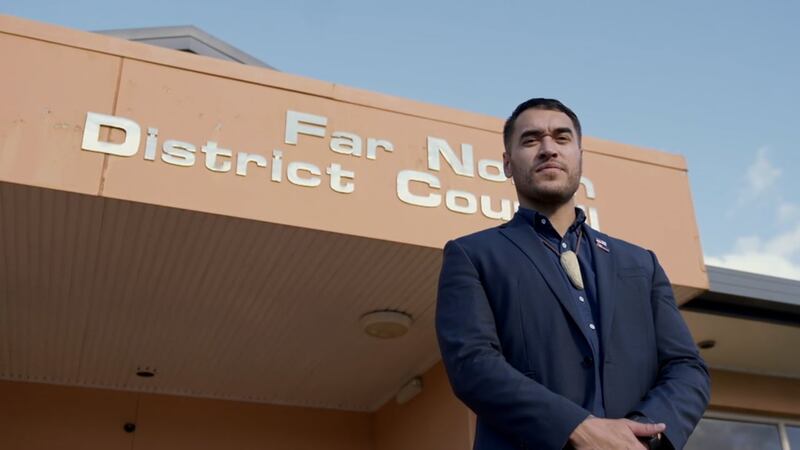
Moko Tepania, the mayor of the Far North District Counsil says the EC are new and will need an expert who understands the benefits and the risk of using them.
“Ko mātou te tuatahitanga i roto i Aotearoa ki te whakamahi i tēnei hangarau hou, kāhore anō pea ngā kaipūnaha huritiko o konei, kāhore anō ngā kaipūtaiao o konei kia tino mōhio ki te mana me te tika me te kore tika rānei o tēnei momo hangarau ā ko mātou te tuatahi”
At Ora Ora Resort, Inge Bremer and Rolf Mueller-Glodde established an EC as the resort is not connected to the Kerikeri wastewater line.
Rolf says that the wastewater situation is different than the traditional water ponds 40 years ago and that the process takes too long to report, the EC however can be operated on your phone and that you can quickly get reports on what is wrong instead of having to wait a few days before responding.


“We are all in a situation to understand what needs to be done, how it is affordable and what is the efficiency of that and stop flushing anything into the water, into the moana or the awa” said Rolf.
They both say that the EC has been proved around the world, the process has been used for decades used for decades in Europe and the United States to meet high environmental standards that traditional oxidation ponds are failing to do.