

I whakaputahia tuatahia tēnei atikara e RNZ
An iwi leader has described the coalition government as “the most racist, anti-Māori government ever to come to power”, telling the Waitangi Tribunal its review of Treaty clauses across legislation amounted to an “unrelenting assault” on Māori rights.
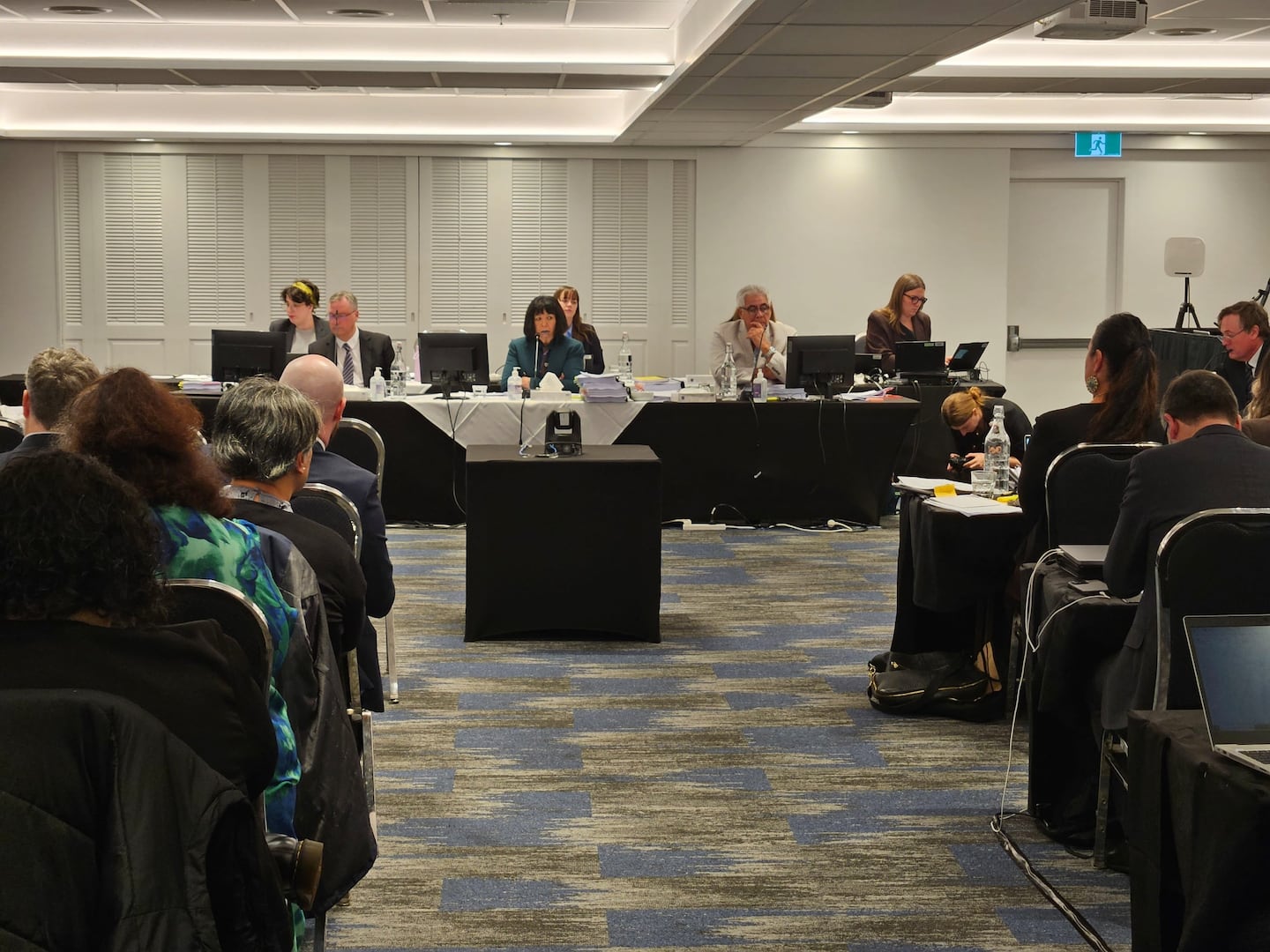
Tukoroirangi Morgan appeared before the Tribunal on Wednesday for day two of the Treaty Principles Reform Urgent Inquiry, giving evidence on behalf of Te Whakakitenga o Waikato and the National Iwi Chairs Forum.
The inquiry is examining Cabinet decisions to amend, standardise or repeal references to the principles of Te Tiriti o Waitangi across 19 pieces of legislation.
When the amendments were announced last month, Justice Minister Paul Goldsmith said they would ensure references to the principles of the treaty are clear and consistent.
“Since this coalition government was elected more than two years ago, we have watched the unrelenting assault on our rights and interests under Te Tiriti o Waitangi,” Morgan told the Tribunal.
“At play is their naked display of their integrity and their intent to erode and dismantle, for all time, our rights and interests under Te Tiriti o Waitangi.”
Morgan said the government had failed to consult with Waikato-Tainui and was undermining existing settlement arrangements, including the Waikato Raupatu Settlement and the Waikato River settlement.
“We don’t often come to this place, but we’re here because of our sheer concern and huge disappointment about the constant change of this government, always moving the goalposts,” he said.
Morgan said trust and confidence between Waikato-Tainui and the Crown had been damaged.
“Our settlements are hinged around good faith, confidence, and trust. All of that’s been eroded. That’s all we want...all we want is all of those things - trust, confidence, and good faith.”
In a written letter to the Tribunal, Goldsmith said Cabinet decisions were informed by officials’ advice and political judgment.

“Decisions I have reached as Minister of Justice are no different. As I said at the outset, political context has informed my political judgement and, so, decision-making. Officials’ advice has too, of course,” he said.
He said consultation will continue through engagement with the National Iwi Chairs Forum and the select committee process before any legislation is enacted.
However, Morgan rejected any suggestion that engagement with the National Iwi Chairs Forum could substitute for direct consultation with iwi.
“It’s convenient for them to go to one place. And it’s contrary to the purpose of that forum...It’s not a one-stop tick box shop that the Crown often use as an excuse for consultation.”

He said the forum was established so iwi could discuss issues affecting their own communities and determine their own priorities.
Speaking on behalf of the National Iwi Chairs Forum on Tuesday, Professor Margaret Mutu said there had still been no consultation with the forum, despite sending a request to meet with the prime minister last year.
“The co-chairs of the National Iwi Chairs Forum were advised that in response to our request on the 22nd of April this year to meet with the prime minister about the Treaty Principles Reform Policy, the prime minister’s office was arranging a time for us to meet with him,” she said.
“I have neither been asked what times I’m available nor been advised of a proposed meeting time.”
Waikato-Tainui chief executive Officer Donna Flavell told the Tribunal the Crown’s approach did not reflect Te Tiriti or settlement commitments, “which expressly affirm an ongoing and living partnership and an enduring relationship”.
“At its core, this matter is not simply about drafting language and legislation, it is about the constitutional relationship between iwi and the Crown and whether that relationship is one of genuine partnership or not.”
She said changes affecting education, health, Oranga Tamariki and environmental management had occurred without meaningful engagement with Waikato-Tainui.
“A single subsequent communication on one statute alone cannot be reasonably described as consultation.”
Flavell said if the proposals were to proceed, “the result will be further erosion of Māori participation, diminished accountability, and increased inequity across systems that directly impact our people and our babies, our mokopuna”.
‘Irreversible prejudice’ to Māori if health sector changes go through
Chief executive of Māori health provider Te Puna Ora o Mataatua and a former member of Te Aka Whai Ora, Dr Chris Tooley, told the Tribunal he was part of the advisory process when the Pae Ora Act was being drafted.
Under the proposed legislation, two sections of the Pae Ora (Healthy Futures) Act 2022 would have their provisions to the Treaty set at no higher standard than “take into account”.
“If the government continues with this proposal to weaken Pae Ora Treaty Provision from its current legal weighting of ‘give effect’ to ‘take into account,’ Te Puna Ora and those Māori communities it serves, including people suffering grave health inequalities, will suffer significant and irreversible prejudice due to the reduction of practical effect and implementation of the Treaty obligations in the health sector.”
Tooley said equity formulas have been removed from funding provisions within the health sector, which has led to a drop off in access to doctors, especially in Māori and people living rurally.
“What we’re seeing is there hasn’t been a pick-up in ED at hospitals either, so it’s not like these whānau are going to ED if they can’t get into GP practices. We’re seeing that these whānau are actually just staying home now.”
The Treaty clauses are already a minimal expression of the rights and interests of Māori as statutory partners, he said.
The government is minimising what is already minimal.
Ngāti Ranginui said the proposal was a breach of the Treaty settlement
Chair of Tauranga iwi Ngāti Ranginui, Charlie Rahiri, told the Tribunal on Tuesday the reforms are a direct breach of Te Tiriti, and a breach of the Ngāti Ranginui settlement signed just last year.
“The Crown is now repeating the very behaviours it apologised for.
“Instead of healing past breaches, it is aggravating them.
“The impacts on Ngāti Ranginui today are far-reaching, for Ngāti Ranginui, Te Tiriti provisions and legislations are not symbolic; they are practical, operational and essential.
‘Weakening those provisions threatens the foundations of our work across Tauranga Moana in environmental restoration and kaitiakitanga, protection of our wāhi tapu and cultural heritage, health, wellbeing and whānau safety services, education partnerships and pathways, fisheries and aquaculture management, our ability to exercise our tino rangatiratanga, our reo, our mātauranga in our own rohe."
Rahiri said the settlement was built on the Crown’s commitment to a new relationship based on trust, cooperation and respect for Te Tiriti.
“The Crown cannot apologise in 2025 and repeat the same behaviours it apologised for in 2026.
“It cannot promise partnership, then legislate away the mechanisms that uphold it. That is not how a Treaty partner behaves.”

Toitū Te Tiriti warns of ‘wide-ranging legislative breach’
In evidence to the Tribunal, constitutional law expert Dr Carwyn Jones from Toitū Te Tiriti said the Crown’s Treaty principles reforms would amount to “the most wide-ranging legislative breach of Te Tiriti in modern history”.
Over 72,000 people signed up to support the Toitū Te Tiriti claim, including 54,319 who identify as Māori.
“The combined effect of the Crown’s comprehensive suite of proposed changes to the Treaty Provisions will be to either completely remove or significantly diminish the legal effect of Te Tiriti across all of the 19 affected statutes,” Jones said.
Jones said the reforms would shift Te Tiriti from a foundational constitutional document into “one competing consideration amongst others”.
He said the proposals amounted to a “significant constitutional recalibration” that would be “detrimental and prejudicial to Māori”.
He also warned that the principles of the Treaty, including partnership, active protection and consultation, were being breached.
“The real prejudice arising from the Crown’s Proposals… will be significant, harmful,” he said, warning the full impact may not be known until implementation.
Jones said official advice did not support the changes and warned that repeal was likely to increase uncertainty rather than reduce it.
The urgent inquiry will wrap up on Wednesday evening, with the Tribunal releasing its report in due course.
Nā Layla Bailey-McDowell rāua ko Pokere Paewai nō RNZ