

Harata Gibson of Ngāti Oneone believes the loss of hapū land in Tūranganui-a-Kiwa was the beginning of homelessness seen in the area today.
In 1852, the land and marae situated around Eastland Port was confiscated for harbour development under the Public Works Act.
A few years ago, the hapū surveyed amongst themselves to find they only owned ten homes in their area.
The walls of Te Poho o Rawiri marae have since been replaced by Te Pā Eketū Shed on Hirini St. Ngāti Oneone opened a new pā on other land they had bought back.

“I say to people, homelessness started to us 1925 because that’s when the business started rolling in and everyone came to town”, says Gibson.
“Housing Corps came and took up the rest of our rohe, the rest of the land. Hence, we don’t have land, and none of that was offered, none of that housing was offered to my people.”
Now, more than 33,000 tamariki and rangatahi in New Zealand are experiencing severe housing deprivation (SHD), and Māori are bearing the brunt of it, according to new research from the Coalition to End Women’s Homelessness, with heavy concentration in Gisborne, Tāmaki Makaurau and Northland.
The data highlights the impact of housing instability among women, particularly mothers, and how inadequate livelihood shapes poorer outcomes in health, education, experiences with the justice system and children’s welfare services for children and young people under the age of 18.
The research shows that young people experiencing SHD are also more likely to be diagnosed with rare developmental disorders such as Fetal Alcohol Syndrome, are more likely to disengage with the education system, are two times likely to be a victim of crime, and are three times likely to have experienced Oranga Tamariki placements.
Dr Kathie Irwin, Kaihautū for the coalition, says women tend to be caregivers, and an indicator of future outcomes for tamariki.
“There are factors also relating to whānau, domestic violence and sexual violence, particularly, that women are becoming homeless because of, and in the need to be able to care for tamariki and mokopuna,” she says.
“The way in which history has positioned our wāhine to be under served by education, how policy channelled us to the semi-skilled and lower skilled sectors of the Labour market... creates a vulnerability that is showing up through this research on homelessness and particularly the impact on children.”

Manaaki Rangatahi’s CE, Bianca Johanson, says Māori are overrepresented.
“In my experience in youth housing, especially here in Tāmaki and beyond, what I’ve always seen is that our youth housing is made up of 80 to about 90 per cent rangatahi Māori.
“A lot of it is because our rangatahi are escaping, often, violent situations at home.”
Johanson feels there isn’t enough being done, and that the recent budget announcement for 2026 left many feeling “abandoned”.
“There wasn’t really anything there for our rangatahi Māori, and with the removal of emergency housing. These are all political decisions that make it really difficult for a lot of us that are working at the coal face,” she says.
“There isn’t official data or stats on this because we’re just not able to get the funding to be able to do the proper data and stats. It’s sadly that the majority in the higher percentage of those stats are our own rangatahi Māori.”
The Coalition to End Women’s Homelessness are now calling for a national homelessness strategy for women, as well as services that are focused on māmā, their tamariki and their mokopuna.
Reclamation of Whenua
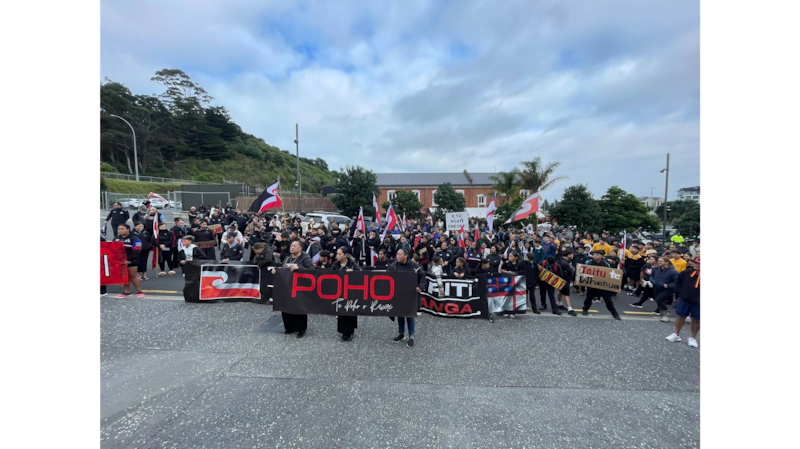
Harata Gibson and the people of Ngāti Oneone fought one of many battles and won. Parts of their ancestral land was given back after protests, and occupation of the shed where her marae once stood, with a fire that burned for 174 days.
However, the reclamation of land has not necessarily helped put whānau into homes. Furthermore, the land returned that was unused for the purposes of its confiscation, is not suitable to build homes.
“We were successful in that the parcels of land have been returned or in the process of being returned. Unfortunately, they’re not actually prime building lands.”
The whenua returned has steep slopes and swampy areas not fit for homes.
Gibson says there is more work to be done, and the hapū will keep turning up to do it.
“When you’re looking at government and successive governments talk about housing, saying, ‘what are we going to do? What are we going to do?‘ Well, people, a hundred years, you had a chance to do something.”