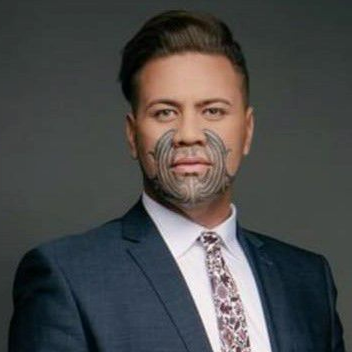

New ACT deputy leader Nicole McKee has acknowledged the party’s controversial Treaty Principles Bill ultimately damaged Māori-Crown relations, conceding “that’s where it’s ended up” while insisting division was never ACT’s intention.
In a sit-down interview with Te Ao Māori News after being elected deputy leader, the Ngāpuhi MP reflected on ACT’s relationship with Māori, the criticism she has faced over her own identity, and why she believes the party can still win greater support from Māori voters.
McKee’s appointment also means every minor party now has leadership who have Māori whakapapa.
But unlike her counterparts across Parliament, she steps into the role at a time when ACT remains one of the parties most sharply criticised over its approach to Te Tiriti, co-governance and policies focused on need rather than race.
Asked whether the Treaty Principles Bill had harmed the relationship between Māori and the Crown, McKee accepted the outcome, even as she defended the party’s intentions.
“I think that’s where it’s ended up, but it’s not where we wanted to be, nor was it our intent,” she said.
“We never did the Treaty Principles Bill thinking that we were going to divide the country... We did the Treaty Principles Bill thinking that we could define a way for the country to move forward. Now that obviously didn’t work that way.”

It marks an acknowledgement from ACT’s new deputy leader after the bill became one of the most divisive political issues of the parliamentary term.
The legislation prompted one of the largest hīkoi in recent history, attracted a record number of public submissions, drew repeated criticism from the Waitangi Tribunal and was ultimately voted down in Parliament.
Despite that, McKee rejected suggestions ACT’s vision for New Zealand differed fundamentally from that of many Māori leaders.
“I found listening to comments from the Iwi Chairs Forum, they were actually saying their same end goal is the same as ours,” she said.
“We actually do have the same end goals. We just don’t agree how to get there.”
“My whakapapa is mine”
As the first Māori deputy leader of ACT, McKee said one of the biggest challenges of her political career has been criticism from within Māori communities themselves.
She said she had regularly been labelled a “plastic Māori”, “not Māori enough”, a “kupapa”, and even told she was “a waste of my bloodline” because of her political beliefs.
“My whakapapa is mine,” she said.
“Because I don’t think the way that you think or I don’t agree with the way that you think, you then label me as not being Māori enough. When in actual fact I am still me.”
McKee described herself as equally proud of both sides of her ancestry.
“I am half Māori and I am half British. That is my ancestry. I love that. I can bind them together.”
Her journey to Parliament has been anything but conventional.
Raised by a solo mother, McKee worked as a legal secretary before losing her first partner just a week before the birth of their daughter.
After later marrying and raising four children, she said the family went through a difficult financial period while her husband returned to university to retrain.
She learned to hunt to help feed the family, an experience she says reinforced her belief in self-reliance, resilience and making the most of opportunities.
Those experiences, she said, continue to shape the way she approaches politics.
“My mum... never took the victim side of life either. She just said there are opportunities out there and if you want to go grab them, the world is your oyster.”

More than a firearms advocate
Although McKee entered politics through firearms advocacy following the Christchurch mosque attacks, she said some of the work she is proudest of has come in portfolios many people would not associate with her.
She pointed to reforms of New Zealand’s anti-money laundering laws, saying excessive compliance rules had created unnecessary barriers for everyday New Zealanders trying to access banking services.
She also highlighted changes to overseas adoption laws after learning Pacific children had been adopted into abusive homes in New Zealand.
Making the case for ACT
McKee said ACT’s philosophy remained centred on equality of opportunity, arguing support should be based on need rather than ethnicity.
“As the ACT Party, we’ve always said it should be about need, not race,” she said.
“If they need it, they’re going to be pushed up to the front of the line. But it’s everybody who needs it should be pushed up the front rather than looking at ethnicity and race.”
Asked about the persistent inequities Māori continue to experience across health, education and other social indicators, McKee acknowledged many New Zealanders begin life from different starting points.
But she said her own upbringing and later experiences raising a family through financial hardship had reinforced her belief that opportunity, aspiration and personal responsibility remain the best pathway to improving outcomes.

That philosophy has consistently drawn criticism from Māori, iwi leaders and the Waitangi Tribunal, who have argued ACT’s policies - including the Treaty Principles Bill, opposition to co-governance, support for reviewing Treaty clauses throughout legislation and the abolition of Te Aka Whai Ora - have weakened Treaty rights and damaged Māori-Crown relations.
Asked what ACT had achieved for Māori while in government, McKee pointed to charter schools, saying they had created new educational opportunities by recognising that not every child learns in the same way.
She also highlighted the End of Life Choice Act as one of the party’s proudest achievements, saying it had given New Zealanders greater dignity and choice at the end of their lives.
Te reo as a ‘taonga’
McKee’s comments come despite ACT’s support for coalition policies requiring public service agencies to prioritise English in government communications and give greater prominence to their English names in branding.
Her predecessor as ACT deputy leader, Brooke van Velden, also oversaw the decision as Internal Affairs Minister to restore the English title to the top of New Zealand passport covers, reversing the previous ordering that had placed the te reo Māori title, Uruwhenua Aotearoa, first.
Despite those changes, McKee said she believed the Crown continued to have a responsibility to protect te reo Māori.
“Our language is precious and does need to be held as a taonga,” she said.
Drawing on her own experiences of being criticised for the way she spoke growing up, McKee said the focus should be on encouraging more people to speak the language, rather than criticising those who make mistakes.
“I think if we want to encourage te reo use, then we encourage everybody.”
While she supports the coalition’s broader reforms to public sector branding and communications, McKee drew a distinction between the use of te reo in government branding and the Crown’s responsibility to actively protect the language itself.
Looking towards the election
With the election approaching, McKee said ACT would continue campaigning on its core message of individual freedom and smaller government.
Asked about the prospect of working with TOP, she instead suggested the biggest contest on the centre-left would be between TOP and the Greens.
“I think really what might happen there is TOP and the Greens are going to cannibalise each other for their own votes,” she said.
“It’ll be interesting to see which one of them gets in.”
She also argued the Greens had shifted away from their environmental roots.
“When I look at Greens, TOP and Labour, they’re all just trying to eat each other’s vote.”
Despite the polarising debate surrounding ACT’s Treaty agenda, McKee said she hoped voters would judge the party on its policies rather than its reputation.
“We need to unlock the potential in New Zealand,” she said.
“I think that we can land in a really good place.”