


I whakaputahia tēnei ātikara e RNZ.
Former Te Pāti Māori president Che Wilson has sparked debate following a controversial haka performed at the Tainui Regional Kapa Haka competition over the weekend.
The haka, directed at ACT MP Parmjeet Parmar, included the phrase “purari karikari iniana”, which has been interpreted as a derogatory reference to Indians. It also incorporated gestures referencing Indian cultural practices, including sitting cross-legged with hands in a prayer position. Wilson appeared to mimic an Indian accent and head movements during the performance.
When contacted by Mata, ACT Party ethnic communities spokesperson Parmjeet Parmar said: “Reports that this performance was composed and directed at mocking Indians are deeply troubling. Many in the Indian community have come to New Zealand seeking opportunity, safety, and a sense of belonging. They deserve to be treated with dignity“.
In an interview with Te Arawa FM journalist Kereama Wright posted on Monday, Wilson defended the haka, saying, “Ko te hunga pēnā ki a Parmjeet e hiahia ana te tohutohu mai, ko tāku, haere hoki!”.
Indigenous rights advocate Tina Ngata criticised the performance online, writing that she believed, “Parmjeet Parmar has indeed done a lot of damage, and delivers racist harm to Māori and many others. The answer to that should not be to deliver racist harm back upon her people by mocking them, ridiculing their culture, jeering at the poverty on their lands that comes from the same coloniser, and using racial slurs cloaked in our reo”.
Parmar previously drew criticism after seeking advice from officials on the range of possible penalties for Te Pāti Māori MPs following their Treaty Principles haka in Parliament, including whether imprisonment was an option. She said at the time she was “doing her homework”.
Political connections
Wilson served as Te Pāti Māori president from 2018 to 2022 before being replaced by John Tamihere. He is also a former Deputy Secretary for the Ministry of Environment.
He leads the kapa haka - Te Pae Kahurangi, an affiliate of the kapa haka Te Iti Kahurangi. When Mata first contacted Wilson, it was advised he would not be available to comment due to wānanga commitments.
Te Iti Kahurangi, the senior group, is led by newly selected Labour Party candidate Kingi Kiriona, who announced during the competition that he would stand against Waikato-Hauraki MP Hana Rāwhiti Maipi-Clarke.
When Mata contacted Kiriona, he provided a statement attributed to Wilson and reiterated that Wilson had been unable to reply because he had been away at a wānanga.
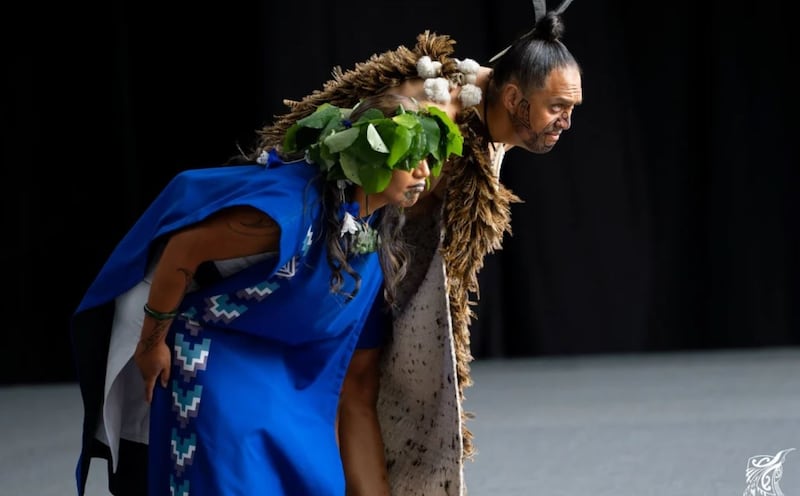
The statement said: “Haka is a platform to challenge and where relevant, denigrate in response to an issue. The haka was composed and choreographed by a collective known as Te Whānau o Te Pae Kahurangi, and takes aim at ACT MP Parmjeet Parmar for her actions in seeking imprisonment advice for the performance of the haka by Māori MPs in the house last year, as well as her attack on Māori-focussed roles, courses, and spaces at the University of Auckland.
“Te Pae Kahurangi regards these actions as clear examples of prejudice towards Māori culture, and as such, the haka is aimed specifically at Mrs. Parmar and not the Indian community.
“Te Pae Kahurangi does not condone racism. Te Pae Kahurangi apologises for any offence caused to the Indian community, towards whom this haka was not directed”.
Rising tension
The controversy comes as the government prepares to sign a free trade agreement with India. The issue has already created political tension between National and New Zealand First.
Minister Shane Jones previously warned such a deal could lead to a "tsunami of butter chicken“, a comment that drew strong criticism.
On Tuesday Labour leader Chris Hipkins condemned Jones’ remarks which he described as “racist at the least”, adding “there is no room for racist rhetoric in any government that I lead”.
Last year Hipkins was critical of former Te Pāti Māori MP Tākuta Ferris when he attacked Labour for using “Indians, Asians, Black and Pākehā” to help campaign for Peeni Henare in the Tāmaki Makaurau byelection.
Last week an Auckland man was arrested in relation to anti-Indian graffiti near Papatoetoe Central School.
Over the weekend Tāmaki Makaurau MP Oriini Kaipara met with members of the Takanini Gurdwara Sahib in a show of solidarity. She has been vocal in her support of the Sikh community and critical of attacks against them by Destiny Church leader Brian Tamaki.
Kaipara who is a founding member of national champion kapa haka Ngā Tūmanako told Mata she was appalled Te Pae Kahurangi’s haka, which she believed had ridiculed the Indian culture.
She said “we were always taught that humility is the quintessence of who we are as Māori. Our values of manaakitanga and whanaungatanga never leave us, even in competition mode”.
The Tāmaki Makaurau MP said haka is often controversial but this is different. She said “I don’t recall a haka as confronting as this. I believe it crossed the line. It is racist”.
In her statement she went on to say “we must do better as Māori, and we need our leaders to lead much better than this, whether on the haka stage, in Parliament, in churches, or in our communities”.
ACT response
In her statement to Mata, Parmar said “Racism in any form is unacceptable. It doesn’t matter who it comes from or who it is directed at. It has no place in a country that prides itself on fairness and mutual respect.

“New Zealanders reject the idea that one group is superior or inferior to another. People should be judged on their character and contribution, not their identity”.
Last year Parmar drafted a members bill to prevent universities from giving scholarships based on a person or group’s race or ethnic origin, nor any other financial assistance, accommodation, housing, access to “designated spaces, rooms, or other facilities” or “any other benefit, entitlement, or opportunity”.
“I wrote to the minister for universities to raise concerns about allocation of resources toward students based on ethnicity. This includes special allowances, separate study spaces, scholarships, and course entrance pathways in fields like medicine.”
Parmar also raised concerns students at the University of Auckland were being forced to do a paper on the Treaty of Waitangi, particularly for international students, for whom the course would “hold little value”.
Debate over kapa haka and political expression
Expressing political views through kapa haka is not uncommon, with many groups composing waiata about contentious issues and policies. However, in this case, the use of racial stereotypes on stage has drawn strong criticism. Te Matatini, the national kapa haka organisation, shared clips of the performance on social media over the weekend which have now been removed.
When contacted by Mata, Te Matatini chief executive Carl Ross confirmed it had received complaints and acted immediately to remove the haka from its social media and other platforms and contacted Whakaata Māori, which will also remove the haka from all Whakaata Māori platforms.

“We assessed the haka against the standards of the Broadcasting Standards Authority, particularly those relating to discrimination and denigration. We concluded that elements of the performance risked reinforcing negative stereotypes about Indian people, and on that basis, the material did not meet the standard expected.”
A common sentiment expressed on social media was that political critique should focus on ideas rather than culture. One commentator posted “Werohia ngā whakaaro o te tangata, kaua ko tōna ahurea”, “Challenge the ideas of a person, not their culture”.
Wilson, who is currently a director of Māori consultancy firm Naia, appeared unrepentant in his earlier interview with Te Arawa FM, saying: “Mēnā e riri ana ētahi, e tū ana ngā pihi, kei te pai, kei a rātou tēnā”.
The statement to Mata, attributed to Wilson, said “It is worthwhile noting that there are many examples of haka and kaioraora (derogatory songs), that often include references such as ‘pokokōhua’, ‘kai a te kurī’, ‘porohewa’ used to denigrate people”.
Parmjeet Parmar was critical of Wilson saying “leadership comes with a responsibility to bring people together, not to foster division or target others based on race”.
“Kapa haka is a powerful and respected cultural art form. It should celebrate identity, tell stories, and bring people together, not denigrate a particular racial group. When it is used that way, it diminishes the mana and meaning of the haka itself.”
In response to the interview, Ngata stated on Facebook, “This is a perfect example of how colonial harm turns into lateral racism, and it’s exactly why we, as Māori, need to stop excusing ourselves from anti-racism training. Ka pā pouri ahau mō tōku reo rangatira, kua mahia hei patu i runga i te iwi Iniana, hei āwhina i te kaikiritanga anō hoki.” She said she was sad that te reo Māori was being used in a way that harmed Indian people and reinforced racism.
Nā MATA with Mihingarangi Forbes nō RNZ.