


China’s launch of a long-range nuclear-capable ballistic missile into the South Pacific has prompted concern from New Zealand politicians and foreign policy experts, who warn the test risks increasing tensions and contributing to the further militarisation of the region.
Speaking to the media on Tuesday, the Prime Minister said it was unacceptable that China had tested nuclear-capable weapons in the Pacific, adding the government had expressed its concerns directly to Beijing.
Those concerns were echoed by Green Party foreign affairs spokesperson Teanau Tuiono, who said the Government’s response needed to be applied consistently to all countries conducting military activity in the Pacific.
The concerns come as Pacific leaders have committed to the vision of a “Blue Pacific Ocean of Peace”, a declaration intended to keep the region from becoming a theatre for geopolitical competition. However, critics have warned that growing military activity and strategic rivalry risk undermining that ambition.
The launch may also draw attention to the Pacific’s longstanding commitment to remaining nuclear-free under the Treaty of Rarotonga, which established the South Pacific Nuclear Free Zone, although the treaty’s provisions focus on nuclear explosive devices rather than missile capability alone.
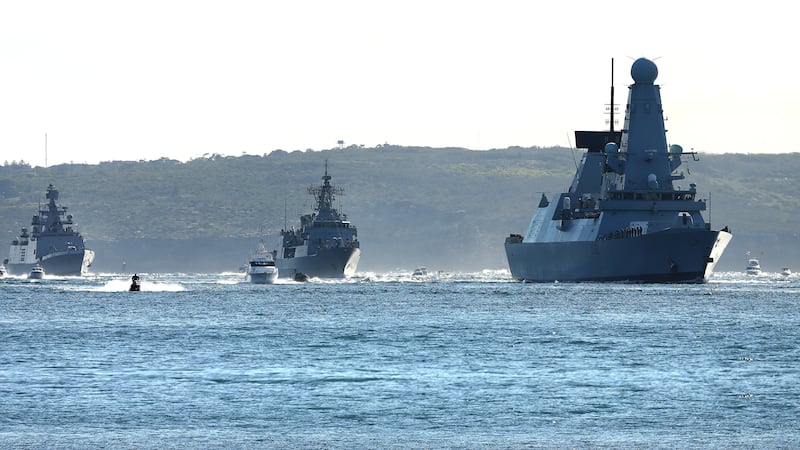
The discussion comes as major military exercises continue in the wider Pacific region, including the Rim of the Pacific (RIMPAC) exercise currently underway around the Hawaiian Islands, involving more than 30 nations, including Aotearoa.
Political and environmental impact
Former New Zealand Trade Commissioner and Director of Trade in Taiwan Tina Wilson Wehipeihana, who worked extensively across Asia, including China, says Beijing’s actions are disastrous.
“Our Pacific islander cousins have so much challenges already to start with, from a climate perspective, from resourcing, from all those types of things. So when you have that type of activity happening in your backyard… where our wildlife are different types of currencies for our Pacific nations taking place, it’s disastrous."
She commended the government’s decision to publicly express concern about the launch, but said more needed to be done.

She added that for Indigenous peoples across the South Pacific, the ocean holds deep spiritual significance, and Beijing’s activities could be seen as undermining that sacredness.
“Our marine life and the quality of what happens underneath the water is extremely important for our Pacific nations, and it’s extremely important for us as Māori. When people disrespect that, there is really an incursion on mana, and what are we doing to stand up for the mana of our people and the mana of our taiao?”
Consistency in approach
Tuiono, who also has whakapapa to the Cook Islands, said the New Zealand Government needed to be consistent in its messaging.
“America often tests intercontinental ballistic missiles, firing into the Marshall Islands. If they’re going to take this stance with China, then the expectation is they should also take it with the Americans.”

Foreign Minister Winton Peters, who is travelling in Japan, confirmed on Monday that China had informed the New Zealand Government in advance of its plans to launch a long-range ballistic missile into the South Pacific.
He described the launch as “deeply concerning”.
“New Zealand considers this an unwelcome and concerning development. We, like our neighbours in other Pacific countries, have no interest in China using the South Pacific as a testing site for missile capability.”
Peters said he would discuss the incident with Pacific partners and reiterated that Pacific leaders had consistently said they did not want the region to become a theatre for outside military competition.

“We are also concerned that this now seems to be a recurring pattern by China, following its test firing of an intercontinental ballistic missile into the South Pacific in 2024. We as a region should not sit by and allow such tests to become normalised or routine.”
The minister said New Zealand would continue to monitor the situation in close coordination with regional partners.
Te Ao Māori News has reached out to the Chinese Embassy for comment on the missile test and the concerns raised about increased militarisation in the Pacific.