

I whakaputahia tuatahia tēnei atikara e RNZ
Whānau of Ōnuku Marae and Ngāi Tahu celebrated their first hautapu ceremony at Takapūneke Reserve in almost two centuries this Matariki.
In 1830, the Ngati Toa rangatira, Te Rauparaha, arrived at the site at Akaroa on Banks Peninsula, aboard the British ship, Elizabeth, hidden below deck with a party of his warriors. A massacre soon followed.
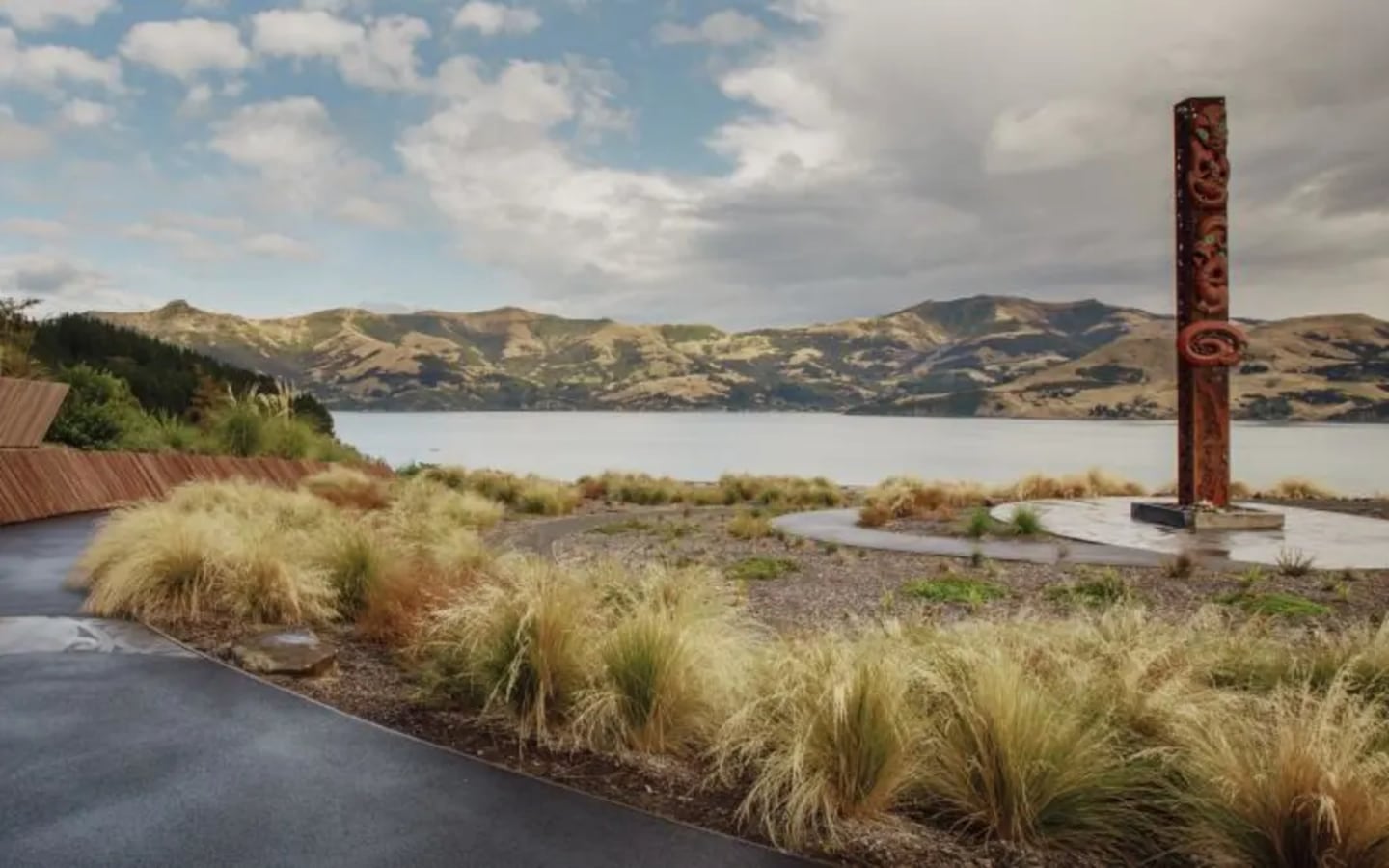
The ceremony on Friday followed the recent installation of a main pou, named ‘Puaka Tātai Rau o Irakehu,’ and nine Matariki pou markers designed by master carver Fayne Robertson, for the second stage of the Takapūneke Reserve redevelopment.
Keefe Robinson-Gore, a member of the Ōnuku Runanga co-governance group, told Māpuna it was a special day for the hapū and community, with around 150 people gathering at dawn to celebrate.
“We had our first hautapu on Takapūneke that would have been since the times of those raids, so in quite close to 200 years, to honour our dead and set our intentions for the year ahead.”
Robinson-Gore said from a Ngāi Tahu perspective, the 1830 massacre known as the ‘Elizabeth Affair’ was a catalyst for the signing of the Treaty of Waitangi because it marked the first British intervention in inter-tribal warfare.
“Takapūneke was our trading post here for Akaroa Harbour, if we think about those times… most people are getting around Aotearoa via the ocean, via the moana, and Akaroa would have been a lot busier place.
“What we were doing at Takapūneke we were trading flax cordage, which was used for the sailing ships. At the time, they were using hemp rope, but harakeke is far more durable, and so it made the trips to Sydney and further back to Europe a lot more economical for those merchant sailors.”
The incident impacted the community for a long time and still does to this day, he said.
“The work that we’re doing at Takapūneke now is to sort of unpick that and create change and healing, but for even my grandmother’s generation, my father’s generation, they were told never to go on to the whenua there but were never told why. And so, as part of that healing, it’s about telling those stories not to forget the past, but to ensure it remains, but the feelings associated with it change.”
For the next generation, Takapūneke won’t be a desolate place absent of people; it will place of reflection and wānanga, he said.
Robinson-Gore said the vision to transform Takapūneke progressed over generations, and at different stages, there were different hurdles to jump through.
“Takapūneke was also the town rubbish dump; we still have the wastewater treatment plant really close to our site, if not on the ancestral site of where our tīpuna once occupied, and it was earmarked for subdivision, so it’s through the work of many of our kaumātua."
Healing the taiao, the environment, is part of the wider healing journey, he said.
“In terms of the human connection, the tāngata, our people it is really about having a place that we can return to and so that we can start to have a different relationship with that whenua so that our people can hear their stories, can see themselves reflected and understand their identity in a more wholesome and more fulsome picture and that is what we are trying to create at Takapūneke.”
Nā Māpuna nō RNZ