

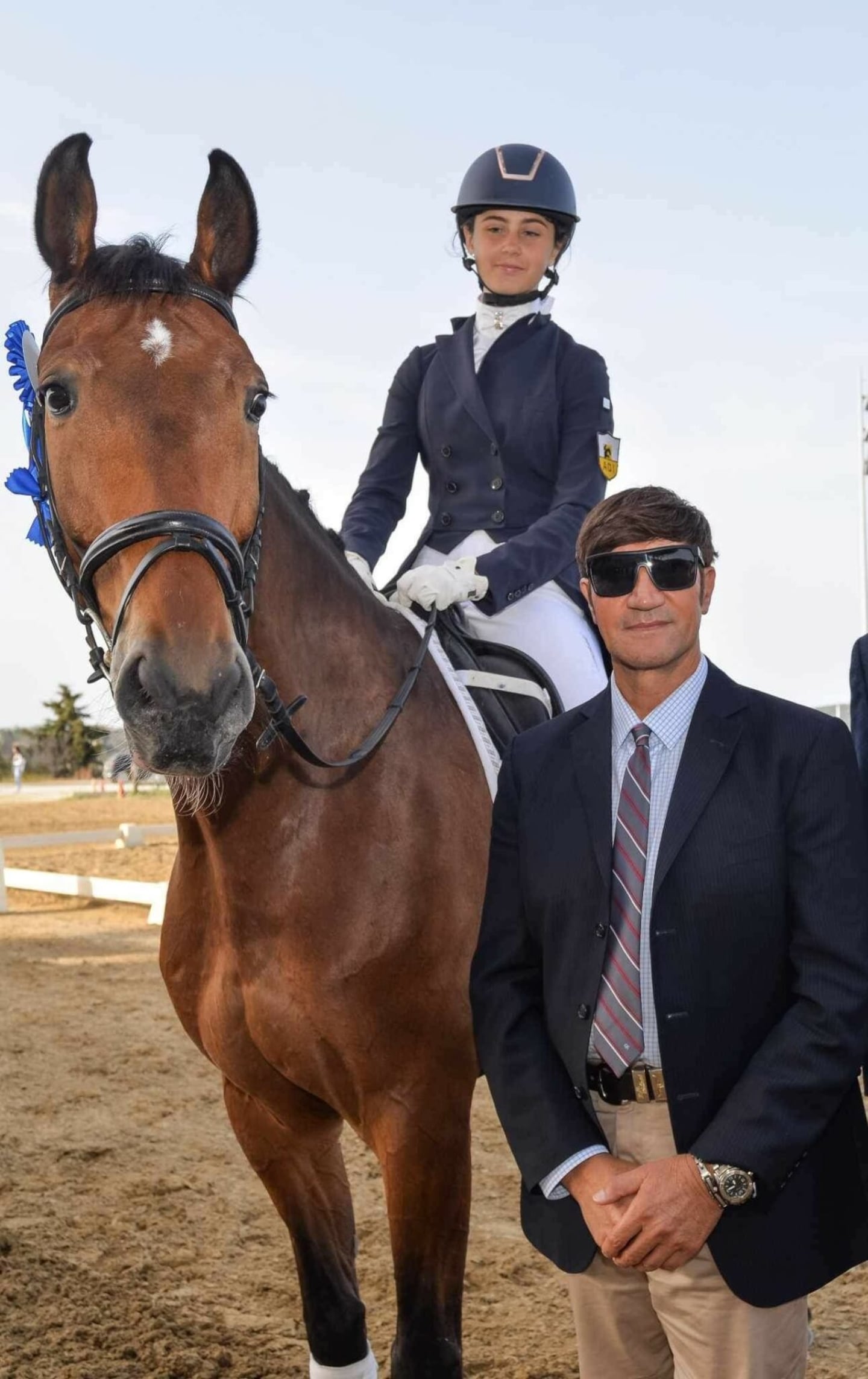
New Zealand now has its first Level 3 FEI para dressage judge, one of only 14 in the world.
Mura Love (Ngāti Konohi) has made history, being the first New Zealander to achieve this FEI qualification, after five years of working in the field of international para dressage.
The promotion allows Love to primarily judge riders as a member of the judging panel at several international para dressage events around the world, including president of the ground jury, foreign judge or ground jury member. He is also an active FEI level 2 FEI eventing Judge and FEI level 2 FEI dressage judge.
To achieve eligibility for this status, Mura completed criteria set out by the FEI before taking the three-day exam which is an intense experience examining all aspects of para dressage, judging, jurisdiction roles and responsibilities.
A big part of the criteria is shadow judging all Grades I to V. This was achieved at the Nordic Championships in Drammen in Norway and Hartpury Festival of the Horse in the UK. Also, he served as a ground jury member at Boneo, Australia (twice in 2022), and in Sydney and Mannheim in Germany in 2023, and having successfully completed and passed the exam in Lexington, USA was transferred to FEI para dressage level 3.
Love says it has been a long journey, mostly due to the disruption of Covid-19 halting all overseas travel to and from New Zealand and sanctions posed on many international equestrian events in the northern hemisphere.
Rigorous training
However, a lot of previous experiences judging internationally before and after Covid served to establish and support the past five years toward achieving FEI level 3.
“You judge alongside FEI level 4 para dressage judges (Olympic and World Equestrian Games judges) and they then assess your judging ability and understanding. The process of going over your [judging] sheets, comments and marks is very rigorous and quite measured, with a small margin of error. They really want to see that you are consistent with the standard and expectation for each level of competition,” he says.
Love says horses have been in his family for generations. “Everyone in my family rode, and some still do. We often go on family horse rides to the beach or places of interest when we’re at home together.
“We were part of that generation that made your own fun together. Because we all had horses and enjoyed riding as a family it was a big part of our lifestyle. We just ventured out and did all sorts of things.
“It was an idyllic lifestyle growing up in the coastal settlement of Whangara, halfway between Gisborne and Tolaga Bay. We have such a strong sense of identity and belonging to Ngāti Konohi, a subtribe of Ngāti Porou and knowing your heritage from this place is quite special. Whangara is also well known as the home of the movie, Whale Rider, as Paikea who sits astride the whale is our common ancestor.
Loce says he was riding and competing like most keen people in Gisborne but he can’t remember much about dressage back then as most people went jumping.
Dressage led to judging
" I went on to have some dressage lessons with the late Heather McNeil who was passionate about two things in life: horses and dressage. We forged a great friendship and Heather has been the biggest influence on my understanding of horsemanship and dressage. From there I got involved with supporting the Gisborne Dressage Group and Shirley Hyland, approached me to see if I’d like to do some judging and that was the beginning.”
He became involved in para judging by chance, while attending a dressage judges’ seminar at SIEC (Sydney International Equestrian Centre) New South Wales, Australia.
“A well-known Olympic-level Australian para dressage Judge Jan Geary who I met there encouraged me to pursue para dressage. And back home in New Zealand, former ESNZ para-equestrian sports manager Judy Alderdice was instrumental in following on with that initiative and was a huge support mechanism creating the pathway for me toward FEI international para judging.
“Judy gave me the opportunity and the motivation so we could work together to make things happen. I didn’t come from a background of para, apart from knowing some of the athletes competing in dressage. But when you’re on a pathway you’ve got a plan and a goal, you just get involved and become immersed in the discipline, because – like all sport – you need to understand it within its entirety so you can grow and develop a depth of understanding.
Challenging
He says one of his first experiences toward becoming an international official was shadow judging at an International para dressage event in Belgium at a place called Waregem, “and you are reminded that you must be prepared for anything and everything”.
“I remember arriving at the hotel and then at the event. I met a lot of people but didn’t know anyone. On the first day at the show, they said, “This is your judge’s box next to B” - it was this little box-like house with a little window in the front and was freezing cold.
“The organisers said, ‘we don’t have a secretary (writer) for you, so you’ll just have to complete all your own sheets, comments and marks’. There were around 25 horses to judge. Reminding myself that this was an exam, I set to work and managed to get all my comments and marks down although it didn’t help that all the announcements were in a foreign language as well, so I really had no idea what was happening. You learn to act quickly, efficiently and use your wits … it was testing!
Love says the course director in Lexington for the seminar told him, “It’s really great to see that somebody from New Zealand is actually bringing a voice to the international stage” and in spite of the geographical challenges and other factors, it gives New Zealand an international outlook of what an international standard looks like for our riders at home here.
Still riding
“Most importantly, New Zealand has got a voice in the world now for para dressage at an international level. Through Europe, UK, Asia and US, to mention some of the bigger countries, in all these places, we bring experience, knowledge and standards back to our own country to help move things along and get a stronger perspective – not just to foster the sport but also inspiring others to follow.”
Based in Clarkville, North Canterbury, Love finds the time to ride his grand prix dressage horse.
“I think it’s important if possible – even when you’re judging – if you have the opportunity to ride as well. You don’t have to compete but you can go ride and train, and remember how things feel.
“Also, to be reminded of how hard it can be to get everything correct, and equally how amazing it feels when it all comes together. Judging often teaches you how things should look, riding gives you the opportunity to feel and create what you want it to look like. It’s good to spend time with the horses, they are such generous animals and fun to be with. I think it’s quite important for lots of different reasons.
“It is also encouraging to see others get involved in judging and for those who want to judge at higher levels it’s definitely possible. There also some good people in the sport that you can reach out to and most are willing and want to help.”
Love will be home for a couple of months, then he has some invitations to judge in Europe while also working on FEI upgrading for dressage level 3.