

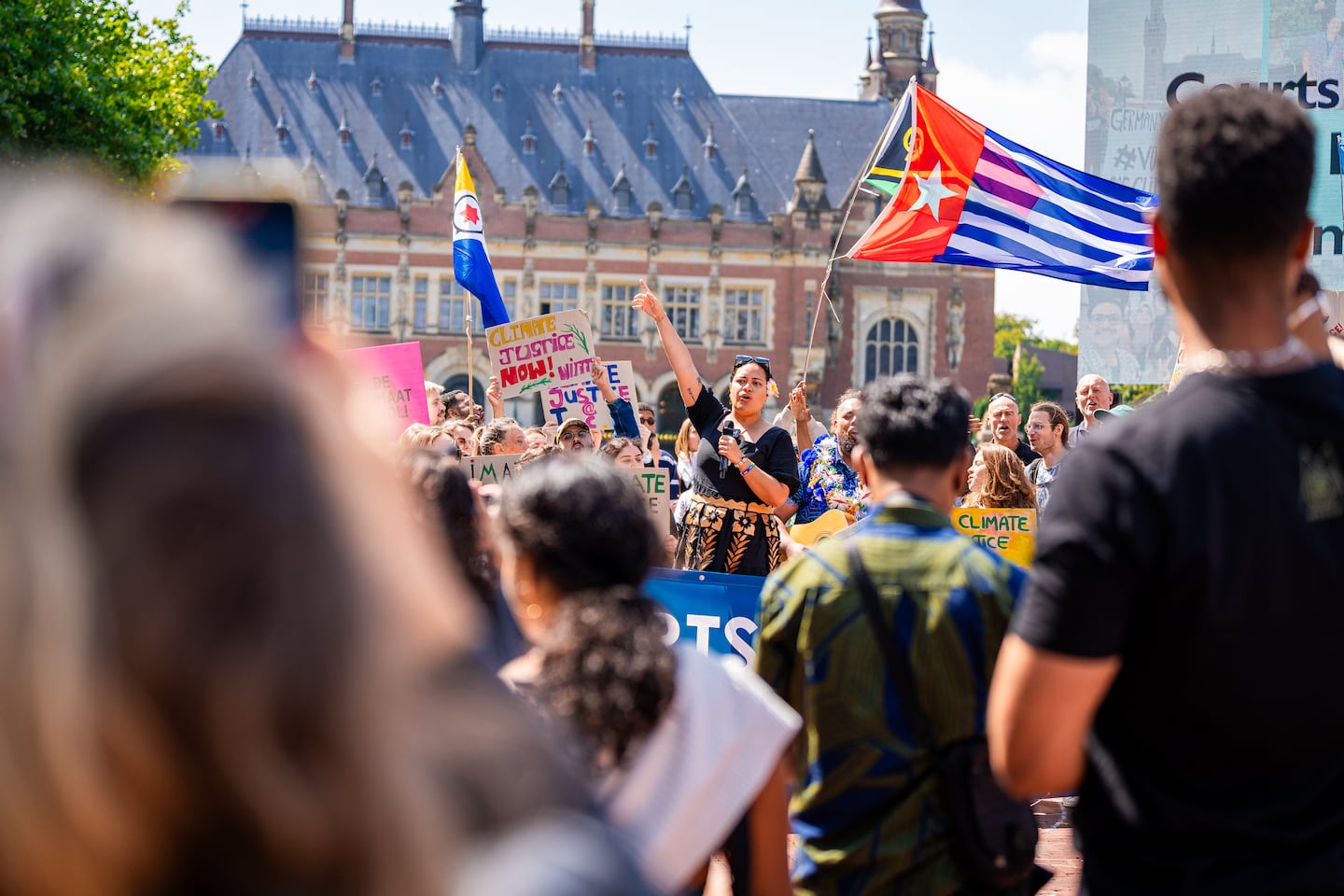
As climate impacts intensify across the world, from rising seas to increasingly severe storms and widespread destruction to homes and infrastructure, questions over responsibility are shifting from political debate into the courts.
That shift has now reached the United Nations, where member states have backed a landmark International Court of Justice advisory opinion clarifying how international law applies to climate harm. New Zealand joined 141 countries in support of the resolution, which signals growing international acceptance that climate change is not only a policy challenge, but a legal one with defined obligations for states.

The ruling draws on a process that began years earlier with a student-led campaign at the University of the South Pacific, where Pacific Islands Students Fighting Climate Change first pushed for the world’s highest court to clarify states’ responsibilities.
What began in a lecture hall in Vanuatu was later taken up by the Vanuatu Government and supported across the Pacific Islands Forum, eventually becoming a formal request to the International Court of Justice through a UN General Assembly resolution in 2023.

Vishal Prasad, the Director of Pacific Islands Students Fighting Climate Change, said the outcome reflected years of pressure from frontline communities demanding accountability through law.
“This must be a turning point in accountability for damaging the climate,” he said.
“Communities on the frontlines, like in the Pacific, have been waiting far too long and continue to pay too high a price for the actions of others,” says Prasad.
Behind the vote, several countries attempted last-minute amendments that would have softened references to the Court’s findings and narrowed language on states’ obligations under international climate agreements. Supporters of the original text, including Vanuatu, warned the changes would weaken the impact of the opinion and reopen months of negotiated agreement. New Zealand ultimately voted against the amendments, saying they would have disrupted the outcome of the negotiations.

The UN vote comes as the New Zealand Government moves to amend climate laws to limit civil court proceedings against major greenhouse gas emitters for climate-related harm, with Māori climate advocate Mike Smith among those whose case could be affected.
Smith is currently pursuing High Court proceedings against six of Aotearoa’s largest greenhouse gas emitters, and he describes the UN development as a “major shift”, arguing it confirms climate change is not only a policy issue but a legal one, with defined responsibilities for nation-states.
He says the ruling reflects a wider accountability movement and a changing understanding of climate harm not just as environmental damage, but as something with legal consequences.
“We know as Māori that the islands are part of our journey across the Pacific that’s led us here to Aotearoa,” he said.
“New Zealand has a responsibility to stand with Pacific countries like Vanuatu, Kiribati, Tonga, and Tokelau. Not just symbolically, but in supporting stronger legal and international action on climate harm,” says Smith.