

Otukou Marae, located 22 kilometres southwest of Turangi, has become a hub of manaakitanga this week for those working to control the bushfire on Tongariro. The marae has been providing food for emergency responders and support workers.
“It’s been beautiful. I can liken it to how the iwi came together when our Ariki passed away,” says Melissa Tupara from Otukou Marae.
The fire, which has burned an estimated 2,800 hectares of land on Tongariro, was first spotted around 3 p.m. on Saturday.
Mana whenua Ngāti Hikairo ki Tongariro took immediate action on Sunday afternoon, preparing to care for the crews who would arrive to fight the fire.
“Otūkou took the lead in ensuring kai was being distributed from here. By 9 o’clock, we were ready to go, and by half-past 12, we had everything in place,” Tupara explains.
Witakerei Biddle, who has lived under Tongariro for many years, says he has never witnessed anything like this before.
“I was five when Ruapehu erupted, so I have very little memory of that,” he recalls.
“Going up last night to drop some kai off to our kaimahi, it was quite heartbreaking to see our whenua up in flames.”
Biddle is responsible for overseeing and coordinating the delivery of donated food to essential workers.
“It’s good to look after those who are saving our whenua and our marae as well. It’s an honour,” he says.
Mana whenua report that hundreds of people have turned up at Otukou, Raetihi and Papakai marae over the past few days to donate kai for evacuees and emergency response workers.
“The day-to-day operations involve setting the menu, estimating numbers and catering,” Tupara explains.
While no evacuees were staying at Otukou, the hau kāinga still prepared meals for up to 200 people.
“I would liken it to coming together for a tangi - you never know how many people you’re going to be feeding, so you just feed the motu,” she says.
The wharekai, Te Rangimarie, was lively with waiata as whānau laid out a hākari for emergency response workers. The hau kāinga remained joyful despite the tragedy unfolding around them.
FENZ Kaitakawaenga Māori, Aidan Crawford, said he had never witnessed manaakitanga like this in his role.
“Te hunga kei muri i ahau, me kī ko tēnei te hunga kei mua i ahau, e ārahi ana i ngā kaupapa,” he explains.
“He ngāwari te kite kei reira he pānga e honohono nei i waenganui i ngā hapori Māori, ngā kaupapa Māori i roto mai i tēnei kaupapa o FENZ.”
He added that their crew is prepared for whatever the week may bring.
“Taihoa ka kitea ngā hua o ngā atua, ka rongo hoki ki ngā matapae huarere, hei reira mātau e rongo ai te kaha, te iti pea o ngā momo ka taea.”
Fillippo Gasparini, originally from Italy, was in Waimarino when the fire began.
“Seeing the devastation and hearing that they needed extra hands at the marae. [I thought], as a cook, I might be able to help,” he says.
Tupara is grateful to those who have wrapped around their hapū and iwi during this time.
“We’re very thankful to these people here, to everybody who has stepped forward, given up their time, and come to support Ngāti Hikairo ki Tongariro.”
The latest update from FENZ today said there are 35 crews of Department of Conservation firefighters working on the fireground today. One helicopter is on standby, but conditions have been too misty with extensive low cloud to enable a visual flyover of the area.

Incident Controller Nigel Dravitzki says, “Once we are able to get airborne, we will fly around the full perimeter and get an accurate measure of the size. Indications are that the size has not increased since Sunday night.”
Marae have a big role to play during natural disasters
It hasn’t just been Otūkou that has opened its doors to locals; Raetihi and Papakai have also been lending a valuable hand in coordinating kai and resources to Otūkou.
It follows a long-held tradition for Māori to open their marae in times of crisis, offering shelter, kai, and support to those affected.
During the Christchurch earthquakes, marae across Te Waipounamu opened their doors to both Māori and non-Māori, providing food, accommodation, and a place of refuge.
That same spirit of manaakitanga was evident again during Cyclone Gabrielle, when marae throughout Hawke’s Bay, Tairāwhiti, and beyond became vital community hubs, housing evacuees, distributing supplies, and coordinating relief efforts for those in need.
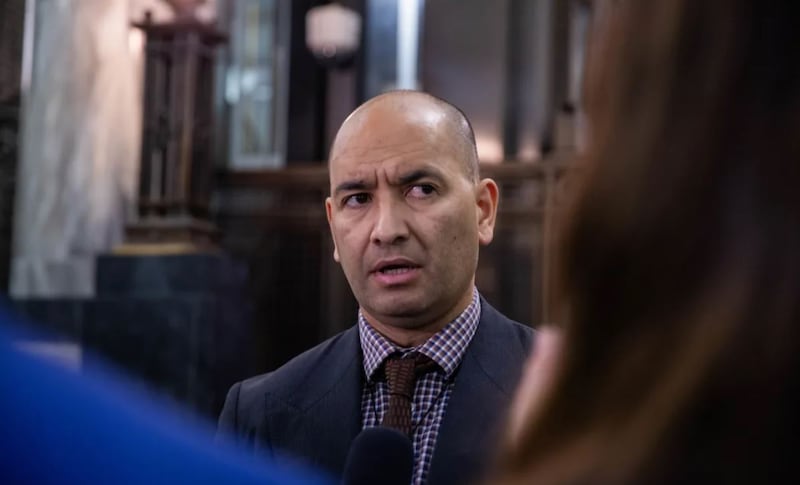
Tama Potaka, Minister for the Department of Conservation, says marae are a key and central point in recovery efforts.
“Certainly, the current experience in Tongariro, Ngāti Hikairo, Ngāti Tūwharetoa, Ngāti Rangi, Wainui ā-Rua, and others have put in a huge amount of effort to support the people, firefighters and others working on this take.
“Also, manuhiri who have visited the conservation estate, they’ve hosted them, they’ve looked after them.”
“So, it’s certainly indicative of many years of involvement of marae, iwi, and hapu, to look after people in emergency situations.”

