

Ngāti Hāua’s Treaty settlement has passed its third and final reading in Parliament, formally concluding nine years of negotiations with the Crown.
Treaty of Waitangi Negotiations Minister Paul Goldsmith said the settlement marked a significant step forward in the relationship between the Crown and Ngāti Hāua.
“This is a significant day for the Crown and Ngāti Hāua. Through this settlement, the Crown acknowledges its historical breaches of the Treaty, returns 64 culturally significant sites, and provides $19 million of financial redress,” he said.
The legislation also provides statutory pardons for Te Rangiātea and Mātene Ruta Te Whareaitu, who were tried under martial law in 1846.
“These pardons remove their convictions, recognise their mana and honour their legacy within Ngāti Hāua for future generations,” Goldsmith said.
In the 1840s, the Crown negotiated with another iwi to purchase land in Heretaunga on behalf of the New Zealand Company and ordered those Ngāti Hāua present to leave under threat of military force.
After fighting broke out in 1846, the Crown captured and court-martialled Ngāti Hāua tūpuna. Te Rangiātea was sentenced to confinement for life and died soon thereafter in prison.
Mātene Ruta Te Whareaitu was sentenced to death and executed by hanging. Another five tūpuna were exiled to Australia.
These events served as a catalyst for further fighting between Ngāti Hāua and the Crown in Whanganui in 1847.
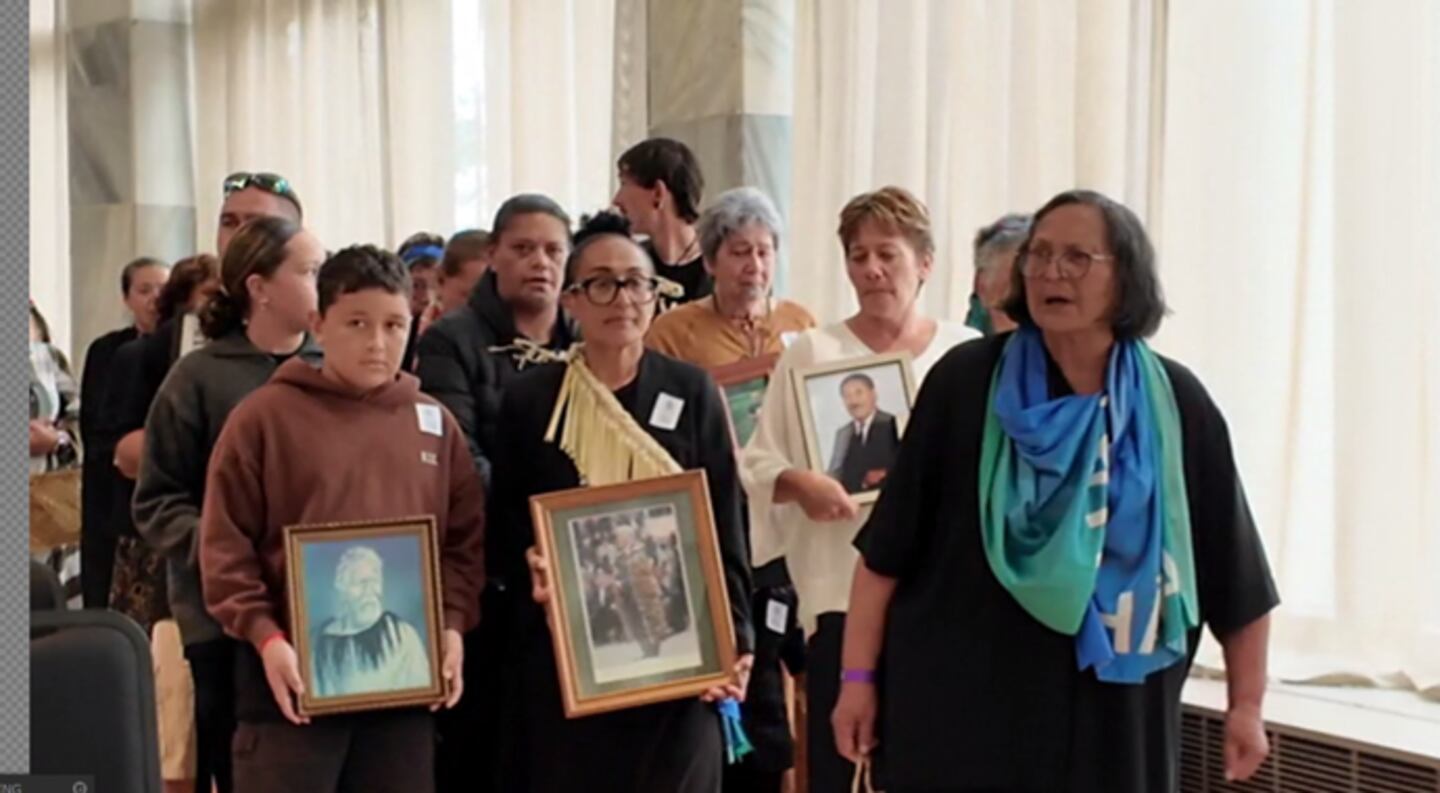
Ngāti Hāua trustees, whānau and supporters were present in the House for the final reading on Thursday, with trustee Aaron Rice-Edwards describing the moment as the culmination of a long and difficult journey.
“Anei tātou mā. Mō tēnei wāhanga o tō mātou nei haerenga, he haerenga roa, he nui ngā heke me ngā piki, kua ngaro atu wētahi o ō mātou nei paheke, tātou nei rangatira me kī, kua kawea nei tēnei kaupapa ki tēnei, tēnei rangi, nō reira he rangi nui.”

“He timatanga hou me kī ka whakatūria tēnei ture mō ngā awa, kia whakatinanahia ngā moemoeā o rātou mā, ērā ki te hokinga mai o ngā whenua i ngaro kino atu me hoki whenua mai i roto tēnei ture, me te mōhio i roto tēnei ture ko te muringa kore mō te tokorua o mātou nei tūpuna, ko Te Whareaitu tēnā, ko (Te) Rangiātea i mate tūkino i raro i ngā hē, ngā hara o te karauna i tērā atu rautau,” he said.
Rice-Edwards said the settlement was about restoring mana and setting a pathway forward for future generations.
“Nō reira kua haramai, haere mai mātou ngā uri o rāua, ngā tūpuna rā tēnei rangi kia whakanuia ō rāua ingoa kia hoki mai te mana ki runga i ō rāua, mātou ki te pae tāwhiti kia huri te kei o tō mātou waka ki te āpōpō me pēhea tātou e hāpai, e tautoko atu te oranga mō mātou nei mokopuna, rangatahi e heke ana,” he said.
Fellow trustee Lois Tutemahurangi described the day as a milestone for the iwi.
“Today is wonderful, our journey to a third reading and our leaders. So yeah, after a decade of negotiations, it is a wonderful and historic day for us,” she said.
As it went through its final reading, MPs from across the House reflected on the history underpinning the settlement and the impacts of colonisation.
Te Pāti Māori co-leader Debbie Ngarewa-Packer said the House had a responsibility to confront the full truth of New Zealand’s past.
“It’s really important that we use our influence in this house to correct and continuously hold ourselves to task when it comes to the real history of Aotearoa,” she said.
“The full military political force from the Crown and the New Zealand company on our people was devastating. Putting to trial tupuna, Te Rangiātea under Martial law, removing normal rights. Having all that happened, but worse, knowing that he died alone without his people, without his karakia.”
She said the trial and sentencing of Mātene Ruta Te Whareaitu under martial law was inhumane and continued to have lasting consequences.
“It is the true history of this nation. What happened were acts of injustice and state violence. It is what it is. And it’s created intergenerational harm that doesn’t just lift because the iwi arrived here to settle their Treaty claim,” she said.
Green Party MP Steve Abel focused on the role of the New Zealand Company and early colonisation.
“(Edward Gibbon) Wakefield was a particularly rapacious and nasty and totally interested capitalist exploiter,” he said.
“The Crown backing up this capitalist speculator in his totally unruly and unjust land deals.”
Abel acknowledged Ngāti Hāua for the way it had carried itself through the settlement process.
“And today, by your graciousness, generosity, you enhance the mana of us all,” he said.