

Ten kiwi pukupuku have moved from Wellington’s Zealandia Te Māra a Tāne to Cape Sanctuary in Hawke’s Bay, in what kaitiaki say is a major milestone for urban wildlife restoration.
Waiata, karanga and taonga puoro filled the air as kaitiaki and the community gathered this week for a special poroporoaki.
“Tēnei te wehenga atu, te poroporoaki ki ngā manu, arā ko ngā kiwi pukupuku i konei, kia takoha atu ki a Ngāti Mihiroa,” says Mark Ormsby of Te Māra a Tāne.
“Ko tō rātou hiahia, kia kī rawa tā rātou kāinga i te karanga o te kiwi.”
This is the second time kiwi have been moved between the two sanctuaries in just over a year. In 2025, 15 kiwi pukupuku were moved north, and this latest transfer helps keep the Hawke’s Bay population healthy by improving its genetic diversity.
Ormsby says this reflects tikanga in practice - the sharing and exchange of taonga between iwi.
“Tērā te āhuatanga o te iwi Māori kia koha atu, kia koha mai, ka whai mātou i tērā tikanga kaupapa o tō tā tātou nei tūpuna.”
Only around 2,100 kiwi pukupuku remain worldwide, making them one of Aotearoa’s rarest kiwi species.
This is a collaboration between the sanctuaries, conservation groups and local iwi. Ngāti Toa Rangatira and Ngāi Tahu are recognised as kaitiaki of kiwi pukupuku.
Me āta tiaki i ēnei taonga
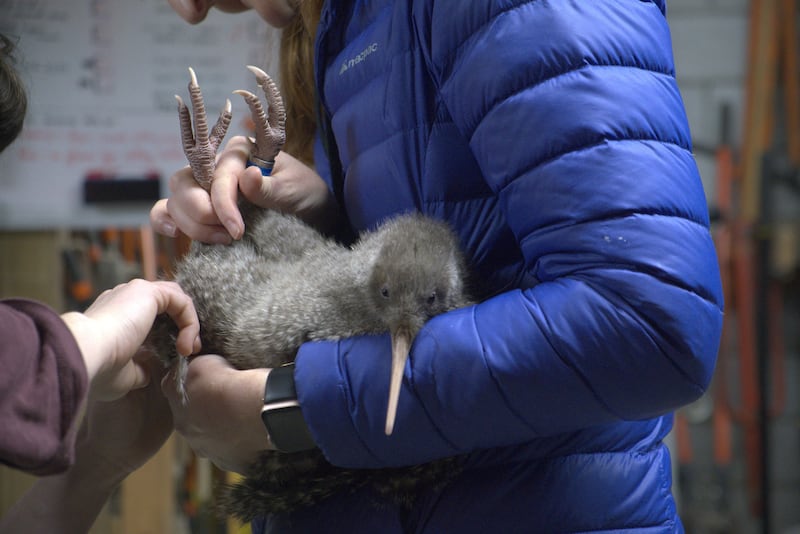
Before dawn, specialist kiwi handlers and conservation dog teams located each kiwi. They were health-checked, measured, banded and placed into special wooden crates lined with fern, with known pairs kept together.
Zealandia Te Māra a Tāne’s CEO, Danielle Shanahan, says transporting kiwi requires extreme care.
“This is pretty precious cargo. I mean, not many of us get to drive with a kiwi. So it’s a rare privilege,” she says.
“Keeping your voice quiet, making sure there’s good airflow, making sure those manu aren’t out in a hot car.”

Ka ora anō te kiwi ki ngā taone nui
Kiwi pukupuku were reintroduced to Wellington from Kāpiti Island in 2000 and 2001 after disappearing from the North Island mainland. Since then, the population at Te Māra a Tāne has grown from around 40 birds to 250 - the second-largest kiwi pukupuku population in the country after Kāpiti Island.
Earlier this year, Sanctuary Mountain Maungatautari announced more than 800 kiwi had been translocated from the sanctuary over four years, highlighting how sanctuaries are helping rebuild kiwi populations across Aotearoa.
Shanahan says this is a significant moment in the ecosanctuary’s 26-year history.
“If you look back in our history in Aotearoa [in] the late 80s, late 90s, we had almost no native birds in the skies of Wellington, and conservation was something that we primarily did away in national parks on offshore islands where no one could get to,” she says.
“But now with a place like Zealandia, we’re seeing kākā show up in people’s backyards. Like this is not just within this sanctuary, this is across the whole city.”
Zealandia says the growth of the kiwi population shows what can be achieved through long-term predator control and restoration work since the sanctuary’s world-first predator exclusion fence was built.

Kua rite ngā rohe ki te manaaki i te kiwi pukupuku
Hariata Dawn Bennett of Ngāti Mihiroa, also a Cultural Liason for Cape Sanctuary, says they are more than ready to receive the new arrivals.
“Last year’s population are just thriving, so these new ten that are coming in today will add to it.”
She explains that the translocation is a huge milestone for all parties, with iwi involvement vital to the project’s success.
“I think without that collaboration between all the hapū, this wouldn’t be happening as easily as it has.”
Cape Sanctuary Founder, Liz Lowe says they’ve come a long way with their conservation efforts.
“We’re way over a thousand birds at the last count, and we started with 60 birds.”

Te mana o te kiwi
Therese McLeod of Taranaki Whānui Tonu o Te Ūpoko o te Ika says this reflects the mana of the kiwi.
“There’s something magnitudinal about the mana of these species.”
“Something washes over the rōpū when a kiwi is around, and I think it’s that regality, the kind of graceful regality and humility that these manu have and it reaches into people’s hearts and minds.”
The manu are expected to join and mix with the existing kiwi population already thriving within Cape Sanctuary’s protected enclosure.
Kaitiaki at Te Māra a Tāne are also celebrating the arrival of two new tākahe at their base, and say they look forward to continuing to care for and support more manu in the future.