


The Government’s proposed overhaul of conservation law is drawing fierce criticism from iwi, environmental advocates and opposition parties, with Ngāi Tahu warning the reforms could undermine Treaty settlements and force iwi back into negotiations over rights they believed were already settled.
The Conservation Amendment Bill, introduced to Parliament this week by Conservation Minister Tama Potaka, has been described by the Government as the most significant reform of conservation legislation in nearly 40 years.
The Bill aims to modernise the management of conservation land by streamlining concession processes, reducing what the Government describes as “red tape”, and enabling greater economic activity and tourism opportunities on public conservation land.
It would also introduce international visitor charges at some of the country’s most visited conservation sites, simplify planning processes to align with wider Resource Management Act reforms, and establish a new National Conservation Policy Statement to replace overlapping planning frameworks.
Potaka says the reforms are about balancing environmental protection with economic growth.
“New Zealanders shouldn’t have to choose between protecting nature and growing the economy; this Bill delivers both,” Potaka said.

“It supports jobs, improves visitor experiences, and protects the places New Zealanders value.”
The Government says the changes will allow faster concession approvals and reduce processing requirements for up to 30 to 40 percent of applications.
“Conservation and economic development do not sit in opposition to one another all the time. Done properly, they can support one another - that’s what we believe in,” Potaka told Parliament during the Bill’s first reading debate.
Kāore ngā iwi i te whakaae
But iwi leaders and opposition MPs say the legislation goes much further than administrative reform, warning it risks weakening conservation protections and undermining Treaty obligations embedded within conservation law and settlement arrangements.
Te Rūnanga o Ngāi Tahu says it has long-held fears around the Government’s approach to Treaty settlements and conservation management.
Rūnanga kaiwhakahaere, Justin Tipa, said the reforms demonstrated that Treaty settlements had been treated as “a complete afterthought”.
“The Bill makes significant changes to the Conservation Act and demonstrates that upholding Treaty Settlements has been treated as a complete afterthought by the Government.
“It confirms that the effect of section 4 of the Conservation Act will be significantly diminished and that unilateral changes will be made to our Settlement Act. That alone puts the integrity of our Settlement at risk,” Tipa said.

Section 4 of the Conservation Act requires the Act to be interpreted and administered so as to give effect to the principles of Te Tiriti o Waitangi.
Ngāi Tahu says while the Bill includes mechanisms intended to uphold Treaty settlements, it would effectively force iwi into renegotiating parts of settlements to fit within a narrower framework set by the Crown.
“The Bill includes proposed arrangements to uphold Treaty Settlements, but it puts iwi in the position of being forced to renegotiate important parts of their settlements to fit within a narrow framework,” Tipa said.
“Under the new regime, where elements of a settlement do not fit neatly within that framework, the Crown would only be required to meet them ‘to the greatest extent possible’. In no world does that align with a ‘full and final’ settlement.”
Ngāi Tahu confirmed it intended to continue legal action against the Crown if the legislation becomes law.
“These are the very reasons we initiated legal action last year. While the High Court has paused that challenge until the Bill is no longer before Parliament, we intend to defend our Settlement and hold the Crown to account through the courts if the Bill becomes law.”
The iwi also warned the reforms would centralise decision-making powers and weaken local oversight of public conservation land.
“New Zealanders should also be concerned. The Bill centralises decision-making, strips away local and community oversight, and entrenches long-term concessions on public conservation land.”
Ka noho tuwhera ngā tono Tiriti ki ngā panonitanga
Te Pāti Māori co-leader Rawiri Waititi echoed those concerns, saying the reforms would deepen mistrust among iwi who were still progressing through Treaty settlement processes.
Speaking to Te Ao Māori News, Waititi referenced the long history behind Ngāi Tahu’s settlement and the decades of work undertaken by leaders, including Sir Tipene O’Regan.
“Tuatahi kei te hoki atu ōku whakaaro ki a Matiu Rata, nāna hoki tēnei kaupapa i tōia ki roto i te whare nei, kei te ū tonu i tēnei rā mō ngā Treaty settlements.
“Ko tāku e mea ana, 30 tau a Ngāi Tahu i hainatia tā rātou kerēme tiriti, me te mea hoki ka roa nei a Ngāi Tahu e mahi tahi ana me te kāwanatanga kia tutuki pai ai tā rātou kerēme tiriti, i tēnei rā kei te turaki te kāwanatanga i roto i te pire nei mō taua kaupapa rā, mō te conservation.”
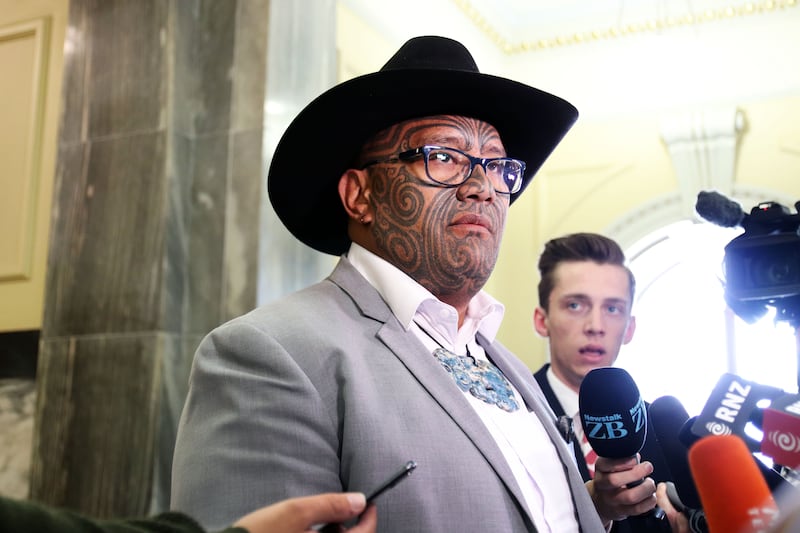
Waititi said iwi had negotiated settlements with future generations in mind.
“30 tau kua hipa ake, i whakaaro rātou mō ā rātou mokopuna, a Sir Tipene Regan mā, i whakaaro rātou mō ā rātou mokopuna.
“I tēnei rā kua hipa tērā, kei te tū ngā mokopuna ki te mahi i ngā mahi mō ngā mokopuna hei te 30 tau, hei te 100 tau e haere ake nei.”
He argued the Bill would have broader implications beyond Ngāi Tahu, particularly for iwi who had not yet completed Treaty settlements, including Te Whānau a Apanui and Ngāpuhi.
“Ko tā Te Pāti Māori ka roa nei mātou e mea ana, kotahi paihēneti te rirohanga a te Māori ki tōna ake whenua i roto i ngā kerēme tiriti nei. Waiho mā ngā mokopuna te 9 paihēneti kei waho tonu.
“Nō reira kua hipa tērā i tēnei rā, kei te whawhai tonu i tērā tūāhuatanga kia pupuri i te kotahi paihēneti i riro i a Kāi Tahu me te whawhai mō te 9 paihēneti kei waho tonu i te kereme tiriti o Kāi Tahu.”
Waititi said the Government’s actions could deter iwi still considering settlement processes.
“Mehemea ka pēnei te kāwanatanga ki ngā kerēme tiriti kua oti, he aha te take ka kuhu ko ngā iwi kāore anō kua whakahau i ō rātou kerēme, pērā anō i Te Whānau a Apanui, pērā anō i a Ngāpuhi?”
Kei te whakahēngia hoki e te taha āpitihana o te whare miere
Opposition parties have also mounted strong criticism of the reforms.
Labour conservation spokesperson, Priyanca Radhakrishnan, warned the Bill could open up significant parts of the conservation estate to sale and commercialisation.
“It’s a sneaky, egregious bill that goes so much further,” she said during the first reading debate.
“It is the most significant rollback of conservation protections in a generation, and it puts commercialisation over conservation.”
Green Party co-leader Marama Davidson accused the coalition Government of prioritising profit over environmental protection, particularly following funding cuts to the Department of Conservation during this term.

She said the reforms would increase ministerial power while reducing independent and public oversight.
The Government has rejected claims the legislation weakens Treaty protections.
Responding to concerns raised by Ngāi Tahu, Potaka defended the Bill and said iwi should read the legislation in full before drawing conclusions.
“The first thing is I just wanted to ask people to read the Bill through in its entirety because you can’t really take that out of the context where the five pages of the Bill uphold simple redress.”
Potaka said the legislation set aside a two-year process for discussions around what the Government described as “complex redress”.
“We’ve made a provision around enabling two years of discussion to take place to figure out how we best uphold complex redress because not all redress is the same under Treaty settlements.”
He also argued the current system was preventing iwi and Māori organisations from accessing economic opportunities on conservation land.
“I make no apology when I see people from an iwi space, from a Māori space who have spent eight to ten years trying to get a licence to go and take a guided tour on national park conservation sites.”
Potaka said the reforms were intended to create a more workable system while still upholding Treaty obligations.
“In relation to section 4… there’s some processes that we need to go through in all its uphold section 4.”
“We are upholding the simple redress in the Bill.”
The Bill passed its first reading on Tuesday night, and will now go to select committee.
