


I whakaputahia tuatahia tēnei atikara e RNZ
The season of Matariki is a time to look to the future and plan ahead, but not everyone in Aotearoa will have a clear view of the star cluster in the future.
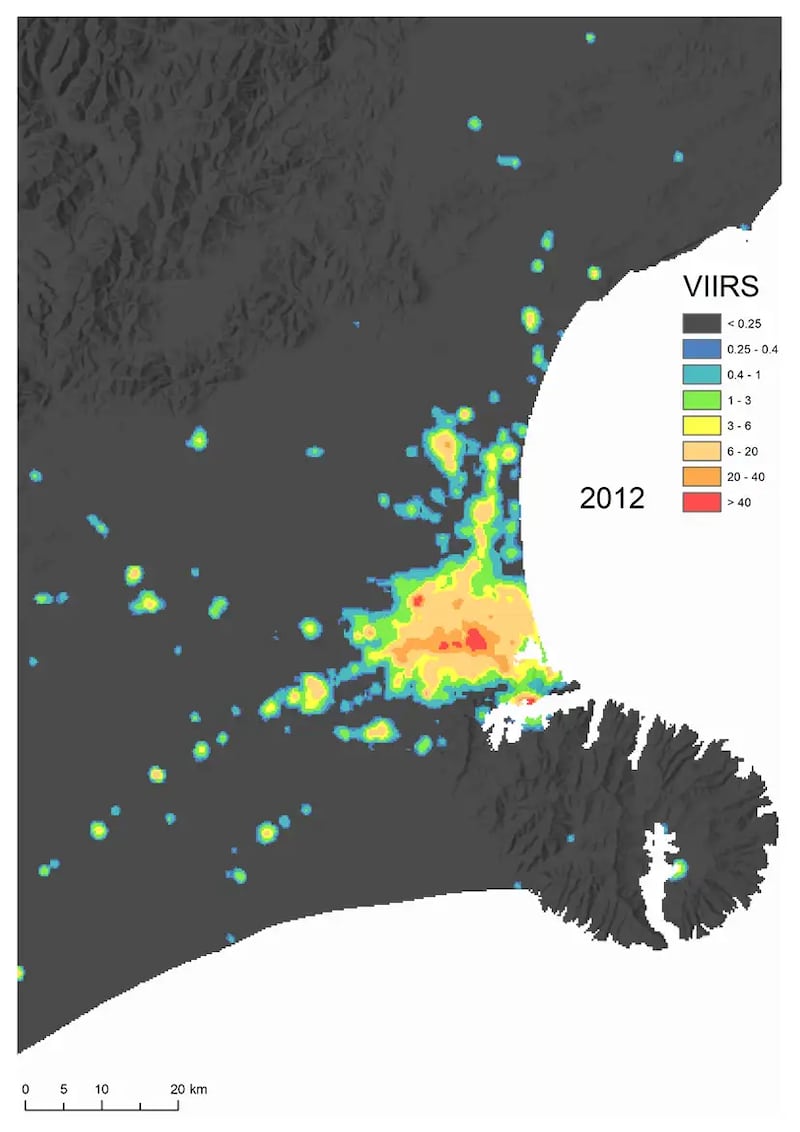
Victoria University of Wellington lecturer Dr Bridgette Farnworth told RNZ light pollution in New Zealand is increasing, on average, at a rate of 3.2 per cent per year.
“Now that doesn’t seem like a lot, but when we consider it to the global average, the global average is only 2.2 per cent. So for me as a wildlife biologist, I kind of am looking at this as a potential emerging conservation issue for New Zealand.”
Estimates indicate about 97 per cent of the population lives under skies affected by light pollution, she said.
Victoria Campbell (Ngāi Tahu) is the general manager of the Dark Sky Project, the joint venture which organises stargazing tours at Mount St John near Tekapo in the Southern Alps.
She told RNZ that without conversations on the way we use light, it is probable that many people won’t be able to physically view Matariki because of light pollution.
“I know that unless you have advocates championing for good lighting practices, that indeed, people will build infrastructure, will continue without having that lens of good lighting practice, and that will result in us not having that ability to see Matariki and our stars from those environments.”

Matariki is a small and faint star cluster among brighter, more prominent stars.
Campbell said DarkSky International (DSi) certified places, such as MacKenzie, Wairarapa and Rakiura/Stewart Island, can be an exemplar of how light is used.
“I have a goal of Aotearoa becoming a dark sky nation. So I’m not opposed to light and development and progress, but what we can do is do that in line with some really good lighting practices that mean that we can preserve the integrity of the sky and still use light the way that we need to. But, in a more deeper level, we really should be having conversations about light because it does have wellbeing impacts on us as humans.”
Dark sky areas can also help people grow a connection with the night sky, she said.
“I would hope that once people do experience that and also start to explore the knowledge that sits behind our connection to the stars, then I think the value of our stars and our ability to be able to connect them and learn from them will do us some good.”

Campbell said there are some simple solutions to alleviating light pollution, including switching to amber-tone lighting as well as shielding street lights to direct light downwards.
“We can look at having lighting regulations in place through our city councils, and they have that connection to consent and planning. And so the Mackenzie District Council, for example, operating with the Aoraki Mackenzie International Dark Sky Reserve Board, they work collaboratively so that the infrastructure that is going in the Mackenzie region is within regulations that allow us to continue to have dark sky status.”
Farnworth said combating light pollution can start small; for individuals that might mean turning porch lights off or closing curtains in the evening.
For businesses, it might mean putting advertising lights on a timer. “Seabirds, they’re not buying your product at three o’clock in the morning,” she said.
And finally for councils and the government, she would like to see the start of a conversation about lighting in public spaces.
“Can we consider both public safety and ecology as well? So the two can go hand in hand together. And I think that’s the pathway forward that we are looking at, which is really great for a country that’s committed to conservation and New Zealand really can do that.”
Looking down to protect wildlife from light pollution
Farnworth said light pollution changes animal behaviour drastically. Insects, such as moths, are attracted to light, but other native species avoid lit spaces, and the light doesn’t need to be that bright to stop them from entering a particular area, she said.
“We can also look at how light affects other responses, so animal communication, for example. So some of the birds in New Zealand’s very famous dawn chorus, for example, they’ll start singing earlier if they’re exposed to light at night.”
Many New Zealand native animals are nocturnal, and some that are particularly affected include our most iconic species, she said.
Wētā avoid illumination, while pūriri moths are attracted to it.
“These are huge, big moths the size of your palm of your hand, and they are really attracted to lighting. And the thing about pūriri moths is that they spend six years in their larval stage underground before they’ll turn into adults, and they only live for a couple of days and they’re flying off to find a mate.
“So if they get distracted by maybe a garden light or a billboard, they’ll probably just be a little bit dazzled by the brightness basically until they die. So when we think of specific light pollution effects, we can think of that kind of being as the ultimate Tinder date gone wrong.”

Farnworth said many seabirds are very sensitive to lighting. The endangered Hutton’s shearwater can become disorientated by artificial lights, often leading to crash landings on roads and being hit by cars.
“The bats in New Zealand, these are critically endangered species- and some of the research is showing that they will reduce the activity around where areas are illuminated. So we’re basically pushing them out of really important zones that they need to be in.
“So I guess some of the stars of Matariki, they’re reminding us to look up, but they should also remind us to look down and to protect some of these specific species that are living beneath them.”
Nā Pokere Paewai nō RNZ