

Nearly four decades after sawmill workers in Whakatāne were exposed to toxic chemicals, their families are still fighting for justice for the harm they say has followed them across generations.
“I know that it’s a taniwha. I know that it’s buried in our whenua. I know that it disrupted our whakapapa,” said Marama Cook, co-chair of Sawmill Workers Against Poisons, an organisation founded by her father, Joe Harawira.
“Dad was the sort of person that would fight for the underdog… and that’s probably what spurred his passion to want to pull back the lid on what was happening with sawmill workers.”

The mill gates closed in 1988, the same year PCP was withdrawn from use by the timber industry. But the fight for recognition of its legacy continues.
Kereama Akuhata, former sawmill worker and co-chair of SWAP, said there had been a pipeline directing generations of Māori boys into manual, labour-intensive work.
“We weren’t teed up to go to university; we were teed up to be the labour force, whether it was as painters, carpenters, sawmill workers or in the freezing works. We were funnelled down that pathway into labour-intensive jobs,” Akuhata added.
“Most of us were rugby players. We were driven by sports. It was a manual job; we were physically hard.”

Tracey Godfery’s father worked at Tasman Lumber in Kawerau, as a chemical mixer, preparing the chemicals used to treat the timber.
“My father was a typical Māori; he was strong, healthy and all of a sudden… around the age of 50 he became quite sick with severe asthma out of nowhere and other illnesses that impacted his ability to work. He had to give up work,” Tracey Godfery said.

“That was difficult for him and for us as a whanau to see his health decline very rapidly, and I think for him that sort of loss of mana as a male.”
In the early days, her father was always sick, experienced dizziness and blackouts, and one time fell off his motorbike during a blackout on the way home from work.

The poison followed the workers home
Cook said the workers’ exposure did not end when they left the mill.
“The men would come home with their clothing soaked in PCP, so what would the women do? They would wash all the clothes together. The contamination was brought home unknowingly,” she said.
“That’s another story to be told - the story of the women.”

Cook said her mother’s health was central to her thinking when she wrote her thesis.
“We still have Mum here; she turned 71 a couple of weeks ago. Even before Dad’s passing, her health was never that great.
“Although the thesis focuses on the menfolk—my dad and the sawmill workers—the women were also severely affected. My mum was one of them.”

Cook is the oldest child in her family. She said her mother experienced three miscarriages before she was born.
“She wasn’t the only one. Other women living in the mill village experienced the same type of trauma, but they didn’t talk about it in those days.
“They more or less just got on with it because that’s what the conditions were at the time.”
Three years ago, Parepikiao Harawira had a cancerous tumour removed and continues to live with other health issues.

The health effects of dioxin exposure
Scientist Gordon Jackman was drawn into SWAP’s campaign through his partner, former Green MP Catherine Delahunty.
Working alongside SWAP, he researched the effects of PCP and dioxin.
“It not only causes, in high concentrations, chloracne and certain types of cancers, but it also contributes to a whole range of other diseases,” Jackman said.
“It lasts for generations - not the chemical itself, but what you might call the corrupted software in our genes that goes through to the next generation.”
The World Health Organisation identifies dioxins as carcinogenic and links long-term exposure to impairment of the immune, developing nervous, endocrine and reproductive systems.

Exposed all day, every day
Akuhata said workers were given little protection from the chemicals they handled.
“There was no protection. There were rubber gloves and an apron, but they would wear out. You’d ask your boss if you could have some more, or more safety gear, and he’d say no,” he said.
“The safety gear was for the nature of the job, not the nature of the chemical, so the men were continuously exposed - all day, every day.”
Akuhata said he did not begin noticing serious health problems until the 2000s, when problems with his knees led to keyhole surgery.
During that period, he was diagnosed with diffuse idiopathic skeletal hyperostosis (DISH), a condition in which ligaments along the spine harden and form bone, causing stiffness and restricting movement.
PCP exposure was not considered a possible cause during his diagnosis. A specialist suggested the condition could be genetic, but Akuhata said there was no history of it in his whakapapa.
“This taniwha has caused many of these men to die prematurely. Some of them in their 50s, early 60s, that’s far too young,” said Marama Cook.
“I have also inherited some of those illnesses, likewise with my two daughters and likewise with my mokopuna.”

Contamination beyond the mill
Akuhata said the harm extended beyond sawmill workers and their immediate whānau. Contaminants entered nearby waterways, where families gathered eels and fish and went swimming. He believes that exposure contributed to high rates of cancer among some local whānau.
An estimated 6,000 tonnes of PCP was used in Aotearoa. Jackman said that while PCP itself is water-soluble, the dioxins associated with it are highly persistent.
“Dioxin binds to soil particles and stays virtually forever,” he said.
“It can come out in streams, enter food chains and be present in the dust you breathe.”
SWAP says 36 contaminated sites have been identified in Whakatāne. However, timber-treatment chemicals were used at sawmills throughout the country, and the full extent of the contamination remains unknown.
“They took the sawdust home to put it in the garden,” Jackman said. “There were a whole lot of other ways the dioxins were distributed.”

Joe Harawira’s diaries
Growing up, Cook knew little about SWAP. “Dad was just Dad,” she said.
“To be fair, it probably took his passing for me to really understand the gravity of what he had been doing all those years.”
Joe Harawira died in 2017, leaving behind 30 years of diaries.
“There was a lot of trauma and grief in there, but there were also moments of joy and pride,” Cook said.

Reading them, she learned more about her father’s thoughts and emotions than she had known while he was alive.
“That came through strongly in his writing. It was very heavy, but there was a mountain of wealth and knowledge contained within those diaries.”
Alongside the mātauranga in his writing, Cook discovered pages of chemical formulae and symbols - a scientific side of her father she had not previously known.
New petrol station raises old contamination fears
Concerns have resurfaced with the construction of a new petrol station at The Hub, on land that once formed part of the former Whakatāne Mill site.

Although the development received the necessary consents and is operating under a contaminated-soils management plan, SWAP says it was not consulted before earthworks began. The group fears that disturbing soil associated with historic PCP and dioxin contamination could expose the surrounding community to further risk.
“I was really disappointed. SWAP has been going for nearly 40 years, since the mill closed in 1988. We’ve lobbied government, we’ve been to Parliament, and we’ve worked on bioremediation - bringing together mātauranga Māori and new science to help clean up the dioxins,” Akuhata said.
“Why couldn’t we wait for that work to happen and use that technology to remediate the soil? Why would they disturb it and let it spread around the whole community?”
Whakatāne Mayor Nándor Tánczos said both the contamination and the decades-long struggle for recognition remained deeply troubling.

“Look, it’s horrific what they are dealing with. Hearing the stories breaks your heart—not just what they have been through in terms of the contamination, but the fight they have had simply to be recognised, to be acknowledged and to receive even a small remedy for the huge health concerns. It’s terrible,” he said.
Tánczos described the contamination as an ongoing problem and “a bit of a dirty secret”, saying regulators knew about it while many people moving into the district did not.
“What we have seen recently coming from Wellington is the narrowing of the scope of what can be publicly notified,” he said.
“It’s part of an attempt from Wellington to take away a voice, take away community and take away environmental protection.”

PCP legacy recognised as a human rights issue
Te Kāhui Tika Tangata Human Rights Commission released a report on Tuesday, examining the impacts on workers, whānau and communities exposed to PCP.
Dayle Takitimu, the Commission’s Indigenous Rights Governance Partner, said the Commission saw clear human rights implications for workers, whakapapa, whānau, hapū, and iwi, and hoped the report would strengthen SWAP’s pursuit of justice.
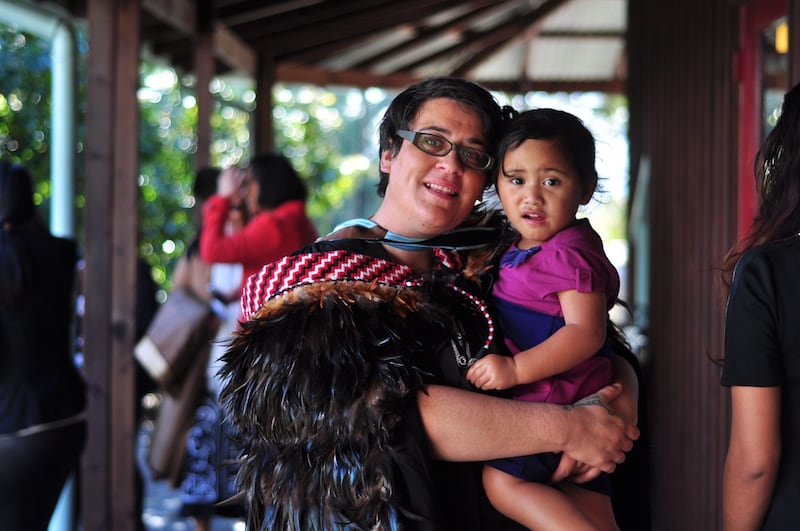
Godfrey welcomed the call for compensation but questioned whether a non-Māori workforce would have waited so long for healthcare and recognition.
Akuhata said its assessment of past governments was particularly significant.
“But the language was damning of past governments. What happened to participation and protection? Where were the principles of Te Tiriti o Waitangi? How were we not informed before this chemical was brought in and Māori men were exposed to it?”
For Cook, the report offered long-awaited recognition and said it’s a momentous shift.
“When we think of my dad and all the others who have passed, it’s a win - and we’re going to take it,” she said.
What happens next
ACC Minister Scott Simpson acknowledged the experiences of former sawmill workers and their whānau but said each claim was multifaceted and assessed on a case-by-case basis.
“I’ve asked officials for advice, and I’m looking forward to receiving that,” he said. “I’d like to have a really good look at the recommendations and then consider that advice.”
On contaminated land, a Ministry for Cities, Environment, Regions and Transport spokesperson said the Government began investigating the environmental and health impacts of historical PCP use in the 1990s. That work included the remediation of the Kōpeopeo Canal and the development of guidance for assessing and managing former timber-treatment sites.

The ministry said regional councils are primarily responsible for identifying and investigating contaminated land, while district councils regulate its use. Councils can apply to the Contaminated Sites and Vulnerable Landfills Fund for investigation and remediation work.
Gordon Jackman was not confident the current Government would act.
“I don’t think the Government is taking notice of it because it doesn’t seem to take notice of anything. It is busy dismantling environmental protections, Treaty protections and everything else we’ve had,” he said.

“There needs to be a national inquiry and compensation. The Minister saying it is too complex to address is a cop-out. This should not be dealt with one case at a time,” Ngarewa-Packer said.
“This harm has affected generations of whānau. It is a tragedy, and they should never have had to go through it. Justice shouldn’t wait until you die.”
Akuhata said many of the workers who began the fight would not live to see its conclusion.
“Gordon Jackman said you might not see it in the first generation, you might not see it in the second generation, but you’re definitely seeing it in the third,” he said.
“I won’t be here. A lot of my friends have passed away, so what are my chances? I don’t think there’s much. But justice delayed is justice denied. Justice for me is all about my mokopuna.”


