
Taranaki has missed a chance for a fresh look at farmer representation on its environmental watchdog, says a regional councillor.
After being briefly ousted, Federated Farmers won back a seat on the Taranaki Regional Council (TRC) committee that looks after rivers and oversees pollution and consent breaches.
Farm-lobby councillors failed to prevent the culling of the lobby group from TRC’s Operations and Regulatory Committee in November.
But Federated Farmers will be back at the committee table next week, after a delegation to the council’s December meeting convinced almost all councillors to support the return.
Councillor Bonita Bigham couldn’t make December’s meeting: she was at a conference on trade in endangered species in Uzbekistan for her PhD studies.
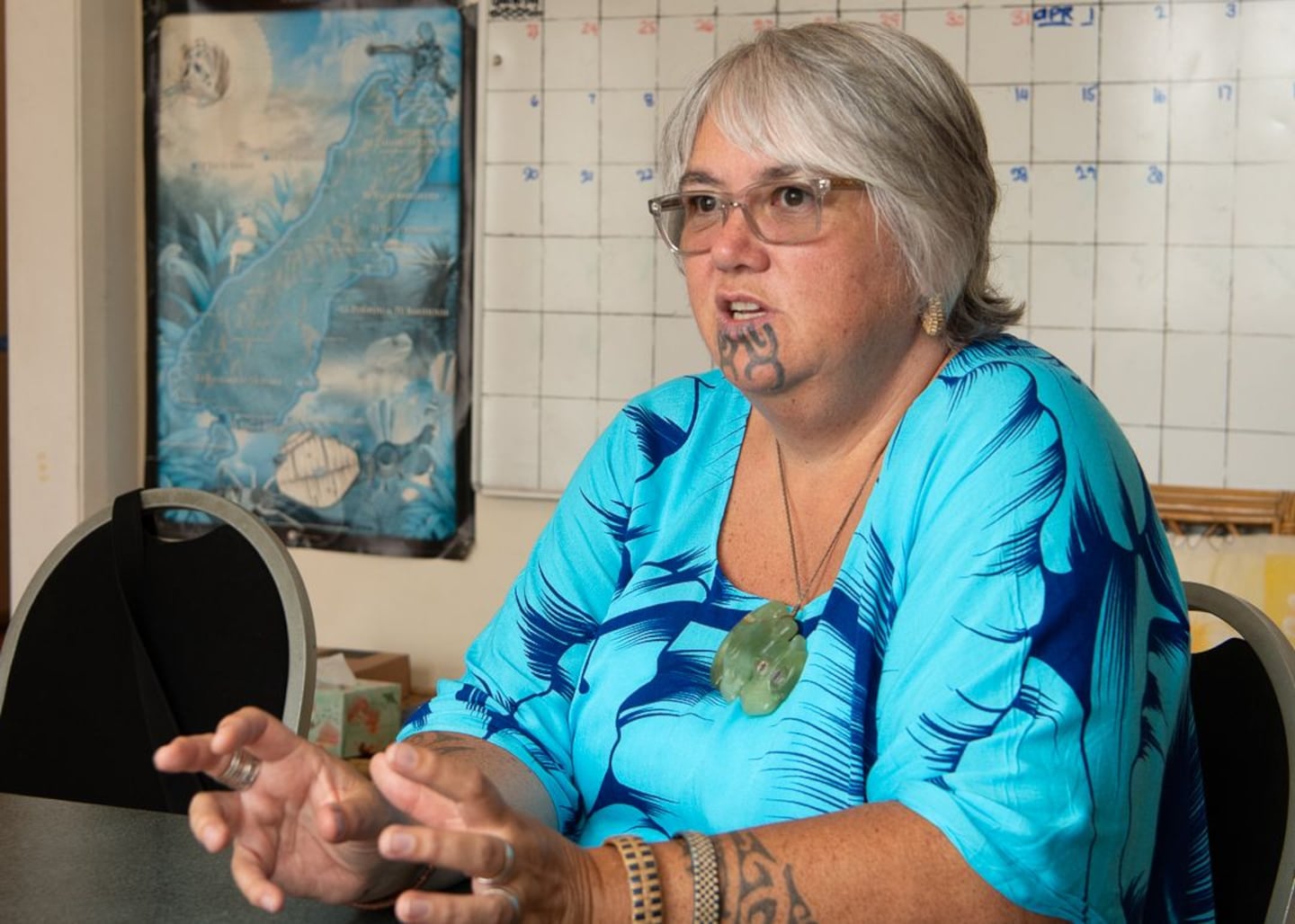
TRC’s Māori constituency councillor said it’s a lost opportunity for a wider discussion about who represents the farming community at Taranaki Regional Council.
“It seems to me a small demographic speaks for the wider sector,” said Bigham.
“If there’s going to be a farming voice: who’s farming voice? Why must it be status quo?”
Bigham suggested at November’s meeting that a farmer representative could as easily come from Parininihi ki Waitōtara (PkW) as from Federated Farmers.
PkW runs Taranaki’s largest dairying operation and manages reserves owned by mana whenua but farmed under 326 perpetually-renewable leases – mostly by non-Māori.
Bigham said PkW would bring a valuable voice with its thousands of shareholders showing interested in sustainability, regenerative farming, and alternative species and farming methods.
“Why aren’t wider discussions held with everybody involved in what’s supposed to be the critical industry for Taranaki?”
Federated Farmers’ Taranaki president Leedom Gibbs [subs: sp correct] told TRC’s December meeting they have 837 members across the region.
That’s less than one percent of Taranaki’s 87,013 voters.
TRC has granted Federated Farmers a seat on its two main committees for 35 years.
The council has no obligation to do so, and Taranaki is the only region with Federated Farmers on a committee in charge of enforcing pollution rules and consent compliance.
The Operations and Regulatory Committee also helps decide how to manage rivers and streams, land, biosecurity and biodiversity.
Gibbs said staff gave no reasons for culling Federated Farmers from the committee, railroading councillors with a report that had legally insufficient information and options.
“The report also failed to detail that a significant change was being made, with a long-standing position being omitted,” she said at the December meeting.
“We had not been informed, let alone consulted with.”
Gibbs - who unsuccessfully stood in last year’s council election – still sits in Federated Farmers’ seat on the Policy and Planning Committee.
The report suggested instead appointing an independent member to cover any skills gaps on Operations on Regulatory.
The report’s author, executive assistant Nicole Chadwick, told councillors several interest groups could fill a farmer seat.
“Federated Farmers is one, Fonterra has a vast variety, there’s special grains crop interest groups, there’s forestry … PkW was identified as a group.”
But councillor Donna Cram moved that a farmer chosen by Federated Farmers be reinstated.
“Thirty-five years ago, TRC decided that Federated Farmers was needed in the tent and on the journey to achieve the necessary environmental outcomes.”
Cram said this achieved “incredible” outcomes without huge costs on farmers.
She and councillors Neil Walker and Mike Davey again complained they weren’t alerted to the change, but Chadwick said the elected members were advised twice.

Chair Craig Williamson agreed: “It was pretty clear that it was there.”
Williamson didn’t vote as a show of hands made the result clear, with only New Plymouth councillor Tom Cloke voting against the Federated Farmers’ restoration.
“They’re in the policy area where they need to be,” said Cloke.
“If councillors didn’t pick it up that’s not an omission or a fault.
“We did debate it, and we had a discussion on it.”
Degraded waterways are a battleground at TRC with community impatience for improvement – but farmers fear the price tag.
Gibbs later said Federated Farmers were “thrilled the council has recognised how important it is to have practical, on-the-ground knowledge at the table”.
“This hiccup in the relationship with the regional council is behind us.”
LDR is local body reporting funded by RNZ and NZ on Air