


Sweeping changes to Treaty clauses across 23 laws could lower te Tiriti to its weakest legal standard, reshaping how it influences decisions in health, environment and beyond. — A sweeping overhaul of Treaty clauses is set to lower the legal force of the Treaty of Waitangi to its weakest standard, reshaping how it applies in everything from enviromental decisions to the health system.
Ministers have agreed to rewrite references to the Treaty across more than 20 pieces of legislation, drawing significant backlash from Māori, opposition parties and Treaty experts.
The changes follow Cabinet decisions made earlier this year that were not publicly announced at the time.
While the changes are framed as technical, they would reduce the legal weight of Treaty provisions across the statute book.
At its most basic level, this will reduce the weight given to iwi concerns in processes that have historically been framed as partnership-based.
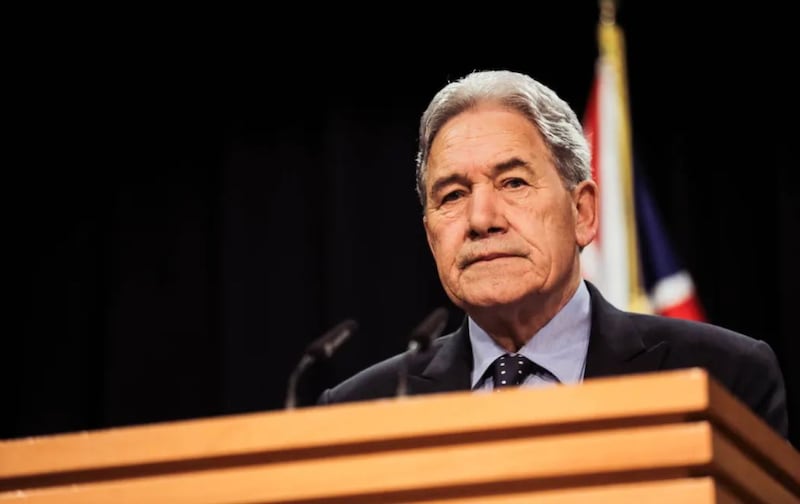
The review was part of the National–NZ First coalition agreement. It committed the Government to review all legislation, other than that relating to Treaty settlements, that included references to the principles of the Treaty, and to either replace them with more specific words relating to the Treaty’s relevance or application, or repeal the references.
The work is being led by Justice Minister Paul Goldsmith, with Cabinet papers confirming he is overseeing the review and bringing proposals to Cabinet on how Treaty clauses should be amended or repealed.
Cabinet has agreed, on the recommendation of Goldsmith, that where Treaty obligations are included in legislation, they should be set no higher than a requirement to “take into account” the principles of the Treaty.
In legal terms, that is widely considered the lowest of the existing standards.
Across current legislation, Treaty clauses impose a range of obligations. Some require decision makers to “give effect to” the principles of the Treaty, a strong directive standard that requires active implementation. Others require agencies to “act consistently with” or “honour” the Treaty, while some use lower thresholds such as “have regard to” or “take into account”.
By setting a ceiling at “take into account”, the review would remove stronger obligations from across the statute book and replace them with a single, weaker standard.
That change does not remove references to the Treaty entirely, but reshapes how much influence those references have on real-world decisions.
In practical terms, the change shifts the Treaty from something that can shape the outcome of a decision to something that can simply be considered before that decision is made, in much the same way submissions may be considered as part of any consultation process.
In areas like environmental management, which could affect whether developments proceed on land or waterways, where iwi have raised concerns.
In local government, it could change how much weight councils give to Māori perspectives in planning decisions.
In the health system, where Māori face well-documented inequities, these reforms will influence how strongly agencies are required to prioritise Māori outcomes.
The changes also sit uneasily alongside the Government’s own acknowledgment that its approach to Treaty issues has damaged trust with Māori.
In an interview with Te Ao Māori News at the end of 2025, Prime Minister Christopher Luxon conceded that debates over the Treaty Principles Bill had strained relationships, describing it as “not helpful” and acknowledging a “public vibe” that had created distance between the Government and Māori communities.
He said rebuilding that trust would be a focus, emphasising the need to improve outcomes while strengthening relationships with iwi and Māori leaders.
That tension is heightened by more recent developments, including Dr Shane Reti’s retirement and a Cabinet reshuffle that leaves only one Māori minister within National’s Cabinet.
Against that backdrop, the scale and direction of the review cut directly across the Government’s stated goal of rebuilding trust, showing a clear contradiction, seeking to repair relationships with Māori on one hand, while weakening the Treaty that underpins that relationship on the other.
While the Treaty Principles Bill sparked public debate and did not progress, the changes now being advanced through this review are broader in reach and more directly tied to how the Treaty operates in law.
Rather than redefining the Treaty in principle, they reshape how it is applied across the statute book, lowering the strength of obligations in areas that directly affect decision-making.
Unlike the earlier debate, much of this work has been developed through Cabinet processes and technical reviews, with limited public visibility and no formal consultation with iwi and hapū during policy development.
That contrast raises questions about how trust is being rebuilt in practice, and whether changes of this scale can proceed without wider engagement with Treaty partners.
Why this matters
Under New Zealand law, Te Tiriti o Waitangi does not automatically have binding legal effect unless it is given force through legislation.
Over the past four decades, that has largely been done through Treaty clauses embedded across a wide range of laws, from environmental management to health, education and local government.
Those clauses are what give practical effect to the Crown’s obligations in day-to-day decision-making.
Changing them changes how the Treaty operates in practice.
Where a law requires decision makers to “give effect to” the Treaty, they are expected to actively uphold its principles in the outcome.
Where the requirement is only to “take into account” the Treaty, those principles can be weighed against other priorities and set aside.
The shift, therefore, moves the Treaty from a directive obligation in some areas to a consideration among many.
Officials advising ministers warned that lowering the standard carried significant risks, including the potential to undermine Māori Crown relationships and impact Māori interests across social, cultural, economic and environmental areas.
They also noted there was limited evidence that existing Treaty clauses were creating the level of legal uncertainty the review is intended to address.
Part of a broader direction of travel
Reforms to replace the Resource Management Act (RMA) show how those shifts can play out in practice.
Under the new planning system, Māori involvement in environmental decision-making is significantly narrowed.
Decision makers would be required to consult iwi and have regard to iwi management plans, but there is no requirement to give effect to Te Tiriti o Waitangi, and no enforceable duty to uphold Treaty principles in final outcomes.
Instead, the legislation frames Treaty obligations at a higher level, stating only that the system recognises the Crown’s responsibilities.
Māori participation is largely confined to consultation and high-level objectives, with no guaranteed decision-making role and no obligation for councils to adopt Māori perspectives in planning decisions.
At the same time, the reforms place a stronger emphasis on property rights and economic development, shifting the balance of the system away from Treaty-based obligations and toward growth and land use outcomes.
Taken together, those changes illustrate how Treaty clauses can be reshaped without being removed entirely.
In that sense, the Treaty clause review mirrors changes already underway in the planning system, where stronger Treaty obligations are being replaced with weaker, consultative requirements.
Expert reaction
Legal and Treaty experts say the direction of the review represents a significant shift away from established practice.
Professor Margaret Mutu says the Government has ignored advice from its own advisory group, which recommended no substantive changes and no repeal of entire provisions.

Instead, she says, ministers have moved to reduce Treaty references to the weakest standard or remove them altogether, without engaging Māori in the process.
Associate Professor Andrew Erueti says limiting Treaty obligations to a “take into account” threshold is a clear step backwards, undermining what protections already exist for Māori rights in law.
Process and criticism
The review has also raised concerns about how the changes are being developed.
Cabinet documents show ministers have agreed to standardise Treaty clauses across legislation, cap the strength of obligations, and proceed with targeted repeals.
At least one clause in the Education and Training Act has been identified for removal, with ministers arguing it is not appropriate for private entities to be subject to that type of Treaty obligation.
The Waitangi Tribunal has found the Government’s purpose and process for the review could breach Treaty principles.
Officials also highlighted the lack of consultation with iwi and hapū during policy development, noting that engagement with Treaty partners is a key part of the Crown’s obligations.
They warned that changes of this scale, particularly without that engagement, could increase legal uncertainty and reduce clarity rather than improve it.
Reversing the changes
Even if a future government wanted to undo the overhaul, reversing it would not be straightforward.
The current review does more than change individual laws. By standardising Treaty clauses across more than 20 Acts to a single “take into account” threshold, it effectively resets the baseline for how the Treaty operates across the statute book.
Reversing that would require more than a single piece of legislation. Each Act would need to be individually revisited, with new policy work, Cabinet decisions and legislative amendments.
In practical terms, the changes create a form of legislative inertia that makes reversal significantly more difficult.
Even if the political direction shifts, the administrative and political effort required to reinstate stronger Treaty obligations across dozens of laws creates a significant barrier to reversal.

Te Pāti Māori says it would make reversing the changes a bottom line in any future coalition negotiations.
The party told Te Ao News it would repeal and reverse all laws that weaken Treaty protections and dilute Crown responsibilities, while also signalling support for structural reform to strengthen the place of te Tiriti in law.
At the same time, the scale of the current review highlights the challenge of that position.
Restoring stronger Treaty clauses across the statute book would require rebuilding a legislative framework that has been systematically standardised in the opposite direction.
The Green Party has also strongly opposed the changes, warning they would reduce Te Tiriti to a “mere consideration” in law and significantly weaken existing protections.
The party also criticised the lack of consultation, saying Māori, iwi and hapū had been excluded from decisions that affect Treaty obligations.
Green Party Māori Justice spokesperson Tamatha Paul said a future Green-influenced government would move to undo the changes.
“We would work immediately to undo the harm caused by constant acts of bad faith by Christopher Luxon’s Government, and ensure the Crown is an honourable partner to Te Tiriti,” Paul said.
She said any government the Greens are part of would be expected to uphold and give effect to Te Tiriti in law.
Te Ao News has asked the Labour Party if it would repeal any of the changes, but it has not yet responded.
Minister responds
Justice Minister Paul Goldsmith said the review was aimed at creating greater consistency and certainty across legislation, with Treaty references to be made more specific or removed where appropriate.
He confirmed the Government has agreed, as a first step, to amend some provisions and repeal others, with further changes expected to follow.

“Over the last 20 years, Parliament’s passed a range of laws with all manner of references, sometimes being very vague about what it means. Reviewing these will ensure Treaty references are specific and consistent with one another, in the interests of increasing certainty and supporting compliance. A core foundation of our success as a nation is predictability in the law,” Goldsmith said.
Goldsmith said consultation with iwi leaders is underway ahead of legislation being introduced.
What laws are set to change, and how
The Government’s Treaty clause review spans 23 pieces of legislation across core areas like health, education, environment and local government.
Across the review, most changes follow a consistent pattern:
- Stronger Treaty obligations, such as “give effect to”, are being replaced
- A lower standard of “take into account” is set to become the default
- Language is being standardised across all legislation
- A small number of provisions are being considered for full repeal
While detailed changes are still being finalised,
Cabinet documents and supporting material show the following direction for each Act:
Explicit repeal identified
Education and Training Act 2020
At least one Treaty clause marked for removal. Wider changes proposed across governance and system provisions
Confirmed for weakening of Treaty obligations
Climate Change Response Act 2002
Treaty obligations set to be lowered to a “take into account” standard
Targeted for amendment and standardisation
Criminal Cases Review Commission Act 2019
Treaty clause to be rewritten using standardised language
Crown Pastoral Land Act 1998
Treaty provisions to be clarified and aligned with the new framework
Data and Statistics Act 2022
Standardisation of Treaty references
Digital Identity Services Trust Framework Act 2023
Treaty clause to be standardised
Energy Efficiency and Conservation Act 2000
Likely downgrade of Treaty obligations
Environment Act 1986
Treaty clause to be amended
Exclusive Economic Zone and Continental Shelf (Environmental Effects) Act 2012
Treaty obligations expected to be weakened
Hazardous Substances and New Organisms Act 1996
Treaty provisions to be standardised
Land Transport Management Act 2003
Treaty clause to be amended
Local Government Act 2002
Treaty provisions under review, with potential weakening of obligations
Mental Health and Wellbeing Commission Act 2020
Treaty clause to be standardised
Oranga Tamariki Act 1989
Treaty provisions under review, with amendments likely
Organic Products and Production Act 2023
Treaty clause to be standardised
Pae Ora (Healthy Futures) Act 2022
Treaty provisions to be amended within the health system framework
Plant Variety Rights Act 2022
Treaty clause to be revised and standardised
Smokefree Environments and Regulated Products Act 1990
Treaty provisions to be amended
Taumata Arowai – the Water Services Regulator Act 2020
Treaty clause to be standardised