

Ko te tirohanga iwi taketake he taonga ki te ao, hei tā Emma Rawson-Te Patu.
At the 25th session of the United Nations Permanent Forum on Indigenous Issues, Rawson-Te Patu used her first intervention as an expert member to call for urgent change to how Indigenous health is understood and acted on globally.
She told member states that peace and safety are prerequisites for health, warning that current systems, including those within the forum itself, continue to create barriers to full and meaningful Indigenous participation.

“Recognise that war causes suffering, destroys health systems, and worsens long-term physical and mental health outcomes,” she said.
Rawson-Te Patu also emphasised that Indigenous health is inseparable from land, describing it as a symbiotic relationship with the environments that sustain life. And, as the sole Pacific representative among the forum’s expert members, she is helping shape how Indigenous issues are understood at the highest level.

The hope, she reflected, is that if member states better understand meeting obligations to Indigenous peoples, it will lead to improved outcomes for everyone. As the sole representative of the Pacific within a small group of experts shaping how Indigenous issues are understood at the highest level, she believes it’s a region often less visible than others globally.
This year, the theme aligns closely with Rawson-Te Patu’s role as President of the World Federation of Public Health Associations - ensuring the health of Indigenous peoples.
Last year, Te Ao Māori News spoke with Rawson-TePatu in New York during the previous UNPFII session, where she was working with the Indigenous Determinants of Health Alliance (IDHA). There, she helped develop a 20-item scorecard designed to hold institutions and governments accountable for their commitments to health equity across Indigenous-defined measures of wellbeing.
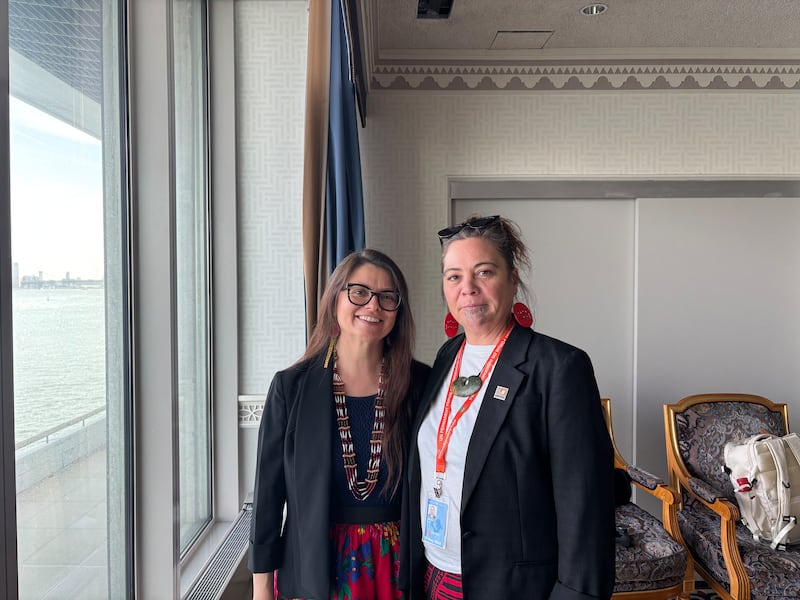
Months later, in July 2025, she received confirmation of her appointment as an expert member. Te Ao Māori News interviewed her again ahead of this year’s session, reflecting on the journey that led her here. While Rawson-Te Patu describes her career trajectory as unexpected, the work requires passion and a strong foundation in cultural identity.
“It’s been a lifelong journey, but it’s really a journey of identity first and foremost,” she said.
Raised away from her papakāinga, whānau, hapū, and iwi after her father died when she was a baby, she was brought up in the world of her Pākehā mother. Ko tā Rawson-Te Patu, kua tae mai te wā me ako ia ngā kōrero mōna ki te taha o tōna pāpā. Nā whai anō kei te whai ia i te tohu paetahi i te reo Māori i raro i Te Whare Wānanga o Waitaha.
I a ia e rangatahi ana, i ngākau whiwhita ia ki te tino rangaritatanga me ngā whanaketanga maha a ngā iwi. Ki reira tipu ake ai tōna hiahia ki te whai i ngā mātauranga mō ngā iwi taketake whānui, koiā ki ngā take e pā ana ki te oranga tangata, otirā, mā o rātou ake tikanga ahurea e ārahi i a rātou mahi katoa.
I ēnei rā, ko ia tērā kei te kōkiri i ngā take mōtika o ngā iwi taketake huri noa i te ao.

I ngā tau, kua tū a Rawson-Te Patu hai mema o te Poari Hauora ā-Rohe i Aotearoa, ā, ki reira ia kite ai i te kore tautoko a ngā tautika i a ngāi Māori, otirā i te āhua o te kaikiri i roto i āna mahi whai kāinga mō ētahi kainoho.
Kātahi ia ka rongo i te whānuitanga o ngā tūāhua kaikiri o roto i te tāhuhu hauora. Nā whai anō tōna hiahia ki te ārahi i ngā take tautika tangata huri i te ao, koiā mō ngā iwi taketake.

Koinei ngā mahi kua kawea e ia ki ngā tōpito o te ao. I te tau kua hipa, tōna 25 ngā whenua i tae atu ai a Rawson-Te Patu. Engari, he arā ngā taumahatanga ki runga ki a ia me te whai i ēnei tūmomo mahi.
“It’s a huge sacrifice on behalf of my family,” te kī a Rawson-Te Patu.
“But also knowing that we put this investment in because we believe in this way of being able to contribute to what it is our people need.”
E 23 te pakeke o tana tamāhine kei Tāmaki Makaurau e noho ana, ā, ko ia hoki tētahi o ōna tino pou me tana aroha nui ki a ia. Ko tana tamāhine tonu kei te kaha āki i a ia kia whai tonu i ēnei mahi āna ahakoa ngā piki me ngā heke.

Raswon - Te Patu explains the Indigenous ways of understanding health as inherently holistic, shaped by the interconnection between people, environment, culture and wellbeing.
“Mental, spiritual, and physical health are inextricably connected, which includes the symbiotic relationship of indigenous peoples and planet,” she said to the forum.
From that perspective, public health aligns closely with Māori understandings of wellbeing and why she is drawn to the field, describing it as the mainstream way of making sense of holistic approaches to health.
A key hook for this year’s session, she notes, is the World Health Organisation’s Global Action Plan on the Health of Indigenous Peoples. The plan is being developed in consultation with Indigenous Peoples, Member States and other stakeholders, and is expected to shape how Indigenous health is addressed within global health systems.
It is also closely connected to discussions at the UNPFII, where recommendations may help influence both its development and implementation, reshaping global systems so Indigenous ways of understanding health are no longer at the margins.

In her address to the forum, she called on member states to move beyond recognition and into action, including resourcing equity, aligning policies, and embedding Indigenous determinants of health across systems.
Her emphasis this year was the need for genuine partnership, with Indigenous peoples involved in decision-making through principles of self-determination and free, prior and informed consent.