

The 25th session of the United Nations Permanent Forum on Indigenous Issues (UNPFII) has closed, with expert members and the Special Rapporteur on the rights of Indigenous peoples issuing strong recommendations to the New Zealand government.
Over two weeks, more than 1,000 experts in law, international human rights and health gathered in New York to examine ongoing challenges facing Indigenous peoples under the theme: “Ensuring Indigenous Peoples’ health, including in the context of conflict.”
The theme created space for nations to outline the realities their people face - from the criminalisation of land defenders and the rise of artificial intelligence to discrimination against women - issues contributing to escalating harm to both people and the environment.
For expert member and Ngāti Ranginui descendant Emma Rawson Te-Patu, the forum remains a critical platform to engage global decision-makers.
“For years, we have been trying in our own spaces to achieve what we need in terms of having governments listen to us, hear us, acknowledge us, even, and still that is a problem. I do fully believe that working together more closely is the way to get the results that we need.”
Why it matters for Māori
Since its inaugural session, Māori have consistently supported the UNPFII, using the platform to internationalise issues faced in Aotearoa over the past 25 years.
Leaders, including Moana Jackson, Aroha Mead and Tā Pita Sharples, have attended the forum, advocating for Indigenous rights on a global stage.
Issues raised have included the 2004 Foreshore and Seabed legislation, failures by successive governments to uphold Te Tiriti o Waitangi obligations, and the ongoing pursuit of Māori self-determination.

In 2010, New Zealand formally endorsed the United Nations Declaration on the Rights of Indigenous Peoples (UNDRIP), with then Māori Affairs Minister Tā Pita Sharples announcing the decision in New York.
Māori were also instrumental in drafting the declaration, including Moana Jackson, who served as chair of the Indigenous Peoples’ caucus at the United Nations in 1990.
This long-standing engagement reflects a broader commitment to kotahitanga among Indigenous nations.
Rawson Te-Patu says that solidarity is essential to advancing Indigenous rights.
“This is a place where Indigenous peoples globally come together and have that opportunity to be in a space with one another. And this is primarily important because we need to be stronger together as a global solidarity unit.”
For Janell Dymus-Kurei (Te Whakatōhea), the forum also provides a platform to elevate Māori issues internationally.
“He wāhi tēnei hei whakapāho i te reo Māori me ngā take, āhuatanga o te wā ki runga i ngā whenua katoa o te ao.”
She says international law reinforces New Zealand’s commitments, regardless of domestic political positions.
“Ka mau tonu te mana o ēnei ture, ēnei tikanga e kīia ana ko te ‘international law.’ Ehara mā te kāwanatanga o Aotearoa e noa, e whakakahoretia, ka mau tonu ēnei ture ahakoa ngā kōrero a te kāwanatanga. Ka taea e rātou te wehe i te ture nei, engari mā te tukanga, kaua mā te kōrero noa.”
UNDRIP implementation back in focus
The Permanent Forum also works closely alongside the other United Nations Indigenous rights mechanisms, including the Expert Mechanism on the Rights of Indigenous Peoples (EMRIP) and the Special Rapporteur on the Rights of Indigenous Peoples.
During this year’s human rights dialogue at the 25th session, Chair-Rapporteur Anexa Alfred Cunningham, EMRIP and the Special Rapporteur reinforced the need for stronger coordination across the UN system to advance Indigenous rights globally, with the United Nations Declaration on the Rights of Indigenous Peoples (UNDRIP) remaining the central framework.
EMRIP highlighted its recent work on Indigenous data rights and traditional economies, including issues of data sovereignty, free, prior and informed consent, biodiversity protection and climate resilience - areas closely connected to ongoing Māori debates around governance, resource management and Tino Rangatiratanga.
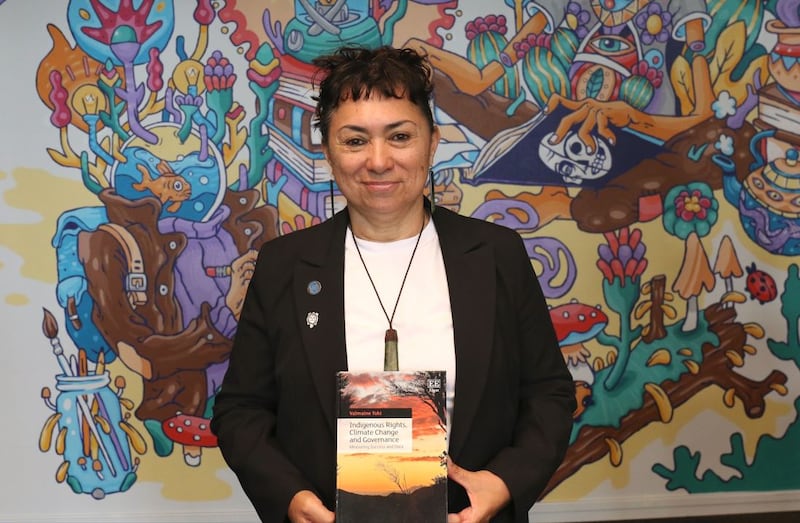
The discussion comes as both the Special Rapporteur and EMRIP prepare for upcoming official visits to Aotearoa New Zealand.
The follow-up EMRIP visit is expected to examine New Zealand’s progress toward developing and implementing a national action plan for UNDRIP, following recommendations made during its 2019 country engagement.
Those recommendations ultimately informed the development of He Puapua, the government-commissioned report outlining pathways for implementing UNDRIP in Aotearoa. Since being leaked publicly in 2021, He Puapua has become a flashpoint in New Zealand politics.
However, scrutiny has intensified after the New Zealand government failed to respond to EMRIP’s request for a follow-up visit, despite Māori organisations and human rights advocates continuing to push for greater engagement with international Indigenous rights mechanisms.
For many Māori advocates, forums such as UNPFII and EMRIP remain important international avenues when domestic recommendations, including those from the Waitangi Tribunal, are ignored or left unimplemented.
Government response under scrutiny
Governments have historically shown limited engagement with UNPFII recommendations.

In 2025, Deputy Prime Minister David Seymour rejected recommendations from the Special Rapporteur on the Regulatory Standards Bill, describing them as “an affront to New Zealand’s sovereignty” and “presumptuous and condescending.”
Despite this, UNPFII members continue to visit member states, including New Zealand, to assess progress.
Following this year’s session — where Māori highlighted disparities in health funding and access — the forum has again called on the government to take action.
Recommendations include recommitting to Te Tiriti o Waitangi, aligning all policies with UNDRIP, and restoring Māori leadership in health and social policy.
“The Forum urges New Zealand to recognise that structural and policy-driven conflict impacts Indigenous health and to monitor and regularly report on developments, ensuring accountability for the impacts of current policies on Māori health and self-determination.”
Rawson Te-Patu says the long-term goal remains tino rangatiratanga, with international engagement offering one pathway forward.
“There’s two things about self-determination, one of them is yes, our rights to be self-determining over all the things that we want to have to enable our lives’ success, whatever that looks like, and that is a constant ongoing issue because we don’t have the access necessarily to the resources to be completely self-determining. But, we are well on our way to doing that.”
Dymus-Kurei says the aspiration is for Māori to eventually return to the forum in a different role — supporting other Indigenous nations rather than advocating for their own unmet needs.
“He mokopuna taku iti, he tipuna taku rahi, ā, ka pērā tonu. Kua kaha whai mātou i ngā kōrero tuku iho me kī, i a Pā Moana mā, i a Whaea Aroha mā, rātou i kaha mahi i roto i ēnei āhutanga. Ko te whāinga roa ka pērā tonu te takahi i runga i tēnei whenua, te noho i waenganui i ēnei momo tūāhuatanga me te whāinga kia kore e hoki mai. He hoki mai ki te atawhai, ki te tautoko i ngā iwi kē atu. Engari ko te whāinga roa ka hau mai a ‘Matike Mai’ ki roto o Aotearoa, ka hau mai he ture hou, ā, ka taea taua ture te whakaū ki Te Tiriti o Waitangi.”


